Top Ten Tuesday: Title Temptation – August 3, 2021

Welcome to a new week of Top Ten Tuesday, hosted by That Artsy Reader Girl. This week, I’ll be examining 10 books I’ve either read because the title grabbed me or I added it to my TBR because the title intrigued me. Interestingly enough, all of these books also have pretty outstanding covers. I notice some people this week have been doing Title and some cover, so I’ll just say mine is multipurpose! Without further ado, here are my 10:
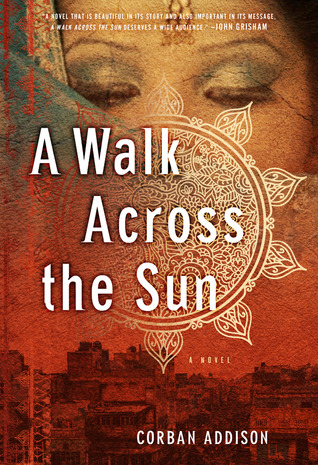
A Walk Across the Sun by Corban Addison

This is the first book by Corban Addison I read, and I positively fell in love with it. It is as good, though heartbreaking, as the cover suggests, and the title is extremely lyircal. Altogether, it’s a pretty tempting package.

Synopsis: “When a tsunami rages through their coastal town in India, 17-year-old Ahalya Ghai and her 15-year-old sister Sita are left orphaned and homeless. With almost everyone they know suddenly erased from the face of the earth, the girls set out for the convent where they attend school. They are abducted almost immediately and sold to a Mumbai brothel owner, beginning a hellish descent into the bowels of the sex trade.”

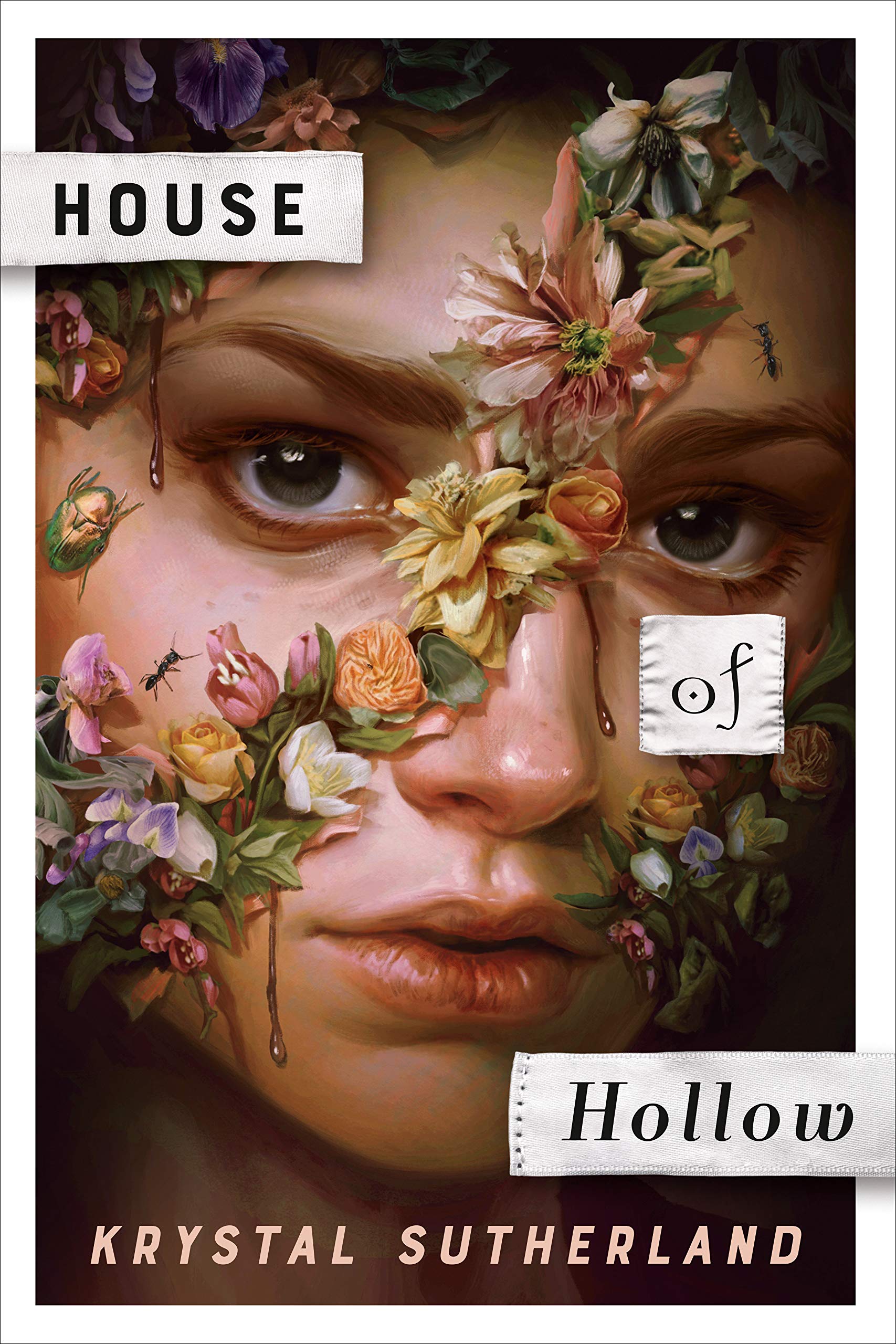
House of Hollow by Krytal Sutherland

Firstly, I’m a sucker for alliterative titles. Secondly, this books cover is the first thing that pulled me in. The book was pretty phenomenal as well.

Synopsis: “Iris has spent most of her teenage years trying to avoid the weirdness that sticks to her like tar. But when her eldest sister, Grey, goes missing under suspicious circumstances, Iris learns just how weird her life can get: horned men start shadowing her, a corpse falls out of her sister’s ceiling, and ugly, impossible memories start to twist their way to the forefront of her mind.”

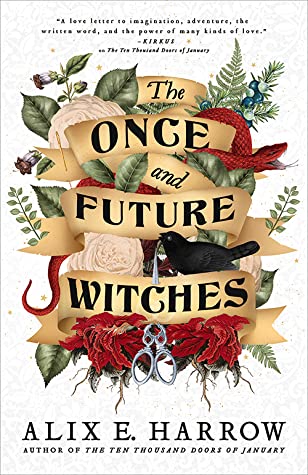
The Once and Future Witches by Alix E. Harrow

It’s true that I was seeing buzz about this book from other readers, but it’s really the cover art blended with that intriguing title that caused me to jump at it so quickly, and I’m really glad I did. It was well worth it.

Synopsis: “In 1893, there’s no such thing as witches. There used to be, in the wild, dark days before the burnings began, but now witching is nothing but tidy charms and nursery rhymes. If the modern woman wants any measure of power, she must find it at the ballot box.

But when the Eastwood sisters–James Juniper, Agnes Amaranth, and Beatrice Belladonna–join the suffragists of New Salem, they begin to pursue the forgotten words and ways that might turn the women’s movement into the witch’s movement. Stalked by shadows and sickness, hunted by forces who will not suffer a witch to vote-and perhaps not even to live-the sisters will need to delve into the oldest magics, draw new alliances, and heal the bond between them if they want to survive.”

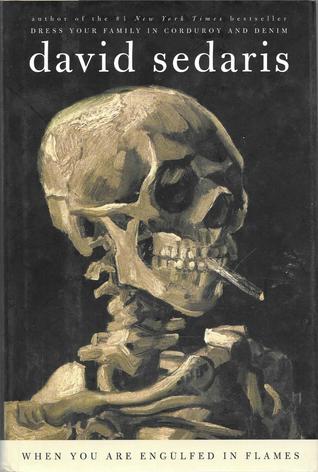
When You Are Engulfed in Flames by David Sedaris

How could you not read a book with that title? Plus, mixed with the cover art? Talk about inviting and weird from the start. And definitely not disappointing. Sedaris is hilarious.

Synopsis: “David Sedaris has written yet another book of essays (his sixth). Subjects include a parasitic worm that once lived in his mother-in-law’s leg, an encounter with a dingo, and the recreational use of an external catheter. Also recounted is the buying of a human skeleton and the author’s attempt to quit smoking In Tokyo.

Master of nothing, at the dead center of his game, Sedaris proves that when you play with matches, you sometimes light the whole pack on fire.”

The House of the Spirits by Isabel Allende

I haven’t yet read enough Isabel Allende, and she’s one of those writers that should be savored. This book has always been intriguing, and the title is one that really blips a radar. Not to mention the cover is exquisite.

Synopsis: “In one of the most important and beloved Latin American works of the twentieth century, Isabel Allende weaves a luminous tapestry of three generations of the Trueba family, revealing both triumphs and tragedies. Here is patriarch Esteban, whose wild desires and political machinations are tempered only by his love for his ethereal wife, Clara, a woman touched by an otherworldly hand. Their daughter, Blanca, whose forbidden love for a man Esteban has deemed unworthy infuriates her father, yet will produce his greatest joy: his granddaughter Alba, a beautiful, ambitious girl who will lead the family and their country into a revolutionary future.”

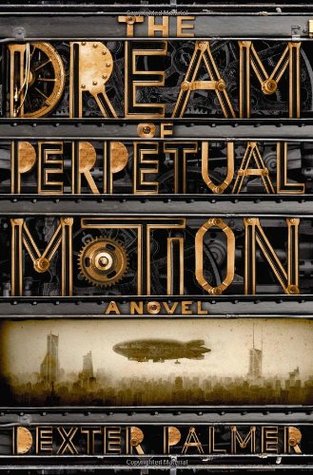
The Dream of Perpetual Motion by Dexter Palmer

Once again, the title and the cover art in all their steam punk glory make this one really intriguing. It just tells me there’s something fascinating inside. I haven’t yet gotten to it, but I’m looking forward to it.

Synopsis: “Imprisoned for life aboard a zeppelin that floats high above a fantastic metropolis, the greeting-card writer Harold Winslow pens his memoirs. His only companions are the disembodied voice of Miranda Taligent, the only woman he has ever loved, and the cryogenically frozen body of her father Prospero, the genius and industrial magnate who drove her insane.”

We Are All the Same in the Dark by Julia Heaberlin

This title seems very dark and brooding. It doesn’t give much away but it draws the reader in. And you can’t help but wonder about the significance of the cover art. Definitely interested in this new thriller.

Synopsis: “The discovery of a girl abandoned by the side of the road threatens to unearth the long-buried secrets of a Texas town’s legendary cold case in this superb, atmospheric novel.”

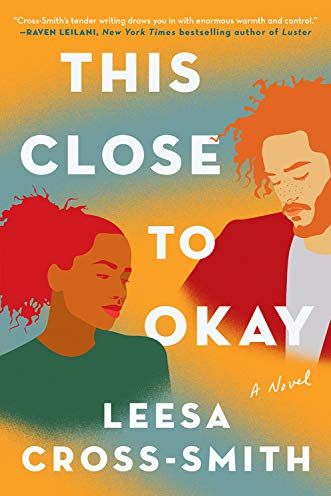
This Close to Okay by Leesa Cross-Smith

Honestly, this just seems like the title to read during a pandemic. As I’m sitting in a State where things just continue to get worse, I feel like everyone is still just flirting with being “this close to ok.” Perhaps that’s what grabs me. Either way, this looks compelling.

Synopsis: “On a rainy October night in Kentucky, recently divorced therapist Tallie Clark is on her way home from work when she spots a man precariously standing on the side of a bridge. Without a second thought, Tallie pulls over and jumps out of the car into the pouring rain. She convinces the man to join her for a cup of coffee, and he eventually agrees to come back to her house, where he finally shares his name: Emmett.

Over the course of the emotionally charged weekend that follows, Tallie makes it her mission to provide a safe space for Emmett, though she hesitates to confess that this is also her day job. But what she doesn’t realize is that he’s not the only one who needs healing — and she’s not the only one with secrets.

How Beautiful We Were by Imbolo Mbue

There’s something so haunting about this title/cover combo. I can tell there are a million things being said in one image. It’s so compelling and makes me want to peek inside.

Synopsis: “As the fictional African village of Kosawa is slowly being destroyed by an American oil company and their government seems to only care about its own interests, the people who live there decide to fight back. This exploration of capitalism, colonialism and what a difference the little guy will really make you think.”

All’s Well by Mona Awad

There are a couple of things going on here. First of all, the title reference to Shakespeare. And if you analyze the image and see the slightly creepy theater face with a forced smile is made up of pills, you realize just how much thought went into the symbolism and imagery of the cover art. I find myself really drawn to this one.

Synopsis: “Miranda’s marriage is over and her job as a college theater director is in peril. In short, her life is in shambles, all because of debilitating nerve pain from the accident that ended her stage career. She’d do anything to make it go away. And then, three strange benefactors offer to do just that, in this darkly comedic story that’s uniquely unsettling.”

Posted in Uncategorized | Tagged , , , , | 8 Comments

Antkind by Charlie Kaufman – a Book Review

I have done it! I have climbed the mountain that is Antkind and have lived to tell the tale. Truly, this novel can best be summed up using dialogue from the novel itself: When our main character is conversing with another character in the end, he asserts that “this feels nonsensical.” She replies, “Yet, you’re drawn to it.” That’s the truth. This novel is completely and utterly nonsensical but yet, for some reason, masochistic readers such as myself keep reading. Had anyone but the famous Charlie Kaufman written this book, I’m not sure it would have seen the light of day. He’s proven he can do whatever he wants simply because he’s Charlie Kaufman. And why not? He’s paid his dues and most of us know he’s weird. Everyone else can deal with it.

First, a warning. I do verge into spoiler territory in this review, as I found it a bit unavoidable. Usually, as a rule for my blog, I don’t want to ever give spoilers because I view my book reviews as intended for potential readers versus those who have already read a book, so I would never spoil the end. In this case, I find it impossible to review this book without giving my own theories into its meaning, so continue reading at your own risk.

Kaufman spends the entire first third of the novel begging us to hate his protagonist. B Rosenberger Rosenberg is everything detestable wrapped into one annoying package. He’s at once narcissistic and pathetic, a caricature of today’s obsessively woke CIS white male of privilege who is the exact epitome of what he claims to despise. He’s so obsessed with race that it’s all he sees. He’s especially obsessed with black people, stubbornly insisting on calling his black girlfriend African American despite her telling him she prefers the term black. He also constantly refers to her as “my African American girlfriend” to everyone he meets, turning her race into the most important factor of her identity and using her presence in his life as a badge of honor. “Look how progressive I am with my black girlfriend!” It’s purely about him and the image he can project to the outside world rather than the issue itself.

He professes to be an ardent feminist while exhibiting all of the worst qualities of the misogynistic mansplainer that he can fit into male form. He’s creepy and stalker-ish, developing strange attachments to women within seconds of meeting them, immediately sexualizing them in wild fantasies that are grotesque and cringeworthy. He generalizes about sex while being publicly obsessed with chosen pronouns, insisting upon the use of the dead “thon” in reference to people who prefer a nonbinary pronoun despite the fact that even these same people would prefer they/them. Pretty sure after listening to Rosenberg drone on about “thon” if I ever hear someone actually use it, I may not be able to stop myself from punching them. It’s the typical pretentious jabberings of someone who knows something once existed so they use it obsessively to put on a certain air of superiority. I’ve seen some reviews, some in major magazines, claiming that Kaufman created this pronoun for the book, that’s how obscure it is. Unlike them, I did my homework and verified that it actually existed in a bygone era.

He’s unbelievably egocentric, believing himself to be the most intelligent and impressive specimen of a man while saying things that are patently incorrect. Interestingly enough, however, this tends to get worse as the novel progresses and the plot becomes stranger. This begs the question, is he really this big of an idiot, is he spiraling into a dementia of paranoia and psychosis, or is he really experiencing some kind of alternate dimension convergence in which things are similar but not exactly the same?

I might add, Rosenberg is a caricature of the much-maligned movie critic, the ones detested by the average movie goer (and probably most filmmakers) because their snobbish opinions are typically the exact reverse of public consensus. It’s no surprise Kaufman writes Rosenberg to positively loathe the filmmaker, Charlie Kaufman, throwing a multitude of insults at him over the course of more than seven hundred pages. Strangely enough, Rosenberg has the exact opposite reaction to Judd Apatow, constantly lauding him with effervescent praise and adulation. It made me wonder if this was Kaufman’s way of flinging underhanded insults at Apatow or if it’s a little joke between friends who just happen to also be competitors in the same industry. Upon researching this question, thon finds *ahem* err… one finds… that Kaufman refuses to answer the question, encouraging readers to make up their own minds. Kaufman’s work has always relied very heavily on imagination and open interpretation, something I’ve always quite admired. He literally refuses to tell us his intent, instead viewing himself as the messenger of a story with no real set intent that can be interpreted differently when viewed from different angles. Some viewers, my own spouse included, just get pissed off when people do this to them. Some people want to be challenged and some want easy escapism. Both are valid and, thankfully, there’s plenty of entertainment out there for all of us.

As the novel moves along, it gets progressively stranger and much more disjointed. Readers aren’t at all sure what’s real or if any of it is real. B meets an impossibly elderly filmmaker, Ingo Cutbirth, who has been making the same film for 9 decades. The film is 3 months long, and B is the only person the filmmaker ever wants to see it. B, however, is convinced he has found the greatest achievement in cinematic history and, upon Ingo’s sudden death, he professes that he will deliver this holy grail of cinematic achievement to the public and will finally make a name for himself in Hollywood. Once again, it didn’t matter to him that Ingo’s dying wish was for the film to never go public, B did what he wanted to further his career. Except that the film spontaneously combusts in the parking lot of a fast food restaurant and all but one frame is lost. B must then set off on a journey of hypnotic self discovery to recollect every last second of the film as it exists in his brain so that he can recreate it in its entirety.

Our journey as we follow B jumps around from odd, rambling encounters in real life, in dreams, in hypnotic trances, in the movie, in history, in alternate dimensions, in the future, and God knows what else because I’m not even clear which was which. At times, I viewed him as being lost within the film, reality blurring with Ingo Cutbirth’s creative work. For instance, the fast food restaurant he was at when the film caught fire becomes a corporate overlord that threatens the fate of the world. President Donald J. Trunk (you read that right) finally gets to have sex with the one person he loves most in the world, himself. And thank you, Charlie Kaufman for giving the world the greatest gift you could, Donald Trump’s worst nightmare. For nothing could be more detestable to him than a future in which the world has forgotten his name and only remembers him for the narcissistic bloviating mess he truly is. I find myself digressing in a similar fashion to the novel.

Are we following B through a real life moment in which his eyes are opened by his introduction to a moving and riveting piece of art or are we following B’s spiral into a desperate psychosis from which he’ll likely never return? If I had to make a guess, I think we are supposed to see this in a semi-literal sense. B is warned that the Brainio technology is dangerous to tinker with, and he tinkers, which caused a further fracturing of a mind already in a fragile, tenuous place. I think, anyway. Seriously, some of it left me so confused and at one point I was listening at 2x speed which probably wasn’t a good idea. BUT IT WAS SOOOO LONG AND B WAS SO ANNOYING! Either way, whether you take things from a speculative fiction or psychological standpoint or somewhere in between, as I do, this is a truly wild ride. I can’t even fathom what’s it’s like inside Charlie Kaufman’s head. What a fascinating, nonsensical, but brilliant place that must be.

I’m very torn on a rating for this book. Upon reflection, I see the flashes of brilliance. However, it was simply so arduous to plod through, so much so that I thought he could have easily shortened it and still retained the meat of the story. I’m going to settle on 3 stars. Worthwhile but not exactly enjoyable.

Rating: 3 out of 5.
Posted in General fiction, Literary Fiction, Seriously Weird Shit, Uncategorized | Tagged , , , , | 5 Comments

Reading Challenge update – July 30, 2021

It’s the last Friday of July, so it’s a great time to check in with my reading challenge progress. I find myself in really great shape at this point, as I’m crushing my 52 book goal. I’m doubling up on some categories at this point, so I’ll really have to focus on choosing things for each category, and many of them I’ve already picked out. To read my reviews for any of the titles, you can click on each completed title. Here’s where I stand so far in 2021:

1. A Productivity BookStop Living on Autopilot by Antonio Neves – completed
2. Book Becoming Movie in 2021 The Reincarnationist Papers by D. Eric Maikranz – completed
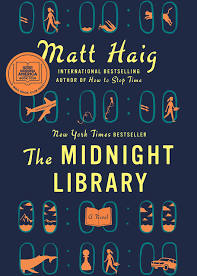
3. Goodreads Winner in 2020 – The Midnight Library – by Matt Haig – completed
4. Biography
5. About a Pressing Social Issue – The Garden of Burning Sand by Corban Addison – completed
6. A Book About BooksThe Bookshop of Yesterdays by Amy Meyerson – completed
7. Set in the 1920s – The Maid’s Version by Daniel Woodrell – completed
8. An Author Who Uses Initials – The Invisible Life of Addie LaRue by V.E. Schwab – completed
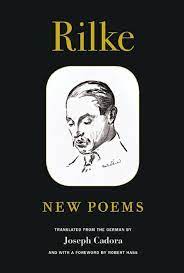
9. Poetry – New Poems by Rilke – currently reading
10. A 2020 BestsellerAnxious People by Fredrik Backman – completed
11. Recommended by a Colleague
12. With a Number in the Title – Slaughterhouse-Five by Kurt Vonnegut – completed
13. Bottom of Your To-Read List
14. Reread a Favorite Book
15. Own Voices Story – March by John Lewis – completed
16. Published in the 1800s
17. Local Author – Drifting by Steven Cross – completed
18. Longer Than 400 Pages – The Once and Future Witches by Alix E. Harrow – completed
19. A Book Turned Into a TV Series
20. A Book That Makes You Think – Antkind by Charlie Kaufman – currently reading
21. A WWII Story – The Willow Wren by Philipp Schott – completed
22. A Highly Anticipated Book – Project Hail Mary by Andy Weir- completed
23. Eye-Catching Cover – House of Hollow by Krystal Sutherlandcompleted.
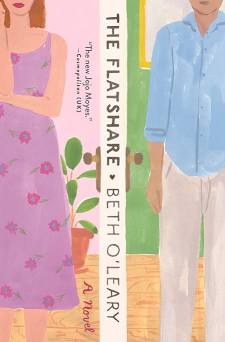
24. A Summer ReadThe Flatshare by Beth O’Leary – completed
25. Coming of Age Story – Homegoing by Yaa Gyasi – completed
26. Bestselling Memoir – In the Dream House by Carmen Maria Machado– completed
27. Book Club FavoriteSouthern Book Club’s Guide to Slaying Vampires by Grady Hendrix – completed
28. A Book About FriendshipThe Soul of an Octopus by Sy Montgomery – completed, How Lucky by Will Leitch – completed, Radiant: The Dancer, the Scientist, and a Friendship Forged in Light by Liz Heinecke – completed
29. An Audiobook – Walking With Ghosts: A Memoir by Gabriel Byrne – completed
30. Set in Australia
31. By a Nobel Prize winner
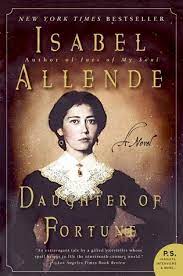
32. About an Immigrant – Daughter of Fortune by Isabel Allende – completed
33. Time Travel Novel – Before the Coffee Gets Cold by Toshikazu Kawaguchi– completed
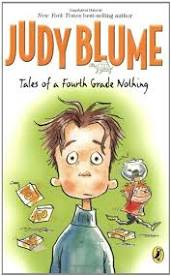
34. An Author You Love 35. Childhood FavoriteTales of a Fourth Grade Nothing by Judy Blume – completed.
36. Classic Read in High School
37. Borrowed from the Library –Faye, Faraway by Helen Fisher – completed, Nothing to See Here by Kevin Wilson – completed
38. Nonfiction New York Times Bestseller
39. From an Indie Publisher – The Enlightenment of the Greengage Tree by Shokoofeh Azar – completed
40. Fantasy – The Absolute Book by Elizabeth Knox – completed
41. A Sequel
42. Recommended by a Librarian
43. Psychological ThrillerIn the Garden of Spite by Camilla Bruce – completed
44. Oprah Winfrey Book Club Pick
45. A Book About Technology – The Future is Yours by Dan Frey – completed
46. Title with Three Words – Home Before Dark by Riley Sager– completed
47. Debut Novel of Famous Author – The Mysterious Affair at Styles by Agatha Christie – completed
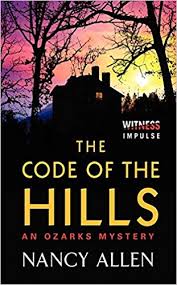
48. Genre You Don’t Usually Read – Code of the Hills: An Ozarks Mystery by Nancy Allen – completed
49. A Book Everyone Is Talking About – American Dirt by Jeanine Cummins – completed.
50. You Own But Haven’t Read
51. Borrowed from a Friend – The Hypnotist’s Love Story by Liane Moriarty– completed
52. A 2021 New Release – The Lost Apothecary by Sarah Penner – completed

So far, I’ve completed 38 books with another 2 in progress, both of which I should finish today. I’m very pleased with my progress so far this month! Happy reading and thanks for stopping by!

Posted in Uncategorized | Tagged , , , , | 2 Comments

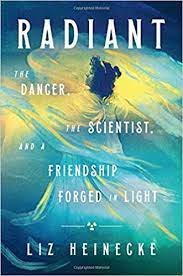
Radiant: The Dancer, the Scientist, and a Friendship Forged in Light by Liz Heinecke: a Book Review

This is the first adult book for author Liz Heinecke whose background is in molecular biology and bacteriology. She has written some in the past in the sciences for children, specifically in experiments parents and children can do at home to encourage the development of a love of science. Her background and her passion definitely cross over into this book. You can find her online at The Kitchen Pantry Scientist.

Synopsis

Radiant is creative nonfiction that focuses on the lives of two very different women and their unlikely friendship. It follows the well known physicist, Marie Curie, and a lesser known but still equally impressive dancer, Loie Fuller. While Curie would go on to win the Nobel Prize not once, but twice, for her work in physics and chemistry, Fuller would fade to relative obscurity outside the worlds of dance and art nouveau. However, it’s clear from Heinecke’s book that Fuller deserves a place of notoriety not just as an innovator in the creative realm, but she was a technological and scientific innovator as well. The book follows both their careers from the late 1800’s to the early 1930’s and profiles both their individual accomplishments and the ways their two fates intertwined to shape their legacies.

Review

I’m really glad I stumbled upon this book. It’s a very unique true story in women’s history, and both of these figures deserve to have their stories told. I found both their stories to be quite riveting. Of course I had heard of Curie, but this was my first introduction to Fuller and I’m amazed I haven’t heard of her before this. At times, this book read very technical and scientific, which isn’t surprising considering Heinecke’s background. Honestly, it would be difficult to write this book without getting into the technical aspects of their innovations, so I don’t find it to be a fault with this book. As I don’t read a lot of nonfiction, I find stuff like that a little more difficult to follow than the human stories. I do feel Heinecke did a very good job making this accessible to all readers despite the very technical aspect of the subject matter, and that’s in part thanks to her using a creative nonfiction format in which she manufactures dialogue and additional scenes to bring the history to life. It reads like a novel despite its place as nonfiction.

Marie Curie, date unknown. Source: Library of Congress Prints & Photographs Online Catalog. https://www.loc.gov/pictures/item/96512741/

Both women dealt with the various types of overt sexism that permeated their fields. In Fuller’s case, she was criticized for not being feminine enough, for not having the perfect body of the typical dancer, and mocked for her weight and height. For Curie, as a woman in the scientific community, her intellect and accomplishments were overlooked or were credited to a male colleague simply because it was believed a woman couldn’t possibly be in possession of the ability to reach such heights in an intellectual world. Both women had to be five times more cunning and had to work ten times harder to rise to the top of their fields, and they both succeeded. Though so different from each other, they both could understand the hurdles each had to overcome to be successful as a woman of their time.

Loie Fuller wearing one of her famous dresses she would wear to perform dances such as her “Serpentine dance.” Image source: Library of Congress Prints & Photographs Online Catalog. https://www.loc.gov/pictures/item/96514366/

At times, Fuller was overlooked as the intelligent and innovative woman she was simply because she was a dancer. Honestly, I feel we still do this to women in pop culture today. Shut up and sing/dance/act, and stop proving you’re actually a brilliant and fascinating human capable of stringing more than three words together. What a slut, go put on some clothes. Take off your clothes because you look like frump girl. Honestly, it’s exhausting seeing what we do to women, and even men, in the public eye. Both Loie Fuller and Marie Curie are evidence that this is hardly a new phenomenon. It’s always been nearly impossible for a woman to please the public. Thankfully, there have always been women who said “screw ’em” and did what they wanted anyway. And there were always some people receptive to their forms of art or their intellect. That’s how progress comes about. This is a story that celebrates that history of progress. I’m so grateful for women like Fuller and Curie who fought such a hard fight to gain respect for women during times when it was so much more difficult than it is today. We haven’t come all the way, but we’ve come a really damn long way.

This book does a great job presenting the two women as I believe they really were. Loie is a charismatic, larger than life, but slightly flighty woman of big dreams and extreme tenacity. Often tethered to reality and kept organized by her life partner, Gab, a severe and resolute woman who both adored Loie for her carelessness and despaired over it within the same breath. Marie is a serious and laser focused scientist with an equal amount of tenacity that manifests itself in different ways than Loie but still works to bind the two together. Though they exist in different spheres, they always find a way to reach out to each other as the years go by.

While Heinecke is a scientist, she still manages to pull off some pretty impressive creative writing. Overall, this book is a really lovely tribute to both of them, and it deserves a lot of admiration for the authentic and rarely shared story that it tells. 4 stars.

Rating: 4 out of 5.

Published February 2021 by Grand Central Publishing. ISBN 9781538717363. 324 pages.

This post contains affiliate links. I may receive a commission from items purchased through my link at no additional cost to you.

Posted in Nonfiction, Uncategorized | Tagged , , , | 5 Comments

TBR Thursday – Episode 8: July 29, 2021

Welcome to a new week of my TBR cleanup. I evidently added a couple, which I don’t remember doing, so perhaps I’ve been doing some sleep perusing of goodreads. Anyway, I’m currently at 501, so let’s get started!

216

The Beloved Daughter by Alana Terry

Synopsis from goodreads: “In a small North Korean village, a young girl struggles to survive. But it is her father’s faith, not the famine of North Hamyong Province, that most threatens Chung-Cha’s well-being. Is Chung-Cha’s father right to be such a vocal believer? Or is he a fool to bring danger on the head of his only daughter? Chung-Cha is only a girl of twelve and is too young to answer such questions. Yet she is not too young to face a life of imprisonment and forced labor. Her crime? Being the daughter of a political traitor. The Beloved Daughter follows Chung-Cha into one of the most notorious prison camps of the contemporary free world. Will Chung-Cha survive the horrors of Camp 22? And if she does survive, will her faith remain intact? “The Beloved Daughter” is Alana Terry’s debut Christian novel and was a winner in the Women of Faith writing contest.”

Verdict: I’m a bit torn on this one. The story does sound incredibly compelling. However, it seems this is categorized as Christian fiction, which is something I don’t care to read as the religious stuff is often way too heavy handed and I’m not a religious person. I don’t mind religion in books, but I don’t want it to be the focus of the story and I don’t want to read something that has a main purpose of saving my soul. I do expect to learn something from a book, but I want it to be subtle and natural. I don’t want to be beaten over the head with a forced message. Most people rave about this book, but they seem to be in the camp of people that like that. Some reviewers did mention it to be off putting, so I think I will remove this one.

REMOVE

58

The Amulet of Samarkand (Bartimaeus #1) by Jonathan Stroud

Synopsis from goodreads: “Nathaniel is a boy magician-in-training, sold to the government by his birth parents at the age of five and sent to live as an apprentice to a master. Powerful magicians rule Britain, and its empire, and Nathaniel is told his is the “ultimate sacrifice” for a “noble destiny.”

If leaving his parents and erasing his past life isn’t tough enough, Nathaniel’s master, Arthur Underwood, is a cold, condescending, and cruel middle-ranking magician in the Ministry of Internal Affairs. The boy’s only saving grace is the master’s wife, Martha Underwood, who shows him genuine affection that he rewards with fierce devotion. Nathaniel gets along tolerably well over the years in the Underwood household until the summer before his eleventh birthday. Everything changes when he is publicly humiliated by the ruthless magician Simon Lovelace and betrayed by his cowardly master who does not defend him.

Nathaniel vows revenge. In a Faustian fever, he devours magical texts and hones his magic skills, all the while trying to appear subservient to his master. When he musters the strength to summon the 5,000-year-old djinni Bartimaeus to avenge Lovelace by stealing the powerful Amulet of Samarkand, the boy magician plunges into a situation more dangerous and deadly than anything he could ever imagine.”

Verdict: I do enjoy a good YA fantasy every now and again and this one has good enough reviews to hold my interest. It looks unique and like it would maybe be a good audiobook pick one day. I think I’ll keep it.

KEEP

88

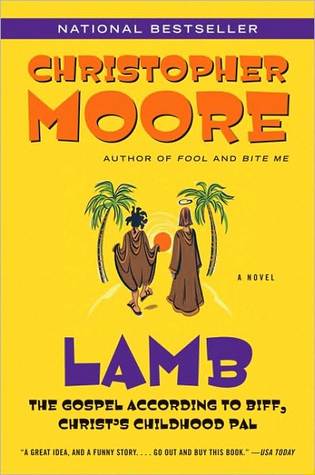
Lamb: The Gospel According to Biff, Christ’s Childhood Pal by Christopher Moore

Synopsis from goodreads: “The birth of Jesus has been well chronicled, as have his glorious teachings, acts, and divine sacrifice after his thirtieth birthday. But no one knows about the early life of the Son of God, the missing years—except Biff, the Messiah’s best bud, who has been resurrected to tell the story in the divinely hilarious yet heartfelt work “reminiscent of Vonnegut and Douglas Adams” (Philadelphia Inquirer).

Verily, the story Biff has to tell is a miraculous one, filled with remarkable journeys, magic, healings, kung fu, corpse reanimations, demons, and hot babes. Even the considerable wiles and devotion of the Savior’s pal may not be enough to divert Joshua from his tragic destiny. But there’s no one who loves Josh more—except maybe “Maggie,” Mary of Magdala—and Biff isn’t about to let his extraordinary pal suffer and ascend without a fight.”

Verdict: This is more like it when it comes to religion in books. Being able to have a little fun. I greatly enjoy humor, and I’ve had this one on my list for a while. I’m going to keep this one.

KEEP

219

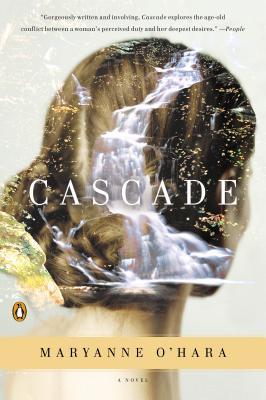
Cascade by Maryanne O’Hara

Synopsis from goodreads: “What would you give up to become the person you knew you were meant to be?

It’s 1935, and Dez Spaulding has sacrificed her plans to work as an artist in New York to care for her bankrupt, ailing father in Cascade, Massachusetts. When he dies, Dez finds herself caught in a marriage of convenience, bound to the promise she made to save her father’s Shakespeare Theater, an especially difficult feat since the town faces almost certain flooding to create a reservoir. When she falls for fellow artist and kindred spirit Jacob Solomon, she sees a chance to escape with him and realize her New York ambitions, but her decisions will have bitter and unexpected consequences.

Fans of Richard Russo, Amor Towles, Sebastian Barry, and Paula McLain will savor this transporting novel about the eternal tug between our duties and our desires, set in New York City and New England during the uncertain, tumultuous 1930s.”

Verdict: This novel has a truly gorgeous cover. From the reviews, it seems to be right up my alley. I will keep this one.

KEEP

197

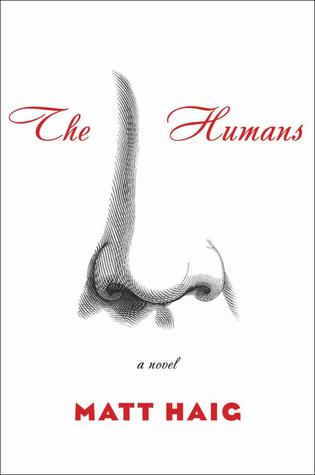
The Humans by Matt Haig

Synopsis from goodreads: “The Humans is a funny, compulsively readable novel about alien abduction, mathematics, and that most interesting subject of all: ourselves. Combine Douglas Adams’s irreverent take on life, the universe, and everything with a genuinely moving love story, and you have some idea of the humor, originality, and poignancy of Matt Haig’s latest novel.

Our hero, Professor Andrew Martin, is dead before the book even begins. As it turns out, though, he wasn’t a very nice man–as the alien imposter who now occupies his body discovers. Sent to Earth to destroy evidence that Andrew had solved a major mathematical problem, the alien soon finds himself learning more about the professor, his family, and “the humans” than he ever expected. When he begins to fall for his own wife and son–who have no idea he’s not the real Andrew–the alien must choose between completing his mission and returning home or finding a new home right here on Earth.”

Verdict: I just finished The Midnight Library not too long ago, which was my first Matt Haig novel. I really enjoyed it and would read anything else he’s written. This also has a great average at 4.08. Definitely keep.

KEEP

There you have it! It may look like I only removed one, but I stumbled across a book I’d already read that was still on my To-Read shelf so I removed it as well for a total of 499.

Posted in Uncategorized | Tagged , , , , , | Leave a comment

WWW Wednesday – July 28, 2021 #wwwwednesday #bookishmemes

Greetings book lovers! Welcome to a new week of WWW Wednesday, a weekly series hosted by Sam at Taking on a World of Words. In it, we share our reading progress for the week by answering three questions beginning with W and invite others to do the same.
The Three Ws are:

  • What are you currently reading?
  • What have you just finished reading?
  • What will you read next?

What am I currently reading?

Oh, Antkind, will I ever finish you? I don’t usually spend so many weeks on an audio, and that frustrates me. I am now on Track 15 of 22, so I’m definitely getting closer. It seems to get weirder, though slightly less irritating, as I move forward. He’s stopped using “thon” quite so much. I’ll explain that one more thoroughly in my review, but trust me, it’s annoying. I can’t claim to like this book, but I definitely respect it for the absurd satire that it is.

In hardback, I’m reading an incredibly interesting creative nonfiction book called Radiant: The Dancer, the Scientist, and a Friendship Forged in Light” by Liz Heinecke. I hope to finish this one today if I read like mad. I’ve realized I really need to pick up the pace on my library reads or I won’t be able to read all of them. Either that or I’ll owe my life savings in late fees to the library once I’m done.

What have I just finished reading?

Eh, not much to be honest. Nothing new to report on audio, though I did finish and post my review for The Enlightenment of the Greengage Tree at the first part of the week. I managed to finish the book over the weekend. It’s definitely a book I recommend for fans of magical realism.

What will I read next?

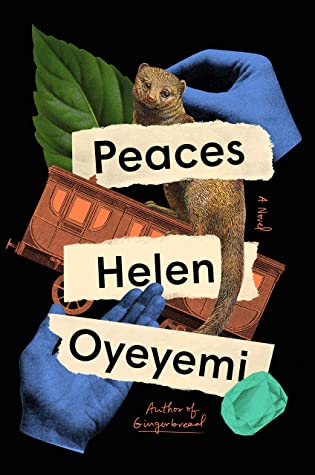
I found a quirky little book on audio called Peaces by Helen Oyeyemi. At one point, I thought I would take a break from Antkind and read something different in between, but I decided to just blaze right through and get done, so I tabled it again. I will pick it up as soon as I’ve finished Antkind.

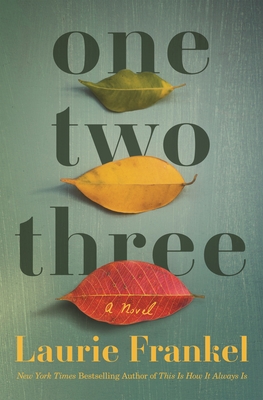
In hardback, I’m going to pick back up the poetry collection, New Poems, by Rilke. I have actually started this one but I didn’t keep up with it so I plan to finish it before I start a new novel. In hardback, I’ll read One Two Three by Laurie Frankel. This is getting really great reviews and I’m excited to read it. But so far none of my friends have this one under their belt so I haven’t gotten any feedback from anyone I know, which is actually a good feeling because I’m typically behind on the newer books.

That’s it! Pretty short update for today! I’ll be back tomorrow with my TBR cleanup post. Unless I turn into a reading machine today, I doubt I get another review posted before the weekend, but miracles do happen. Happy Reading!

Posted in Uncategorized | Tagged , , , , , | 13 Comments

Top Ten Tuesday: Desert Island Books

Top Ten Tuesday is a meme hosted by The Artsy Reader Girl. In it, each week there’s a new topic in which each blogger picks books that fit into that category for them. This week, I positively love the topic. Which books would I choose to have with me if I were stranded on a desert island? These are books I could re-read a million times and never tire of them. I might have some tough choices here to find just 10, but let’s get started.

Frankenstein by Mary Shelley

Long held to be one of my all-time favorite classics, I love this book for its incredible story and for its important place in the literary canon as the first science fiction book. Mary Shelley is one of the most fascinating and awe inspiring authors, and I could read this book multiple times and never tire of it. The only thing I don’t like about this book is how much the Frankenstein concept is butchered in pop culture. What a travesty!

I Know This Much is True by Wally Lamb

This may seem like an odd choice, because it’s a heavy book. But it’s a beautiful, human story that I could read so many times and glean something new each time. Whenever someone asks me to name a favorite book, this title springs to my lips more often than others. It’s positively incredible.

Shadow of the Wind by Carlos Ruiz Zafon

This book is simply rich in so many of the things I love. It’s dark but incredibly lyrical and moving with a beautiful cast of characters. There’s murder and intrigue and, most importantly, a mystery involving old books. It’s a treat to read and I could never tire of it.

The Poisonwood Bible by Barbara Kingsolver

I have to have a Kingsolver book, and this one is her masterpiece. It’s an incredible piece of fiction. Thought it’s dark and more than a bit depressing, it’s one of the most amazing pieces of literature I’ve ever read and has long been considered a favorite. I would need to return to this book.

The Picture of Dorian Gray by Oscar Wilde

Another classic that I wouldn’t want to be without. This is one of the quintessential books in the literary canon that everyone should read at one point or another. It’s dark and brooding but in possession of an incredible amount of lyricism. There’s so much truth behind Wilde’s words, and he’s a genius that’s nearly unparalleled.

Jane Eyre by Charlotte Bronte

I will always love this book. Jane is my favorite literary heroine, and I never tire of reading this or seeing the various movie adaptations of it. I positively adore this book!

Big Little Lies by Liane Moriarty

I have to have at least one Liane Moriarty book. She’s witty, snarky, but also a genius at crafting an amazing mystery. This book is my favorite of hers, but honestly I could have any one of them and be happy about it. This would be for those days I want something lighter but still incredibly compelling.

Project Hail Mary by Andy Weir

I need the fun books. Andy Weir has an incredible wit, and he’s amazing at writing believable and fun dialogue. This book was one of my favorites I read all year and I think I could read it a million times and not tire of the humor. Either this or The Martian I would be very satisfied with on a desert island.

The Thirteenth Tale by Diane Setterfield

This book really wowed me when I first read it in 2009. It quickly became one of my favorites. A modern gothic tale about an old house, a family mystery, and the ghosts of the past. It’s beautiful, lyrical and strange in all the best ways. I would love to revisit this book over and over.

And finally…

The Sparrow by Mary Doria Russell

One of the most wonderful, detailed and thoroughly researched speculative fiction reads I’ve ever read. Russell has an incredible intellect, and she draws from her expertise in cultural anthropology to create an amazing story about our future contact with alien life. It’s a must read for science fiction fans, but it’s one I rarely see mentioned by sci-fi lovers, which is a shame.

Posted in Uncategorized | Tagged , , , , , , | 20 Comments

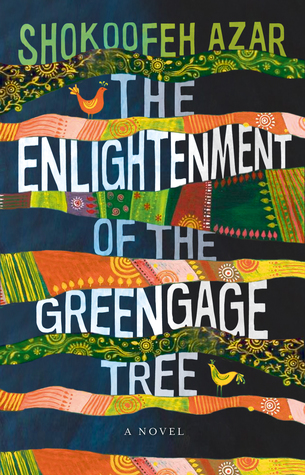
The Enlightenment of the Greengage Tree by Shokoofeh Azar – a Book Review

Instead of counting objects and days and hours, if people would simply rub their palms together just once, and comprehend that mysterious skin to skin contact fully, their understanding of the world would be better. Or if just once they were to watch and understand the blooming of a flower or birth of a lamb, using their senses of sight and hearing and smell completely, perhaps humans would come to the conclusion that in all the days and nights of their lives, only that minute in which they are immersed is worth calculating.

-Shokoofeh Azar

The Enlightenment of the Greengage Tree is a book that deserves more than just a short blog review, as there’s so much to break down. I could probably write for hours, go off on tangents, come up with theories, etc. I won’t do that, but suffice it to say this is a book that relies very heavily on reader interpretation. What I got from this book might not match what another reader would glean, and therein lies some of the genius. Now, this is by no means a particularly new method of story-telling. It’s a heavy dose of magical realism that relies principally on Persian folklore to tell the story of a fractured family whose ability to survive is tested by the cruelty of a despotic regime.

The narrator of The Enlightenment of the Greengage Tree is the first fallen victim of the family, the 13-year-old daughter named Bahar who was killed during the Islamic Revolution of 1979 when the family home in Tehran was attacked by fighters. Following Bahar’s death, the family flees to Razan to begin anew, only to be followed shortly thereafter by the death and destruction from which they fled. Bahar exists as an omniscient figure, a ghost who is able to still interact with her family. She is immune to the physical pain and destruction inflicted upon the remaining members but still feels fully the mental and emotional anguish of witnessing their subsequent breakdown. She is as powerless as we, the reader, to halt the desperate march of time that threatens to destroy their legacy. The “enlightenment” referenced in the title is a bit tongue-in-cheek, as the enlightenment as experienced by Bahar’s mother, Roza, as she climbs to the top of the greengage tree is really nothing short of a mental breakdown brought upon by despair so deep it transports her to a new realm of unfeeling distraction. It’s a “positively Vonnegut-esque” (to quote Bridget Jones) post traumatic stress escape to Tralfamadore in a desperate attempt to forget that the world is imploding around her.

The novel is beautifully and lyrically told, blending Iranian folklore and elements of magical realism. It’s quite rich with symbolism and metaphor, bursting with it, in fact. Placing fantastical elements of mythical creatures, ghosts, and mysticism against a backdrop of persecution and the stifling of creative thought provides an interesting form of escapism in the face of the unthinkable. While they were once a family who valued knowledge and literature above all else, as they are robbed of the ability to enjoy such things we see them descend into a fantasy world that still connects them to those things they hold dear. Literature is an incredibly important theme in this novel. As a matter of fact, I became a little bit weary of the long lists of literary works that were peppered throughout the text, though I do understand their importance. It’s illustrative of what is lost in a Country like Iran during such times when the people lose their freedom to learn without restriction or fear of prosecution if caught. Many of us take for granted that we can simply go to a library or a bookstore and choose from thousands of titles regardless of their content. We celebrate banned books, and we revel in the content that raises the hackles of the would-be censors. I can talk about this book and post my thoughts for the world to see, but the translator of this novel had to remain anonymous for his or her own safety. The author had to immigrate to another country, Australia in this case, before she could even publish such words under her own name. That’s the real world many of us will never experience. That’s the power behind a book such as this, a reality that permeates even the area outside of the pages. It’s a true human story of catharsis in the face of evil.

Narratively speaking this book is told in a very disjointed fashion. It jumps around in time and can sometimes be difficult to follow. Little unrelated stories are brought in to fully illustrate the presented themes which have a tendency to pull the reader out of the main storyline only to thrust them back again a few pages later. This isn’t a linear plot. It’s a “big picture” plot where you have to place all the pieces together into a final, complete work. Unless you’re ready to do some serious thinking, you might want to skip this one. It’s short but far from simplistic.

Considering some issues I had with the narrative style, I would give this one a 4/5. It deserves a lot of credit for its flashes of brilliance and the overall tone which celebrates the power of literature in a world that doesn’t value knowledge.

Rating: 4 out of 5.

Published August 17, 2017 by Wild Dingo Press. ISBN 098738130X. 268 pages.

Posted in Fantasy, Literary Fiction, Uncategorized | Tagged , , , | 6 Comments

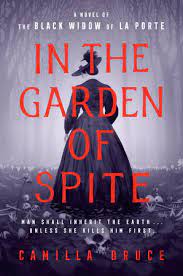
In the Garden of Spite by Camilla Bruce – a Book Review

In the late 1800’s and early 1900’s, a woman by the name of Belle Gunness, a Norwegian immigrant born Brynhild Paulsdatter Storset, quietly terrorized Chicago and La Porte, Indiana. It is now thought Gunness may have been responsible for the deaths of up to 40 people. Having never been caught, much of the facts of Belle’s story are the result of speculation. In the Garden of Spite is Bruce’s version of what the black widow’s story may have been, including her origin story of trauma so terrible it pushed her to the point of unthinkable evil.

Synopsis

The novel begins in Norway with Little Brynhild, the daughter born to a poor working class family, an abused mother and a cruel father. As a teen, we watch in horror as her dealings with men become more horrifying than you can imagine. Her experiences do two things. They give her the desire to escape the hell she experiences in Norway, and they give her a thirst for vengeance. From there, the novel follows her to Chicago to move in with her sister, Big Brynhild, now known as Nellie. The novel progresses in alternating chapters from the perspectives of both sisters and goes through Belle’s life as we experience her slow transformation into the twisted serial killer, the “Black Widow of La Porte.” I will actually refer to her as Belle in this review, though the novel refers to her as Bella. According to the book, Bella was her chosen name and it annoyed her that people referred to her as Belle.

Review

Full disclosure, this book is disturbing as hell. It’s gory and gruesome in pretty graphic detail. I mean, Belle Gunness was a serial killer who literally butchered her victims into pieces with a cleaver in order to more easily bury them on the farm, so what else would you expect? This book is an incredibly dark mix of psychological horror and historical fiction.

photograph of Belle GunnessFrom my own independent research into Gunness, I would say Bruce has done a pretty fabulous job of piecing together a possible historical timeline. She mostly sticks to facts as they are known for the story but she does add her own embellishments here and there. I won’t say what it is, but there is one fact to the conclusion of Belle’s story I always found so horrifying as to have difficulty believing it’s true, and Bruce explains this in a way I found believable but also retains what small shred of humanity Belle had left in my mind.

In general, this book is extremely psychological in nature. First of all, we get the origin story for her. She experiences trauma at the hands of a cruel man. Bruce does humanize Belle, especially in the beginning. I truly did feel for her during her most anguished hours. Her desperate loneliness and grief were very raw and gripping. This allowed me to fully see how someone could wind up down such an awful path in life. However, without already being predisposed to mental illness, I don’t think Belle would have been capable of such atrocities. If every woman abused by a man became a serial killer, there wouldn’t be any men left in the world.

Bruce paints a portrait of her suffering from mental illness that goes all the way back to childhood. At the risk of giving a purely armchair amateur diagnosis, I feel she’s presented as both a malignant narcissist and a sociopath, if not a full on psychopath. She’s completely devoid of empathy, not even for her adopted children she professes to love. Belle Gunness with her adopted childrenBelle is presented as someone incapable of loving anyone the way she loves herself. However, she is able to fake it in an expert fashion. She’s the ultimate charlatan, duping literally everyone she comes into contact with save for one person who recognizes her for what she is.

The novel is well written with compelling characters. In Belle’s case, she is absolutely infuriating. It’s rare to find a book where the protagonist is so much more of an antagonist. She’s the ultimate villain, and we have to be in her head for half of the book. That’s at once a fascinating and frustrating experience. More frustrating than Belle’s perspective, however, is Nellie’s. Nellie is so naive and blinded by love for her sister she seems incapable of recognizing what’s before her very eyes. I will say that Bruce has admitted Nellie’s portion of the story to be mostly fabrication. In reality, Nellie had little to no contact with Gunness following her exit from Chicago and relocation to Indiana. The book shows the two remaining in close contact in order to increase suspense. We see Nellie as someone who could stop Belle if she would just pull her head out of the sand long enough to thwart continued tragedy.

There is one character I’m on the fence about. Belle meets an enigmatic man much like herself, James Lee. It’s through Lee that we see the encouragement of the growth of her more sadistic side. Lee has a similar thirst for blood and he helps Belle cultivate her own. Bruce admits in the afterward that Lee is completely fabricated. There’s no evidence in the historical record that anyone aided Belle in her bloody schemes early on in her killing. On the one hand, I see this type of character as a great plot device that helps the reader understand Belle’s transformation. On the other hand, I feel like adding a man to Belle’s story to “teach” her how to be a better killer takes away some of the power from the real historical figure. I’m not sure it makes much sense to have Belle Gunness, a butcher of men, be in possession of a male mentor. Often times, it was Lee who had the more intelligently crafted schemes and Belle was presented as so careless and blood-thirsty that he had to admonish her to be more careful. I’m not sure this is fair to the original Belle Gunness who was in possession of a crafty scheming nature and was able to get away with it for so long. Additionally, it shows Belle as being inspired in her insurance schemes by the infamous Chicago serial killer, H.H. Holmes. While it’s likely this might have been true, it’s once again presenting ideas coming from a man rather than Belle’s own ingenuity. To her credit, however, Belle got away with it and Holmes did not. Some people may believe Belle died in 1908, but I’m about 99.9% sure that she disappeared to a new life. That being said, if Gunness had tried any of the things she got away with in today’s modern times, she would have been caught faster than you can say miranda rights.

Truly, this is such a compelling book. It’s sure to fascinate both history buffs and horror fans alike. While it’s not for the faint of heart, it’s definitely a page turner. Overall, I give this one 4 stars for sheer readability, depth of research, and it’s in-depth psychological info on a real historical figure.

Rating: 4 out of 5.

Image sources: Image 1 – Belle Gunness. IndyStar News. https://www.indystar.com/story/news/history/retroindy/2017/11/10/female-indiana-serial-killer-comely-belle-gunness-loved-her-suitors-death/848023001/ Image 2 – Belle Gunness and adopted children. La Porte County Historical Society Museum. https://laportecountyhistory.org/exhibits/belle-gunness/

This post contains affiliate links. I receive a commission from purchases made through my site.

Posted in Historical Fiction, Horror, thriller, Uncategorized | Tagged , , , , , , | 11 Comments

WWW Wednesday – July 21, 2021 – #wwwwednesday #bookishmemes

Welcome to a new week of WWW Wednesday, a meme hosted by Sam at Taking on a World of Words. In it, we answer three questions and leave a link in the comments sharing our own posts for other bloggers to view.

The Three Ws are:

  • What are you currently reading?
  • What did you just finish reading?
  • What will you read next?

What am I currently reading?

Life really happened this week and I wound up stuck at home for a few days. Now, many of you may be thinking, “Hey, that’s great! You should have gotten a lot of reading done.” Well, I was stuck home with my kids, so no… I didn’t. I tried, but I never understood anything I read because I kept getting interrupted with “Mommy… mommy… mommy…” Not conducive to adequate reading comprehension. So, I’m still working on Antkind on audio and Enlightenment of the Greengage Tree in paperback.

What have you just finished reading?

I was able to get a hold of another copy of In the Garden of Spite, and I was able to finish it in less than an hour. I haven’t yet gotten the chance to write my review considering how crazy the week was, so I hope to get to that in the next day or two. This was an incredibly interesting book, and I’ll have a lot to say about it, especially about the author’s unique perspective on a real and infamous historical figure.

What will I read next?

I have so much out from the library at the moment and I really need to get moving on it all. Next I’m going to pick up Radiant: The Dancer, the Scientist, and a Friendship Forged in Light by Liz Heinecke. This book is historical nonfiction and follows a unique friendship between Marie Curie and dancer and choreographer with an interest in science, Loie Fuller. I stumbled across it on the shelf and thought it looked like a fascinating piece of women’s history to which I’m not that well-versed. I hope to finish my other read and start this one tomorrow.

On audio, I really don’t even want to pick anything because AntKind is still probably going to take at least another week. So, that’s it for a short update today! Look for my review of Camilla Bruce’s historical fiction thriller, In the Garden of Spite. Happy Reading!

Posted in Uncategorized | Tagged , , , , , | Leave a comment