
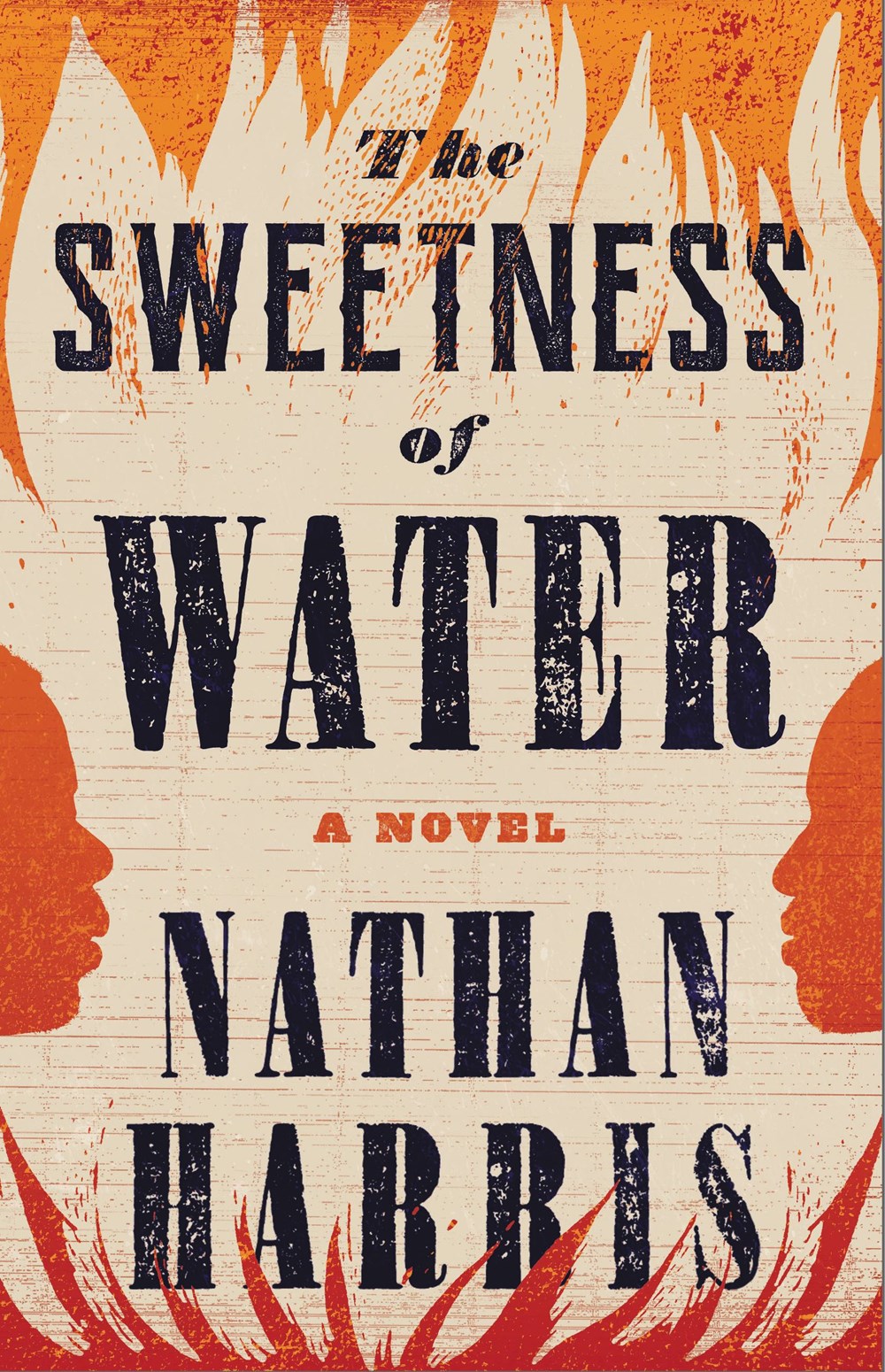
 If you are a lover of historical fiction, commit the name Nathan Harris to memory, because you will be hearing from him again. Harris is an alumnus of the Michener Center for Writers out of The University of Texas at Austin. While there, Harris spent most of his time focusing on The Sweetness of Water. Let’s face it, novels of the Civil War are common, but only an expert wordsmith can create something so unique and refreshing in a genre flooded with content as to speak to every reader in a deeply personal way. This is surely one of these books.
Synopsis
In the small community of Old Ox in Georgia, the Union troops have converged on the town to assist with rebuilding after war. Young soldiers either return home broken in body and spirit or remain lost in the wind as victims of war, only existing in the memories of those they left behind. And throngs of new citizens, young and old alike, emerge through the gates of the prisons that have comprised the entirety of their human existence, forced to start anew with nothing but the clothes on their backs. Two brothers, Prentiss and Landry, having been emancipated from their forced labor on the only place they’ve ever known, hide out in the woods on land owned by the Walker family. When, on one of his regular treks through the woods, George Walker stumbles upon the two brothers, they form an unlikely connection that will alter each of their lives forever.
Review
This book is spectacular. At the moment, it is averaging 4.27 stars on goodreads with more than 10,000 reviews, and it’s so easy to see why. First of all, Harris deeply understands the job of a writer. In an interview with the Austin Chronicle from June, Harris tells journalist Robert Faires, “the power of fiction is empathy, and you put yourself in the shoes of these individuals that you are not, and you try to wonder what their lives would be like.” This is what I’ve always loved about historical fiction. I feel like it gives us a deeply intimate view of history you don’t get from history books. Many people can tell you facts about the Civil War. They know dates and important people. Facebook is full of people arguing about what it was actually about, and most of them should shut up because they have no freaking clue, but that’s another topic for another day. The real truth of war is a complexity so profound it can never be understood using facts and figures. It’s in the scars upon the backs of the freedman wearing out the soles of his shoes in search of a future, it’s in the tears of a mother who will never see her son again, and it’s in the wordless bond between people who society says shouldn’t love one another but who choose to do so anyway. It’s in the subtle language of love that heals and the cruel betrayals that destroy. History doesn’t usually remember such things, but literature does.
Harris gives each and every reader a character he or she can identify with, but he also introduces us to characters that are unlike ourselves but who we grow to know so intimately that they feel a part of our human experience. For me, the character to which I identified the most was Isabelle, the matriarch of the Walker family. I positively adored her fiery strength, stubbornness, intellect, and uncompromising integrity. Some of the events of this novel hurt deeply. There’s much tragedy here, but it’s so authentic to the time. Suffering didn’t end with emancipation. Prejudice didn’t end with emancipation. As a matter of fact, many ills suffered by the newly emancipated were a result of emancipation without support. You’re free but don’t expect anyone to help you. To the contrary, most would do anything in their power to make those people pay dearly for obtaining their freedom. Don’t come looking for a job. Don’t ask for a slice of bread. Don’t ask for a kind word. And suffering could also come for anyone offering any of the three. We can never forget that progress rests on the shoulders and the graves of the people who had the courage to go against the status quo. Thanks to authors like Nathan Harris, we don’t have to.
This novel is expertly paced. It never drags or forges ahead too quickly causing the reader to be thrown off course. We remain exactly where we should, fully immersed in a world so real we forget it’s from the imagination of a particularly brilliant young man. Truly, this is a remarkable book and I haven’t even come close to doing it justice. Just go read it.
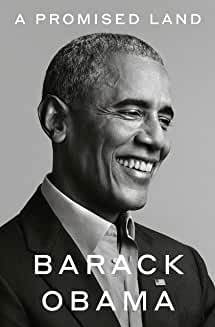 A Promised Land is the Presidential memoir of the 44th President of the United States, Barack Obama. Obama was a positively historic President for the US, as he was the first black President to serve as commander in chief in a country whose history is seething with racial strife. His election was a momentous occasion for millions of Americans, and it was especially important for young people of color growing up in a country that previously felt like such a position was out of their reach. He was and still is an extremely polarizing figure, either adored or demonized depending upon which side of the political divide one falls. In reality, any human individual who has ever sat in the seat in which he sat contains flaws, and he is no different. No President has ever made perfect decisions, just as no other flesh and blood person has ever made perfect decisions. The difference is that the President makes decisions in front of the entire nation and the entire world and will be forever judged by those decisions. And will also have to deal with a whole lot of malarkey flung their way, which should just be ignored, as he deftly demonstrates in this book.
 Ten-year-old Ruby Trick lives in the small seaside village of Limeburn in Devon the United Kingdom. She adores her father, the unfortunate John Trick, an out of work and down on his luck lover of all things cowboy, and practically detests her mother, Alison, a woman we readers can quickly glean is much more complicated than Ruby imagines. A masked assailant begins to terrorize the women of Limeburn and his antics quickly turn deadly. When John takes Ruby along on his “posse” to track down the killer, Ruby finds herself facing potentially deadly consequences for herself and her family.
 I am going to start the same book I planned before, Apples of Stone by Philip Marsh. I saw his brother yesterday at work and verified I would be picking it up soon, so I am really truly committed now. Until next time, happy reading! Hopefully I’ll have more to share next week.
  This is an incredibly different book than the last Hoover novel I read, It Ends With Us. There are some similarities. Again with the odd naming conventions, though I do rather like the name Verity Crawford. There is also a very intense undercurrent of abuse, though in this case it is pretty intense child abuse versus the spousal abuse from the first, so be warned. Otherwise, whereas It Ends With Us is a pretty straightforward plot, this one is twisty and intriguing with more than a few curve balls.
 Audrey Blake is the pen name of not one author, but of two. Authors Regina Sirois and Jaima Fixsen teamed up to write this riveting and intelligent work of historical fiction about a young woman who develops a passion for medicine after being orphaned in the cholera epidemic and growing up in the home of the eccentric doctor who saved her life. This book is a tribute to the real life pioneers in medicine, not only the women who defied the odds to follow careers in a field that barred them on the basis of sex, but to the men who championed the intellects of their female peers, risking damage to their reputations and careers for their principles against sexism.
  This is the first book I’ve read by Colleen Hoover. I picked it up spontaneously. I saw the audiobook on Overdrive and remembered a friend talking about it, so I downloaded it then and there. In order to get a good idea of what Hoover’s books are really like, I don’t believe this is the best one to start with. I don’t mean that in a bad way. It’s just that this book comes from a much deeper, much more personal place for Hoover. In the afterward, she details how she grew up watching her mother suffer the abuses of her father. This novel was, in a way, Hoover’s way of working through the complex web of emotions surrounding her childhood and her relationships with her parents.
  A Librarian and Her Books