The Perks of Being a Wallflower

Cover of Perks of Being a Wallflower

This is a book I heard a lot of buzz about during my Teen Library materials course at Mizzou a few semesters ago.  It is extremely controversial in many respects (as can be expected from most novels geared toward teens), but I believe this book has a lot to offer.  It’s full of references to just about any and every life situation that many teens will experience during their high school years.

Charlie is a freshman in high school.  This arguably the most difficult year in a teen’s life.  He’s struggling with finding a way to fit in, so for the most part he just sits back and watches as life goes on.  He shares his experiences with an unnamed and unknown older individual in the form of letters.  As the letters come and go, we as the reader begin to understand that there is more to Charlie’s story than meets the eye.  He has been through something traumatic, and he’s experienced loss in a way that few people are forced to face at such a young age.  This loss permeates all of his relationships, from those with the members of his family to those of his friends.  We understand that he is both a deeply caring and deeply troubled individual, who seems incapable of being able to attain what he truly wants.  He’s afraid to communicate his inner-most feeling with those who care about him and, in return, is forced to reap the consequences of these actions.

The subject matter of this book is deep.  We see such themes as teenage sexuality, family issues, abuse, sexual identity, teen pregnancy, romantic attachment, friendship, and personal loss among other issues.  A very prevalent issue is mental health.  Charlie’s problems and past have led to a deep and invasive depression that, like many adults, affects his relationships with others.

Overall I thought this was a profound and important book.  It reaches to the very core of our humanity and presents teens with many tools which they can use to shape their understanding of themselves and the world around them.  Many parents rail against authors who introduce teens to such things as drug use, abortion, and even homosexuality.  Whether these parents like it or not, these are things that teenagers are already exposed to and that many of them struggle with.  Why can these parents not see the value in exposing them to these subjects in a way that can help them understand rather than to throw them into each scenario in real life without the necessary tools to face them?

Too often we alienate troubled teens, calling them bad and useless if they struggle with drug use; calling a troubled girl who gets pregnant a whore and writing her off; calling a teen struggling with sexual identity a sinner who’s morally inferior.  None of these are true and, as adults we have an obligation to provide our teens with the necessary education and support to be able to work through his or her own problems in a mature and accepting way rather than hiding behind their fear.   All of these subjects are prevalent in this novel, and the result is powerful.  Overall, great book.  4 stars.
Posted in Young Adult Fiction | Tagged , , , , , , , | 1 Comment

Pray For Silence

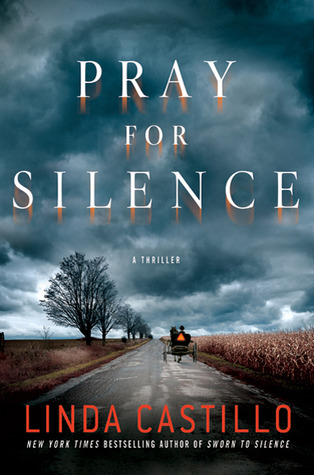
Cover of Pray for Silence by Linda CastilloLet me first preface this review by saying that the number of murder mysteries that I have read number in the singe digits, and the low single digits at that.  And two of those books were by Miss Castillo.  I can hardly call myself an avid reader and expert of murder mysteries, but I’ll do my best.   You might also want to check out my goodreads review of Linda Castillo’s first novel in the Kate Burkholder series, Sworn to Silence.  This review is about a second book in the series, but I seem to think they stand pretty well on their own, and there’s nothing you’ll really have spoiled for you by my reviewing this book on my blog without doing the first.

This is a wildly compelling story that does make you want to keep reading, but it gets bogged down in some details that should have been edited out.  I get really tired of reading about how Kate has trouble dealing with things.  The violence in this book is overwhelming, and it’s not made better by the fact that the author seems to be apologizing for it in her text by having Kate moon over how terrible everything is.  Honestly, I wish some of it would be toned down a bit overall.  We can get the picture without having it nailed into our heads over and over again.  Kate watching one video of a violent barbaric rape of an Amish girl would be enough.  We don’t need to have MANY of them described for us.

I also don’t feel there was any personal growth on the part of any of the characters in either book, the first or the second.  The first book made it seem like catching the killer would lead her closer to atonement and closure over the terrors of her past.  Eh… maybe it will work the second time around.  I bet you anything there are identical struggles in the third book with alcoholism, night terrors and the like.  And not just with Kate.  Tomasetti is also quite the bundle of rapturous sunbeams. If there had just been a smattering of details like this, it wouldn’t have been so bad.  But, like the violence, it is overbearing and eventually starts to annoy, making both of these characters not nearly as compelling as they have the potential of being.

One more thing that irks me – these poor Painter’s Mill Amish people must be cursed.  Either that or each one of them is smeared with serial killer and rapist attraction goo.  It’s perhaps a bit unrealistic to me that this one town can be plagued by so much horror and death at the hands of violent sociopaths.  Then again, anything is possible.

Overall, 3 stars for “Pray for Silence.”  It keeps you interested, but due to serious flaws in characterization and lack of proper editing, it could be much better

Posted in thriller | Tagged , , , , | Leave a comment

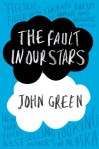
The Fault in Our Stars

I’m proud to make this novel the first of my book reviews.  Though I love a good intricately woven fiction novel geared toward adults, I also love a good (keyword: good) young adult novel.  John Green is by far, in my opinion, the best author out there for young adults.  I say this because he presents a real portrait of the youth of America.  These are not impressively hot chicks who have a thing for bad-boy vampires.  And they are obviously not impressively chiseled bad boy vampires.  These characters are teenagers.  They have acne.  They wear glasses.  They like video games.  And they are all too often not very good at talking to the opposite sex without saying something insanely stupid.

Hazel Grace Lancaster is no exception.  What sets her apart from most other kids her age is that she’s a cancer kid.  She is dying and she knows it.  She’s had a little time bought for her by an experimental new drug (fictional, as Green points out).  She has chubby chipmunk cheeks from the drugs she has to take, and she has to lug around an embarrassing oxygen cart because she would die if she didn’t.  However, when she goes to support group led by one-ball Patrick (he had a testicle removed following his bout with testicular cancer) she still takes the stairs because the elevator is for those kids who are currently on death’s door.  I loved Hazel.  John Green has a way of tackling intense subjects in a way that makes readers feel at ease.  We don’t feel guilty for getting the humor in this novel.  Yes, it’s about a touchy and intensely sad subject, but to a cancer kid that is life.  They still laugh.  They still get teenage crushes.  And they still live their lives until it’s their time to go.  Hopefully they’ll be able to see adulthood before that happens.  I think it’s important for healthy teenagers to get this real-life image of sick kids.  Too often, the sick kid becomes a pariah.  They confuse and scare other kids, because it’s impossible for other kids to know how to react.  For this reason they act in some negative fashion, whether it be complete avoidance, utter contempt or with overzealous pity.

Hazel eventually meets a one-legged teenage God, Augustus Waters.  He lost his leg during a battle with osteocarcoma.  He is cancer-free now, but he still understands what Hazel is grappling with, and he learns to love her even through the ever-present threat that he could lose her at any moment.  Together they embark on a journey to find the truth.  Inspired by the characters in Hazel’s favorite novel, they seek to find out what happens to the family of a cancer kid who’s lost the struggle to go on.  It’s a morbid question, but the reader starts to realize that for Hazel, this is a burning question that is not so much about the character from the book, but about her own future demise.

As usual, John Green’s characters are a bit flawed.  Though I love the snarky, intellectual humor, many of the teens come across as a bit overboard and unrealistic.  They use phrases often not even used by college professors thirty years their senior.  In this case, perhaps it’s not so out there.  They are kids who, for most of their lives, have been unable to do anything physical due to their illnesses, so they read.  They absorb more information than a lot of other kids their age, so I can see how they would have a bit of an intellectual edge.  This, to me, is a minor quibble.  I enjoy the banter, and I wish more teenagers were intellectual prodigies.  I would have a much more positive outlook on our future as a nation.

I don’t want to go much further into the plot, because there’s a lot about this I don’t want to give away.  Ultimately, this is a story about love, friendship and family.  It’s about the fleeting moments in our lives that can define how we will be remembered when we’re nothing but a memory.  And deep down it’s just an amazing story.  Thank you, Mr. Green, for another amazing story.  Five stars from a big fan!

And p.s., Mr. Green – Thanks for finally channeling a female protagonist.  You did a pretty damn good job.

Posted in Young Adult Fiction | Tagged , , , , , | Leave a comment