
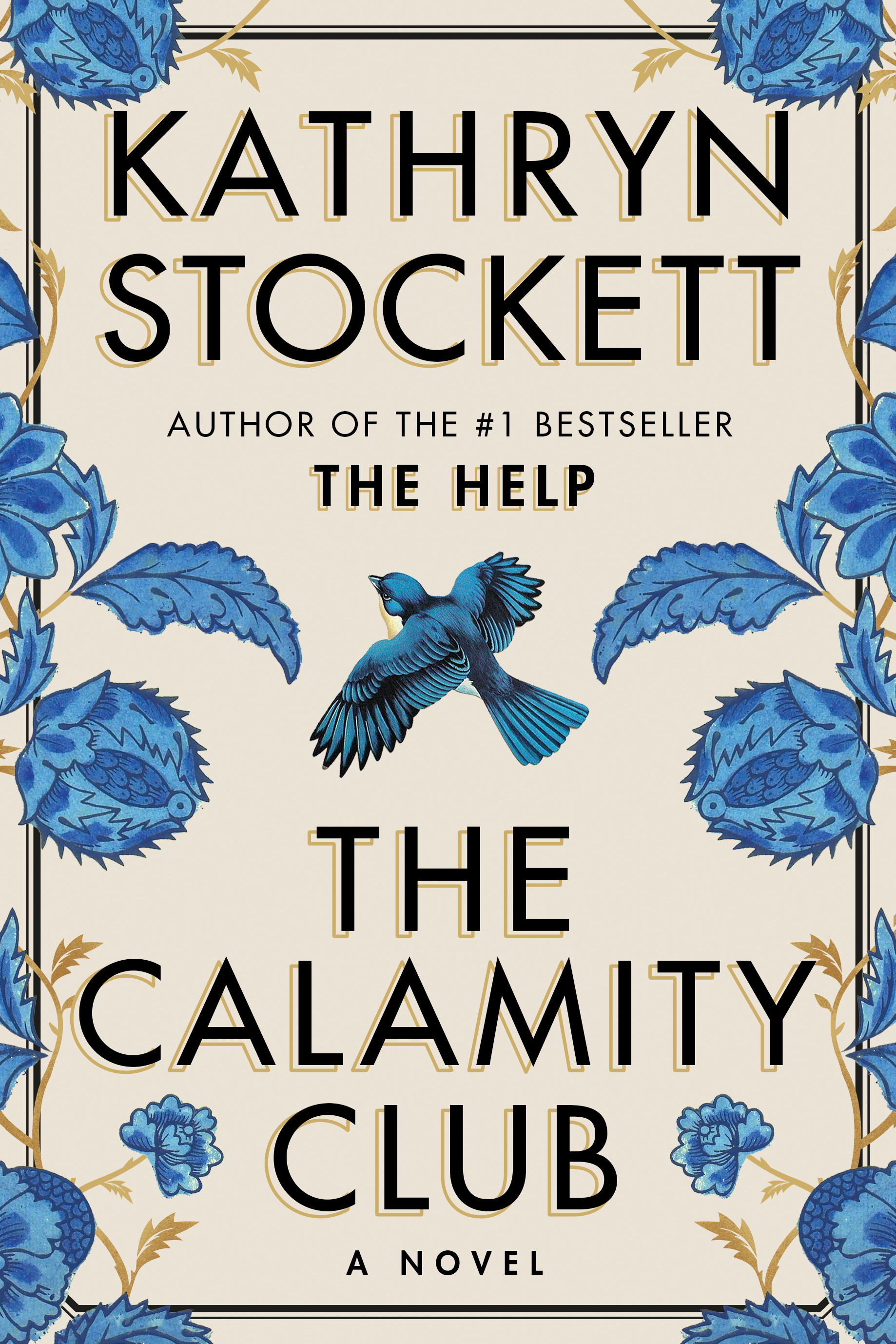
 Imagine my complete elation when I see that Kathryn Stockett has released another novel. Her astounding novel, The Help, was released all the way back in 2009. I guess I should be glad Stockett took so much time to craft this second novel, because it is a marvel of modern literature. Still concerning social justice, The Calamity Club places less emphasis on race relations, though that still definitely plays a part, but focuses more on social class and the societal pressure to adhere to accepted norms.
The novel opens with one of our heroines, Birdie Calhoun, the local spinster of Footley, Mississippi. Birdie is tasked with traveling to visit her sister, Frances, now a socialite who rose above her station by marrying Rory, a wealthy banker and sole heir of the well-respected Tart dynasty. Birdie is thrust into this world of old money and propriety in order to beg her sister and her husband for money, as in the absence of her deceased father, her family back in Footley is rapidly approaching destitution in Depression-era Mississippi.
While visiting Frances, she accompanies her sister to The Orphan, a local home for orphaned girls, where she meets Meg, a fiery and quick-witted girl of 11. After Meg’s mother left home and never returned, she was delivered to the orphanage where she suffers under the cruelty and disdain of the orphanage director, Garnett Pittman. It takes a special kind of skill to craft as vile a shrew as Garnett Pittman, but it takes even greater skill to give such villainy cause and substance. Stockett definitely delivered.
I won’t go into too much plot detail, because discovering where the story goes is one of the real pleasures here. Just when you think you’ve got it all figured out, Stockett shifts the ground entirely. I listened to the audiobook and that’s definitely the way to experience The Calamity Club. The narrators bring each character vividly to life. Sometimes it feels more like a radio drama than a single reader narration. Even in excess of 28 hours, reading never felt like a chore. Kathryn Stockett’s sheer strength lies in character development. She writes people who feel authentic and memorable, and by the end I was deeply invested in their lives and their various fates. Stockett does an amazing job featuring characters from different walks of life, each with their own voice and perspective. By the time you come to the end of this book, you find yourself challenging your own preconceived notions and internal prejudices.
Historically, this book is set during Prohibition. It tackles some very difficult subjects, like alcoholism, abandonment, discrimination in many different forms, abuse, suicide, and the persecution of women in Southern society who were deemed “feeble-minded” or “loose of morals.” The novel deals intimately with the ways so-called “polite society” dealt with these women, and challenges ideas that permeate even our modern society in regard to gender roles. More than anything, however, this novel explores how the bonds of friendship and trust among women can insulate and protect them from these outside evils. It’s on the strength of these brave and tenacious women that modern women like myself were carried into a more free and independent future. War isn’t always fought on battlefields by seasoned soldiers. It’s sometimes fought behind closed doors, at ballot boxes, and on the streets. This novel is a testament to how far many people, especially women, had to go in order to survive a life lacking in privilege.
At times I laughed out loud at the wit and the charm of Stockett’s writing. Additionally, this was a fantastic book club selection (if your club won’t balk at the length) as there’s so much fodder for discussion. This is a unique and beautiful story, and I can’t recommend it enough to other lovers of historical fiction. Bravo, Ms. Stockett.
Published May 5, 2026, by Spiegel and Grau. ASIN B0FTB8MDVN. Runtime 28 hrs, 44 mins. Narrated by Jenna Lamia and January LaVoy.


Hm… I’m still unsure. I’ve read lots of conflicting opinions of this one, so I haven’t decided if I want to read it or not (aside from the fact that it looks very long). It is on my “maybe” pile still.