WWW Wednesday – Oct 21, 2020

Here’s my second edition of this weekly series of posts from Sam at Taking on a World of Words. Check out her blog if you haven’t, as she shares some fabulous content. In this series, each blogger answers the 3 W’s every Wednesday:

What are you currently reading?
What did you recently finish reading?
What do you think you’ll read next?

What am I currently reading?

In hardback, I’m reading The Women of the Copper Country by Mary Doria Russell. Russell is one of those rare authors whose every work I have devoured with absolute glee. She mostly writes historical fiction, but her bestselling novel, The Sparrow, is one of the greatest science fiction novels I’ve ever read. Every detail of her work is meticulously researched, and I highly recommend each one. This one follows a young woman who takes on a powerful mining company in the early 1900’s in the town of Calumet, Michigan. Russell draws on research into her own family history with this work, which lends a very personal touch to the story.

Writer Mary Doria Russell’s newest work of historical fiction is a tribute to the men and women of the Labor Movement in the early 20th Century.

Evidently I’m feeling historical fiction at the moment, because my current audio read is the Holocaust novel The Tattooist of Auschwitz by Heather Morris. I probably don’t need to tell you this is a difficult subject matter, and I’ll have a lot of thoughts about this book in a couple of days, as I’m more than 75% of the way through the audio. The performance is quite well done by talented actor, Richard Armitage, who flawlessly shifts from the dozens of differing voices and dialects of prisoners at the Auschwitz and Birkenau camps during the period from 1942 to 1945. This is a beautiful story based on the real-life account of Lali Sokolov (Lale in the book), a Slovakian Jew who acts as the camp’s Tätowierer during his tenure at the camp. Ultimately, it’s a love story about finding love and hope during the bleakest of times.

The Tattooist of Auschwitz is the 2018 debut novel by Heather Morris.

What did I just finish reading?

I recently finished Becoming by Michelle Obama and The Dutch House by Anne Patchett. You can link to my reviews of each to see my thoughts by clicking on each. Both I highly recommend.

What do I think I’ll read next?

On audio, I’ll be listening to the November selection for my book club, Cold Storage by David Koepp. David Koepp is a screenwriter who worked on Jurassic Park, so I would imagine the man knows a little something about suspense. A little apprehensive about this one in the current climate considering it is a pandemic thriller, but maybe this is, in fact, the right time to read it. Check back with me in a few days to see how good an idea this one is!

Cold Storage is the debut novel for veteran screenwriter, David Koepp.

In paperback, I plan on picking back up a book I started and failed to finish due to circumstances unrelated to the quality of the book. It is The Hypnotist’s Love Story by Liane Moriarty. I always find Moriarty’s books a delight and thought this to be a good buffer while tackling something a bit more panic-inducing on audio.

Liane Moriarty’s novels are infused with wit, charm, and a whole lot of intrigue.

So, there is me! I’d love to hear what you are reading, have read, and want to read soon. I’ll be back soon with my thoughts on my current selections.

Until we meet again, Happy Reading!

Posted in General fiction, Historical Fiction, mystery, thriller, Uncategorized | Tagged , , , , | 9 Comments

Becoming

There is power in allowing yourself to be known and heard, in owning your unique story, in using your authentic voice. And there’s grace in being willing to know and hear others.

– Michelle Obama, Becoming

I first picked up Becoming over a year ago. For various reasons, I kept finding myself distracted by other things. Something came available at the library, I had a book club selection to get through, and, if I’m being honest with myself, it was just depressing to read. Not because of the tone of the book, but because of the current tone of America. Cracking open Becoming brought me back to a nostalgic time when my Country had the cool, measured leadership of a caring family. A family that believed all American citizens were worthy of a voice. A family that read books, celebrated individuality, and understood the gravity of the position they held in American society. A family that understood the sheer power in words, the power to cut deeply and the power to heal. That’s all I’m going to say, because I don’t want to make this about the current occupant of the White House. That would be a slap in the face to the beautiful piece of literature that Michelle Obama has created.

Becoming is broken into 3 parts. The first, Becoming Me, centers on her growth as a person before meeting Barack. It follows her from childhood in the South side of Chicago on to Princeton as she learns to define herself. Readers are immersed in intimate details of how it felt to always feel out of place, never really fitting in completely in any world in which she found herself. She lays bear insecurities that any of us could understand, as we all have them. I grew to love Michelle’s family and friends, and I felt the heartbreak when she encountered loss, often way too soon. It’s easy to see how she came to be so resilient in heart and mind.

The second part, titled Becoming Us, shows her journey with Barack prior to his tenure as President. This section resonates so completely with many working women. Michelle is brutally honest about her struggle to remain true to herself while finding her place as a wife and mother, often finding her own desires and choices swallowed by her husband’s rapid transitions in his career. She vents her frustrations about feeling alone and apprehensive about Barack’s potential entrance into the political sphere, something for which Michelle had nothing but disdain. All the while, her narrative is infused with nothing but admiration for his intellect and his thirst to do good in the world no matter what it costs him. Theirs is a very authentic and inspiring love story. Nothing is perfect, but it’s still right. And much of marriage is about perseverance, never losing sight of the things you originally loved about a person no matter how much difficulty you face later on.

The third section was, I felt, often the more tiresome section. In Becoming More there is a lot of campaigning and details about life in the White House, navigating an environment that is simultaneously steeped in privilege and suffocation. Many of the events discussed I remember quite vividly, and it was fascinating to get a look inside. There are a lot of beautiful, touching moments in this section which saves it from the occasional monotony of the politics. It’s also the saddest section, because as the book drew to a close I knew what was to come. Despite knowing how the story ends, I couldn’t shake the feeling of dread. But Michelle has a way of infusing hope into even the darkest of times.

Every section of this memoir is made better by the lyricism of Obama’s prose and the authenticity of her voice. She’s an amazing human who approaches life with a humble appreciation for what it means simply to exist. She never wanted power or influence, but she managed to do wonderful things upon obtaining both. Overall, this book is inspiring and infinitely quotable. It’s definitely one to keep and cherish, a book to pull off the shelf when life feels a little too weighty.

I want to end this on a very happy note. I found myself worried about Michelle’s beloved garden, so I did a little research to find out how completely the Obama’s legacy was wiped out by the current administration. *I’m happy to report that the garden still stands. The garden is not maintained by the Trump family, but Michelle arranged for private funding and maintenance by the National Park Service before leaving the White House. I choose to see this as a symbol that there is still hope for a brighter tomorrow. Perhaps I should end it with Obama’s own words, as she says it much more eloquently than I ever could.

Life was teaching me that progress and change happen slowly. Not in two years, four years, or even a lifetime. We were planting seeds of change, the fruit of which we might never see. We had to be patient.

– Michelle Obama

5 Stars for this stunning memoir.

*Friedman, Sarah. “Here’s How the Garden Michelle Obama Started is Faring in Melania Trump’s Hands.” Bustle. Sept. 15, 2018.

Tagged , , , , | 3 Comments

The Dutch House

There are a few times in life when you leap up and the past that you’d been standing on falls away behind you, and the future you mean to land on is not yet in place, and for a moment you’re suspended knowing nothing and no one, not even yourself.

–Anne Patchett

Perhaps, if you’re like me, you’ve had the experience of going to a winery. Compared to the rest of the world, in your mind anyway, you have a bit of an unsophisticated palate. You know you like things that taste pleasant, which pretty much translates to sweet regardless of price tag, variety of grape, or tapestry of complicated flavors involved. But here you are, and you’re going to see it through. So you order something that looks nice. The glass is set in front of you with little fanfare and, on the surface, it looks like any other glass of wine. You take a slow sip at first. Honestly, it’s unremarkable to your tastebuds. There’s nothing overtly pleasant about this wine, but it was expensive and it’s wine, so you forge on. You keep sipping, and with each sip you notice something you didn’t notice before. Flavors that whisper on your tongue and a new warmth that spreads through your body, lightening your mood and drawing your mind to introspection. It’s not until you tip back the very last dregs of the glass that the thought occurs, “this is some damn good wine.”

Why am I rambling about wine, you ask? Because this book is that for me. It’s not a pleasant wine. There were times, honestly, I wondered why, exactly, I was reading what I was reading. But the true genius, I believe, of the writing of Anne Patchett is in the subtle creeping of her narrative. This novel is an incredibly intimate character study. I’ve seen some reviews that dub this novel as “a modern fairytale.” I get the reference, certainly. Open scene on a glorious 1920’s Dutch mansion in Philadelphia, a relic complete with the ghostly images of the VanHoebeek family whose portraits bear witness to the tragic dramas of our hero and heroine, Danny and Maeve Conroy. Upon the disappearance of their mother and the untimely demise of their father, Danny and Maeve are cast out by the evil stepmother. In a matter of hours, they are cast from the elegant gilded confines of their mansion onto the street to begin anew. Ok, I’m overdramatizing a bit. They do have one thing left from their father. He left an education trust to be split between Danny and the step-mother’s two daughters.

Much to the delight of Danny’s older sister, Maeve, it’s not required for the trust to be used in equal parts by all three, which means Danny can do as much school as is humanly possible in a bid to potentially empty the trust before the daughters of their nemesis can even think of touching it. It doesn’t matter that Danny has absolutely no desire to go to med school, he WILL be a doctor, at least on paper, for the sole purpose of sticking it to their father’s widow in a slow-burning revenge. What the reader is left with is a comically sad realism. In expert fashion that only a writer with Patchett’s skill can exhibit, we aren’t told what to think about all this. We are shown little by little and layer by layer until everything falls into place. And though this is a slow burning narrative, the effortless flow of her prose ensures that we readers don’t ever really get bored. We don’t grow to love these characters in the same way readers usually love characters, but we do love them. As with members of our own families, we see both sides of them, their affable and admirable side juxtaposed against their apathy and low emotional maturity. We understand them and, consequently, feel for them in a way we otherwise wouldn’t in a less effective narrative. In my case, this is accentuated by the fact that I enjoyed this one on audio, and the first person narration is performed by the incomparable Tom Hanks, whose depiction of Danny was both endearing and authentic.

I think the true power of this story is it causes us to examine our own relationships and resentments. It’s about a reconciliation of the past and present, casting aside the demons that followed us from the past so as to forever alter the course of our lives. It’s about letting go and moving on. In the long run, a house is just a house. A painting is just a painting. The meaning we ascribe to everything that touches us is of our own making. Our resentments and anguish will define us, but we are in control of how those things define us. As with the glass of wine and the good book, will we walk out the other side appreciating the things we gained more than we regret the things that didn’t go our way?

Overall, I give 4 stars to this ultimately moving and lyrical novel.

Pub. date: September 24, 2019 by HarperAudio; ISBN: 9780062963703; Runtime: 9 hrs, 53 mins

Posted in General fiction | Tagged , , , , | 5 Comments

WWW Wednesday – October 7, 2020

I love the idea of sharing reading experiences with fellow writers and bloggers, so I’m participating in the challenge from Sam @ Taking on a World of Words.

Along with other bloggers, I’ll answer the three questions and share my blog and visit others to see what they are also enjoying. Yes, I’m aware I’m a day late, but shhh…..

IMG_1384-0

The Three Ws are:

What are you currently reading?
What did you recently finish reading?
What do you think you’ll read next?

Currently reading: I’m currently reading Becoming by Michelle Obama in hardback and The Dutch House by Anne Patchett on audio. I’ve been reading Obama’s book for quite some time. #1 my time for actually sitting and reading has been woefully rare between the pressures of work, kids, and the multitude of distractions I seem to find myself with of late. I’m also savoring it. I revel in her inspiring and effortless prose and I’ll be sad when I’m finished. The Dutch House is, so far, a very lyrical book. It’s narrated by the incomparable Tom Hanks. It’s a very intimate narration. A slow burner that I feel is probably building to a satisfying conclusion. Check back with my blog in a few days to see if I still feel this way. 🙂

Recently finished: I recently finished Erotic Stories for Punjabi Widows by Balli Kaur Jaswal. I absolutely loved it, and for more detailed thoughts, please see my entry from October 7 for a full review.

Reading next: I will next be picking up Mary Doria Russell’s newest work, The Women of the Copper Country. I’ve had the pleasure of reading every novel of Ms. Russell’s, and I’m really looking forward to diving in to this one, as her historical fiction is typically quite spectacular.

Thanks for stopping by to visit me, and feel free to share your reads in the comments and follow me if you’d like to see what I think about my current reads!

Happy Reading,

Amy

Posted in Uncategorized | Tagged , , , , | 5 Comments

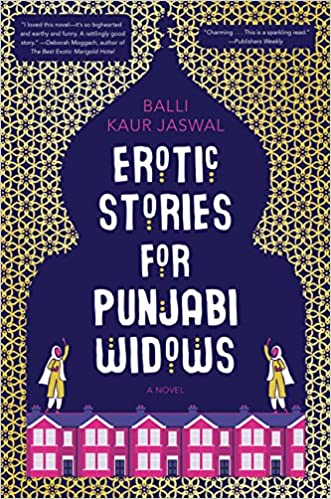
Erotic Stories for Punjabi Widows

With this book, Balli Kaur Jaswal has created a delightful, charming, and ultimately moving novel about female identity. Perhaps I should have expected it based upon the title alone, but admittedly I didn’t anticipate just exactly HOW erotic this little tale would be. Get your water spritzers ready, because this is one spicy read. Don’t get me wrong, there’s absolutely nothing wrong with that. The eroticism in this book is done quite well, and it effectively lends itself toward the topic of female empowerment.

Nikki is a woman stuck between two vastly different worlds: the more traditional world of the Sikh community and the busy modern world of London. Nikki, at age 22, finds herself at odds with just about everyone. She’s a disappointment to her family after she drops out of law school with no clear plan in mind, and she’s a disappointment to the Sikh community as a woman with no desire to marry the first eligible Sikh man to come along, something her more traditional sister, Mindi, is actively seeking.

Nikki struggles with these issues of personal identity and family identity while she struggles to make ends meet by working at a depressing little pub in London located just below her meager flat. Fearing for the longevity of her job at this struggling pub, she takes a job teaching a group of Punjabi widows in London’s Southall community what she believes will be creative writing. What greets her are a group of mostly illiterate widows who just want to learn how to read and write in English. The class takes a completely different turn, however, when the widows find a collection of erotic stories in Nikki’s bag. They begin to pass the time in class by narrating and recording explicit tales of lust to one another. And, with that, I’ll never see vegetables the same way again.

As amusing as this sounds on the surface, this is a vitally important narrative. As one of the widows proclaims, “Nobody eavesdrops on old lady chatter. To them it’s all one buzzing noise.” These are women who, in traditional Punjabi society, have been written off as tired, old and sexless. Women, in general, are expected to be sexless. Sex is for the purpose of procreation. Lust and desire are taboo subjects relegated to the bedroom of a married couple, if they exist at all within a traditional marriage. What Nikki finds through her relationships with these women is a surprising kinship. Additionally, she discovers that her “traditional” Punjabi parents are much more modern than she’d ever considered, and that most of the women in her class would never have been given the kinds of opportunities or freedoms she and her sister were afforded. Over the course of the novel Nikki and the widows find their voices, both individually and collectively. They bridge a divide between two worlds seemingly opposed. Through their relationships with one another they are able to come to terms with and heal relationships with family and friends outside of their circle. Additionally, as the women in the Sikh community finally begin to speak out, we readers begin to see the healing power honesty and communication can have within a toxic culture bent on silencing women. Perhaps not everyone will be convinced immediately, but we have to start somewhere.

To accentuate this feminist undercurrent, Balli Kaur Jaswal spices things up a bit further by adding a bit of intrigue. Nikki and the widows find themselves embroiled in the mysteries surrounding the suspicious deaths of three young Punjabi women. They are also forced into secrecy of their illicit meetings due to the presence of the Brotherhood, a group of young Punjabi thugs who lurk about Southall threatening and intimidating women into remaining proper and submissive. Adding this detail was, at times, unnecessary, but it also accentuated exactly how dangerous subversiveness can be within traditional Sikh culture. It also helped to highlight a hidden truth about the unlikeliness of justice for young women whose lives are cut short because they dare to speak out against the powerful rulers in a toxic patriarchal society. Sadly, this part is not fiction.

When you piece all the details of this book together, it’s not difficult to see the link between women gaining the strength to talk about sex and women gaining the strength to talk about more complex issues surrounding women’s rights. A woman deserves a voice in the bedroom and a voice in the board room. Considering such, I’m surprised I don’t see more reviewers mention how vital Kulwinder’s place is in this narrative. Kulwinder plays two roles. She’s a respected member of the community who hires Nikki to teach the class, and she’s also the grieving mother of one of the dead girls. She’s juxtaposed with Nikki in an interesting way. While Nikki is a modern girl trying to find her place in Punjabi culture without losing her voice, Kulwinder is a more traditional woman attempting to gain a more powerful voice for Punjabi women within the confines of traditional culture while not sacrificing her respectability. It’s an admirable goal, but in the beginning she lacks both the courage and the tools with which to make her demands in a way that’s effective. While she initially has nothing but disdain for Nikki, Nikki is exactly the influence she needs to reach her eventual goals. And the reader can’t deny that Kulwinder’s initial harshness toward Nikki is due, in part, to the young girl’s similarities to Kulwinder’s daughter for whom she is still grieving.

On the surface this is a fun light-hearted read that’s more than a little bit raunchy. A deeper analysis shows this as an important book about female identity. It’s a testament to the fact that a woman is never too young or old to find her voice. Additionally, it provided a critique of many of the antiquated ideas of gender roles in the Sikh community while simultaneously celebrating the positive aspects of the community as a whole. Overall, I give this one 4 stars.

Posted in General fiction, Uncategorized | Tagged , , , , | 9 Comments

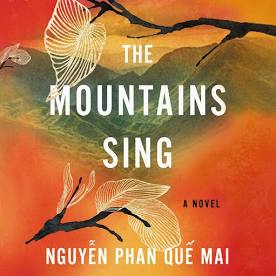
The Mountains Sing

Human lives were short and fragile. Time and illnesses consumed us, like flames burning away these pieces of wood. But it didn’t matter how long or short we lived. It mattered more how much light we were able to shed on those we loved and how many people we touched with our compassion.

– Nguyễn Phan Quế Mai

A good book tells a story that keeps your attention and brings a smile to your face or a tear to your eye. But you find yourself walking away from a good book without giving it much more than a passing thought. It was a leaf on the wind whose beauty touched you for a moment and then faded from your memory as quickly as it came. But a great book? A great book seeps into your brain and imprints something. You don’t just feel emotion, you become deeply entrenched in that emotion. You aren’t just reading about a person and their experiences. You are living those experiences along side them, and you feel intimately their terror, their loss, and their triumph. You see with their eyes and feel with their skin in a truly visceral way. For a brief moment you can’t separate yourself from this person who only exists on a page but whose existence has become so vital to your own.

Nguyễn Phan Quế Mai has created such a book. It’s greatness lies predominantly in a lyricism that immediately pulls the reader in and and won’t release them. Don’t get me wrong, I had to put this book down on some occasions. The events in this novel are horrifying. This is a family saga that spans The Vietnamese Land Reform from the years following WWII through the Vietnam War to the present. At one point I didn’t know if I could take anymore death, torture or starvation. But I see that as a testament to the power of this book. It cuts deep, and it should. What use is showing the horror of war if you don’t give an accurate glimpse into the truth of it? There’s no truth in delicacy. There’s only artifice, and artifice is a slap in the face to people who endured pain and suffering in order to bring a better tomorrow.

One thing Mai does expertly is crafting the perfect character. I deeply understood the love Guava’s Grandma had for her children and her children’s children. I felt her pain when she had to make sacrifices, even going so far as to leave them behind in the care of others to ensure they survived. I could imagine myself in that position, walking away from my children as my heart broke knowing it was the only choice I had. The terror of not knowing if I’d ever see them again. And I felt deeply her intense resolve to return to them and to provide the life that all children deserve, no matter how old they may grow or how far away they may be, both literally and figuratively. I could only aspire to be as brave and selfless in my own actions as this astounding woman. Though it was difficult to understand, I grew to know her heart enough to be able to accept and admire her capacity for forgiveness. Her faith was unshakable. Even at her darkest moments, she was still able to say, “as long as I have my voice, I am still alive.”

I realized that war was monstrous. If it didn’t kill those it touched, it took away a piece of their souls, so they could never be whole again. – Nguyễn Phan Quế Mai

Another impressive thing about this novel is that it doesn’t present a good or a bad when it comes to war. Beneath the surface is pain and desperation, good people and bad people making the only choices they feel they have to make. We all have the capacity for good and evil, and desperate times force us over a precipice. Which way we go depends upon whether we have the strength to do good or the will to do harm. Whether we are willing to fight to regain our own happiness or whether we seek to steal the happiness of others through cowardice.

This book is so infinitely beautiful and worthwhile despite the sheer heft of the weight it places on your soul. It’s one I will never forget.

5 stars.

Posted in General fiction, Historical Fiction, Uncategorized | Tagged , , , | 7 Comments

The Book Woman of Troublesome Creek

One of the things I value most about being a part of a reading group is that I’m exposed to books that I otherwise may have never stumbled upon. This next selection is one of those, so a big thank you to the member who chose this book as our September discussion selection. The Book Woman of Troublesome Creek is a fascinating piece of historical fiction. Richardson has crafted at once a nostalgic and searing look at life in the Kentucky hills in the 1930’s in the latter part of the Great Depression. Kentucky is presented as thoroughly and as bravely as are the other characters in this book. She’s cruel, twisted, and astonishingly beautiful. The power she wielded against the fragile inhabitants that occupied her hills was both awe inspiring and frightening. One moment draining the life from the hill people through starvation and sickness only to cradle them to her bosom the next with a whisper of comfort. Sleep, child. The new day dawns soon if you can make it through the night.

I applaud the authenticity with which Richardson presents every fine-tuned detail of this story. Not that she didn’t take creative license, as she changed certain aspects of the historical record to suit the narrative. In the author’s note she points out these edits and pays homage to the real individuals whose lives in the mid-to-late 20th century were affected by the true events which inspired this book. One won’t get very far before giving in to the compulsion to set the book down for a bit to google “the blue people of Kentucky.” Your first instinct is to say that sounds like a big ole’ load of Kentucky manure. But you’re wrong, because the blue people were as real as you and I. Though the name Fugate was changed to Carter and a new heroine was presented, their story played out much the same way. They experienced the same vilification by the townsfolk and encountered an unimaginable amount of prejudice simply because of the color of their skin. It’s no surprise that one of the few people in this story to see clear to Cussy Mary’s heart is her fellow pack horse librarian, Queenie. Queenie is also vilified for her blackness, but she’s one of the only characters with the strength of character to seek friendship with someone unlike herself. Queenie was undoubtedly one of my favorite characters in a book teeming with richness and authenticity. She’s second only to Junia, whose ability to judge character is purely unrivaled. There wasn’t one superfluous individual among the pages of this book, even those that made me want to scream and slap them about. Lord amighty, there were plenty of those. (Looking at you, Harriett, you mean ole’ cow.)

Ok… sidenote about Harriett. As horrid as she was, Cussy Mary saw the value of education for all, and we get a glimpse of this in one of her interactions with Harriett. Sure, we realize that Harriett will probably always be a wretched beast of a woman, but we do feel a twinge of softness for her when Cussy discloses, “I loved the way Harriett loved her books. It changed her into something different, better.” This is, in a way, a foreshadowing of the future hope. That books and knowledge were the antidote for the ignorance that was the true plague of the hill folk. Though many of them detested her for reasons beyond her control, Cussy Mary was one of those hard working women and men who risked their safety and their comfort to bring knowledge to the people who were desperate and starving. She fought for them. She loved them fiercely despite their faults. She believed in a better tomorrow. And through her and the other librarians of the Works Progress Administration’s Packhorse librarian project, they’d find their hope and their will to live in the pages of books. Some would successfully navigate the starvation and desolation to live another day. Some would not. Also, I’m pretty sure I’ll never be able to hear the name Peter Pan without shedding a tear. “All children, except one, grow up.”

Plenty of children died in the hills of Kentucky with a gnawing hunger that burned in their bellies. That was one of the hardest aspects of this book. But if we didn’t see the harshness of their reality, we would never fully grasp the sheer resilience of these amazing people. Not just Cussy Mary. Jackson Lovett. R.C. Cole. Miss Loretta. Angeline. Elijah. Queenie. Oren Taft. One of the most beautiful moments in this book came during Cussy’s conversation with Mr. Taft, a simple hill man from one of the poorest communities on the mountain who walked miles to meet the book woman every Friday so he could bring knowledge to his people. He tells her that she reminds him of Picasso’s blue lady and asserts that God chose for her the color he’d reserved for the sky, one of his most beautiful creations. It’s a simple but wonderful connection, and it’s precisely what Cussy Mary needed to hear. Through Taft and these others we see the power of caring. Simple actions and words can hurt or they can save. We merely have to ask ourselves in life if we want to be one of the weak, mindless fools or if we want to be one of the brave souls that risk our own comfort for the sake of others. Only then does the world truly become a better place. History is full of these people but most don’t make it into the history books. However, we are where we are today thanks to the hard work and the perseverance of these fine people. And Kim Michele Richardson has done a remarkable job of paying homage to them.

5 stars for this richly beautiful novel.

Posted in Historical Fiction | Tagged , , , , | Leave a comment

Chasing Fireflies

Every now and then you come across a book in which, despite its possible flaws, you can find nothing but beauty. Chasing Fireflies is one such book. First, before getting into anything else, I want to talk about metaphor.  If an extended metaphor is done well, deep within you it’s thoroughly understood without the author having to completely spell it out for you. Within Chasing Fireflies we find several beautiful and complex metaphors that are woven within the story to make an intricate tapestry. Firstly, the title. The title winds up being both a literal and a metaphorical interpretation. We see our characters bonding and healing old wounds by participating in this age old southern tradition. It’s expertly crafted, and it’s not until the very end that the reader understands the vital importance of the chase, the discovery, and the capturing of enlightenment. We see how the firefly blinks, intermittently pulling you closer, illuminating for a brief moment before succumbing to darkness again. Briefly you fear that you’re again lost in darkness, losing hope, only to see once again the glow of the thing that eludes you. It’s that hope that keeps you chasing when all else seems swallowed by darkness.  Martin didn’t have to tell me this, but I knew it. I felt it.

Now here’s where I’ll talk about one way in which this book is an odd choice for me. Martin is often considered as a Christian fiction writer. However, I wouldn’t classify this book as Christian fiction though others may disagree. Sure, it’s fairly sentimental, has some various mentions of the Bible and faith, and there’s no overtly inappropriate content that would make a good protestant woman fetch her smelling salts. But it’s not preachy or over the top. Now I would vehemently disagree with Unc that the firefly’s butt blinks because of God’s divine intervention. I’m on team science. But I also appreciate that there are people in this world who hold to a faith that propels them. They need that. They crave it. Honestly, I think we all have those things, but they take completely different forms.  Unc is one of the most complex, quirky, and lovable characters I’ve ever read, despite the fact that I don’t share his ideas about the universe and all its creations. But I admire his integrity and his ability to think rationally and honorably in the face of severe obstacle. I also absolutely love his little words of wisdom, or “Willyisms.” One way Unc and I do agree is in seeing the beauty of the natural world as a reflection of our character. Unc treasures the land that his father treasured, and he detests seeing the way his brother rolls over it for the sake of greed without returning what he took. I wish more self-professed Christians were like Unc instead of like Jack. We wouldn’t be where we are today.

Back to metaphor, I’m not a chess player, but I know enough about it to understand that sometimes you can’t just play the aggressive game. You have to play the long game. You have to give a little and take a bit of a beating, but you can’t lose sight of the end. That one final move that will decide the whole thing.  Now there will probably be people standing over your shoulder wondering what the hell you’re doing. They’ll think you’re useless. They’ll think you’re stupid. They’ll jump ship and root for the other guy. But you know what they don’t. And you’re saving it for the right moment. And when you play that final move, everything will change. At the same time, you’ll lose a lot to get there. Is it worth it? How much of the army on your board will be left after that final move? How will that have changed you?

I’m going to avoid saying much more about this book, because it’s one that should be experienced.  I was caught off guard by some details, and I love that, because I hate it when I can see the end coming even if it makes me feel good that I figured it out. Ultimately this is a book about identity, family, and finding your voice. It’s ultimately a bit unbelievable, but that’s ok.

Sometimes it’s ok for something to just feel right.

4.5 Stars

Posted in Christian Fiction, General fiction, Uncategorized | Tagged , , | Leave a comment

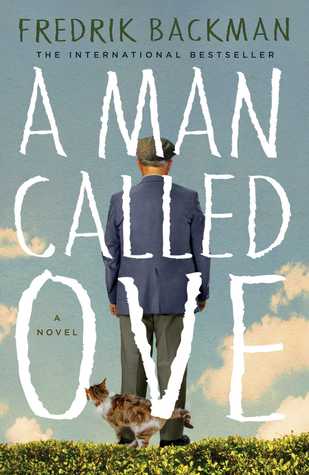
A Man Called Ove

A Man Called Ove A Man Called Ove is a spectacular novel. It comes from a Swedish author named Fredrik Backman. It is effortlessly brilliant.  It’s at once hilarious, wise, and heartbreaking.

The man called Ove is a grumpy curmudgeon who detests the changes that come with so-called modernization and progress.  He’s a hard worker who doesn’t much care for art or books or technology.  But give him a hammer and a 2×4 and he can build you a house, by God, and every man who’s worth a damn should be able to accomplish the same!  As the novel progresses, we see alternating sections that delve into Ove’s present and Ove’s past.  Each chapter begins with either “the man called Ove” or “the man who was Ove.”  I found this to be a brilliant device that easily allowed me to transition between the present narrative and the flashbacks. This is a slowly developing novel that perfectly develops the character of Ove at just the right pace. We get little tidbits of information at a time, allowing us to come to know Ove as we do a person who winds up becoming a close friend. At first we keep them at arm’s length, only knowing those aspects of their person that exist on the surface. As time passes we peel away the layers to find depth and beauty that most people will never see.

The most important thing to know about Ove is that it’s time for him to die.  He had two things to live for – his job and the love of his life. His love for his wife is described beautifully in the book. Ove is a man who sees the world in black and white, but his wife, Sonja, was pure color. She was the only color he needed in life. I am paraphrasing, here, as I don’t remember the exact quote, but the language was as beautiful as the sentiment.  His two purposes in life are gone, and Ove wants nothing more than to reunite with his beloved Sonja, so he will be going to join her. This novel somewhat comically depicts how his plans to off himself are continually thwarted by dimwitted neighbors, a mangy stray cat, and a host of other rather quirky characters. I laughed out loud numerous times while reading this book (I recommend the listen, because the narrator, George Newbern, is superb) and I also did quite a bit of weeping. I’m sure it’s a strange sight to see the driver in the car next to you dissolving into a puddle of tears. I apologize to any individuals who may now be worried about the emotional stability of a stranger, and I assure you from afar that I am fine. In fact, I am a much richer person for having grown to know Ove. I don’t want to discuss this book in too much detail for fear of spoiling it for prospective readers, so I’ll stop here. In closing, I will just say that this book needs to be read, and I hope you enjoy it as much as I did!

5 Emphatic stars!!!

Posted in General fiction, Uncategorized | Tagged , , , | 4 Comments

The Woman at the Light

This fantastic historical novel predominantly takes place in 19th Century Key West.  As a Cover art for Woman at the Lightpiece of historical fiction, it is a celebration of the female lighthouse keepers of this era.  It revolves around the character of Emily Lowry, the wife of a lighthouse keeper who finds herself widowed after the mysterious disappearance of her husband.  Rather than moving back to her original home of Key West, Emily chooses to stay with her three children at Wreckers’ Cay to tend the lighthouse by herself.  This sets her on a course that dramatically changes the rest of her life.

This novel is a story of perseverance, loss and love.  I applaud Brady for creating a female character who is possessed of a rare kind of strength and complexity.  At times I thought some of the events in the latter part of the novel bordered on convenient and slightly unrealistic, as if they were designed specifically to make the ending as happy as possible, but I have to admit I really have no problem with a happy ending.  And I don’t mind having to suspend belief in order to get one every now and then.  I will say that I wish I could stumble upon this financial good luck fairy that Emily finds, because he was really quite generous.

Overall, I’m quite glad that my book club won this title from an online book club site, because it’s a book I probably would have never picked up on my own.  But it was very engaging, educational and an all-around wonderful read.  4 stars.

Posted in Historical Fiction | Tagged , , , , | 3 Comments