In the Dream House by Carmen Maria Machado – Book Review

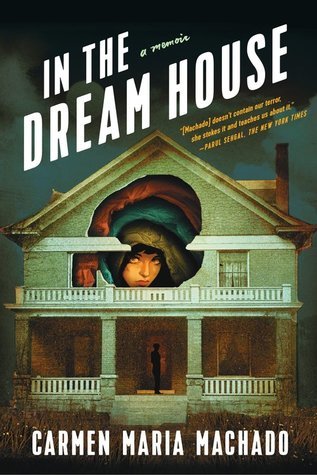
I feel like this is going to be a difficult review for me. On one hand, I’m not sure what to say about this book. On the other, I don’t think I can adequately review such a deeply personal subject without having truly experienced such a thing myself. As with any review, I struggle with whether or not my perception mirrors that of people infinitely smarter than me. I rarely read other reviews of books I’ve just finished before writing my own, because I want my words to be authentic. I don’t want to be swayed into impressions that aren’t really my own, but this also causes me to feel a bit of anxiety over whether or not I sound like I know what I’m talking about. I wonder if other reviewers have such self confidence issues regarding literary interpretation. I digress. I do know this book has received a wide amount of praise. It currently averages a 4.52 out of 5 stars from more than 30,000 ratings on Goodreads, and it’s easy to understand why. Machado has a way of telling a story that’s unlike any other. The way this book unfolds is perfect for a memoir, as it reminds me of the psychological nature of memory.

The book is an extremely intimate look at an abusive same-sex relationship with an unnamed woman. Machado uses a series of different narrative styles and introduces different literary tropes to tell her story, which contributes to a disjointed feel that I’ll circle back around to in a bit. She also routinely switches her point of view, sometimes talking directly to herself in the past by referencing a “you,” and sometimes referring to herself in the first person by referring to the much more seasoned “I.” This is a powerful tool in this present case (but something I would usually detest) only because it makes a remarkable point about what abusive relationships do to us. Can anyone navigate the hell of such a relationship and come out the other side as the same person? Probably not, and we’ll forever be caught in a conversational loop with this former version of ourselves, the one we see as naive and hopeless, as we try unsuccessfully to pull them from their delusions. This is similar to the way viewers watch the same sad movie over again and pray for a different result despite knowing there’s no hope of such a thing.

When we grapple with memory, we don’t remember the totality of the experience. We see snippets of only those things that jumped out at us the most. As a result, over time we often cease to remember correctly those events, but we connect the dots around that one fragment and develop a new shell until there’s something uniquely ours floating around our heads. It’s something only we will experience, because it will only exist within the sphere of our internal consciousness. These memories have a fleeting and ethereal nature to them. Machado even refers to this directly when she speaks of the sadness infused in nostalgia, which she refers to as the “unsettling sensation that you are never able to fully access the past; that once you are departed from an event, some essential quality of it is lost forever.” Essentially, every gain will forever be infused with loss due to the ceaseless march of time and the unreliability of our brains.

Just as our memories drift along in snippets, so do the vignettes in Machado’s memoir. They are brief but poignant reflections of specific points in time, highlighting only the most important aspects of each memory. Often in traumatic situations, our brains become very in tune to the sensual elements infusing experience, so Machado deftly intertwines these intimate details into her book. We see, feel, hear, taste and smell everything along with her, because she’s simply that good at what she does. These stories jump around in time, much the way our brains jump around in time when sorting through and categorizing our memories into something that makes cohesive sense, and this doesn’t always result in a chronological interpretation. Honestly, I feel there’s sheer brilliance to crafting a memoir this way. Add to that the fact that Machado’s entire memoir reads like an epic poem, lyrical prose connecting each and every disparate memory in an effortless and intensely beautiful piece of literature, and it’s something unforgettable.

A reminder to remember: just because the sharpness of the sadness has faded does not mean that it was not, once, terrible. It means only that time and space, creatures of infinite girth and tenderness, have stepped between the two of you, and they are keeping you safe as they were once unable to.

-Machado, In the Dream House

The work is peppered with passages like this that are mind-blowingly beautiful without actually crossing into the realm of overt pretension. That’s impressive, because there are a lot of authors out there who can’t help but cross that line. Knowing big words is nice, but it doesn’t make you a master of words. A master weaves together something incredible and unique using the arsenal of words they already possess. Throw away the thesaurus and give me something meaningful or don’t write it at all.

As fabulous as the writing was, at times I was disturbed by the disjointed nature of the book. Early on I wondered what, exactly, I was reading. I couldn’t sense the characters. I couldn’t feel the story. I was intrigued, but I was being kept at arms length and that made me intensely uncomfortable. I kept putting the book down and coming back to it later. There was something pulling me back, but I didn’t quite understand what it was until it was too late, and then I had no choice but to see it through. I was hooked, an addict looking for the fix that would fully give me the feeling I was desperately wanting from this book.

That’s when I realized the genius of what Machado had done. She had shown me the nature of a toxic relationship by letting me experience it for myself. The discomfort, the anxiety, and the unease were all things she’d experienced by giving herself over to this relationship that would be her introduction to a kind of toxic love no one should ever experience. And she wanted to bring them to me in a way that is so authentic as to be distressing. Further, giving me these snapshots through a collection of disjointed memories allowed me to see those exactly as she lives them today, far away but still present and haunting. She takes this a step further, however, when she lays all her cards on the table by explaining why she crafted the work the way she did. “I broke the stories down because I was breaking down and didn’t know what else to do.” There was a sadness I felt, however, at the notion that she felt the need to justify her method. After enduring such abuse at the hands of a lover, she’s still apologizing to us, the reader, as if she owes us remorse at having offended our sensibilities. This is another tragic memento of her powerlessness in her relationship, the desperate need to please at her own expense.

Well, I’ve come to the end of my regurgitation of thoughts about this book, and that’s precisely what they were. I didn’t come into this review with a plan of any sort. It appears I did have a lot to say about it, and I’m sure I could pull more from the depths of my brain if I tried, but eventually that would begin to siphon power from the book. It’s something a reader must experience personally to understand the magnitude, and I hope I’ve done it justice. Upon reading, I had contemplated rating this book at a 4, but it’s one that seeps through upon reflection and I feel it deserves higher marks than that for the brilliant craftsmanship and the fiercely personal honesty if offers the reader.

5 stars.

Posted in Memoir, Uncategorized | Tagged , , , , , , | 8 Comments

WWW Wednesday – December 2, 2020

My apologies for my more than brief hiatus. This has been such a weird year fraught with unexpected hurdles. Henry and I are quarantined at home now after he got exposed at his preschool to Covid, and even before that there were many challenges that affected my reading productivity. I’m slowly getting back into the swing of things, but I fear that 2020 is probably a lost cause on my reading goal. That goal was already pathetically low and I’m still not on pace to meet it. Regardless of the circumstances, I am back with a new version of WWW Wednesday to help get me back on track. This is a weekly series hosted by Sam at Taking on a World of Words. Be sure to visit her entry and leave a comment with a link to your own so other bloggers can visit. And let me know here what you’ve been enjoying this week as well. Without further ado…

https://samannelizabeth.files.wordpress.com/2015/01/img_1384-0.jpg

The Three Ws are:

What are you currently reading?
What did you recently finish reading?
What do you think you’ll read next?

What are you currently reading?

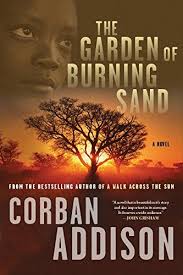
As usual, I’m currently reading two selections. One on audio and one in hardback. On audio, I’m about 1/4 way through The Garden of Burning Sand by Corban Addison. I think I had previously said I was planning to read The Tears of Dark Water first, but I shifted gears. One thing is for sure, however, that Addison writes deeply engaging and powerful novels. This one is fabulous on audio, and it’s narrated by an extremely gifted Robin Miles. Miles has won two Audie awards for Best audiobook narration, and it’s easy to see why. I highly recommend this book, though Addison’s books are very difficult in subject. This particular book is a visceral look at rape, including child rape, and the AIDS epidemic as it’s raged through the African continent. Despite the difficult subject matter, his novels contain a superb balance of character driven suspense and lyrical prose. And the cover art on each of his books is immensely compelling and beautiful. Honestly, this novel probably has the least compelling cover art of his others, but I still feel entranced when I look at it.

In hardback, I’m reading something completely different. It’s a paranormal horror novel called Home Before Dark by Riley Sager. A friend recommended this one to me and I’ve only just started it, so I’ll hold off on any judgments except to say it’s delightfully engaging from square one. I greatly enjoy books that challenge me to question whether I’m really reading paranormal horror or something much more psychological in nature. When done well, this type of fiction is immensely satisfying and effective.

What did you recently finish reading?

I recently finished In the Dream House by Carmen Maria Machado, and I am planning to post my review tomorrow. It’s a deeply intimate and lyrical memoir and I think I’ll have a lot to say about its style.

What Will you Read Next?

Lately I’ve been talking a lot about a literary subject I’ve been mulling over writing about, and it’s really fanned the flame of my passion for learning more. A few months ago for my birthday, I told my husband I wanted to order some books about Mary Shelley, as I find her life and work fascinating beyond belief. I’m most excited to read Romantic Outlaws: The Extraordinary Lives of Mary Wollstonecraft and her Daughter Mary Shelley by Charlotte Gordon. So, there you have it, a return to research!
Thanks so much for stopping by to catch up with me. Have you read any of these titles or do you find them intriguing? I’d love to hear what you’ve been up to, so feel free to drop me a comment. Until tomorrow, happy reading!

Posted in General fiction, Horror, Memoir, mystery, Nonfiction | Tagged , , , , | 2 Comments

WWW Wednesday – November 4, 2020

While I’ve done a horrible job this past week of accomplishing much reading, I do need to update my readers of my progress. Maybe that will inspire me to stop gluing myself to the stressful, all consuming election coverage and get me to focus. This is my third installment of the weekly WWW series hosted by Sam at Taking on a World of Words. In each post, answer the three questions below and leave a link to your post in the comments for others to enjoy. This way we can all experience what our peers are enjoying in the wonderful world of books. Let’s dive in!

The three Ws are:

What are you currently reading?
What did you recently finish reading?
What do you think you’ll read next?

Currently Reading:

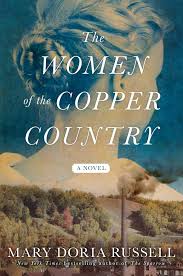
I’m still reading The Women of the Copper Country by Mary Doria Russell. This book falls into the “books I own so I’m constantly putting them down to read my library holds” category. I’m enjoying it greatly, however, and plan on buckling back down with it when I finish the super short next read I picked up from the library. Honestly, this is a really great read to experience during the current stressful political climate, because it hails back to an era in history in which American citizens used political power to fight for their rights as American workers. There’s a very rich and vital narrative to the labor movement in the United States.

As previously mentioned, many reads come available at the library to distract me, and that place this week goes to In the Dream House by Carmen Maria Machado. This is a super short but profound memoir that’s told in a very unique style. It consists of a series of very short vignettes outlining a toxic relationship. My initial impression is that this is a very effective technique. Each vignette intimately shows a specific experience from the author’s life, some which led her to her partner and some that she experienced with her. It’s an excellent mimicry of the way relationships actually develop. Every experience with a person brings us closer to understanding them, like peeling away layers of them until they become fully formed. Sometimes these layers are positive, but we often find ourselves uncovering less than ideal parts of them.

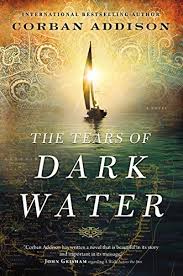
On audio, I’m doing my second book by author Corban Addison. The first I read was A Walk Across the Sun. It’s been 8 years since I read this title, but I never forgot how immensely beautiful it is. It gave me an urge to read more by Addison, but it’s also difficult to pick one up, because he writes about extremely heavy topics. So reader beware, Addison is an author to follow, but while he enriches and enlightens your mind he will leave you with a heavy heart. However, I feel the problem I see in the world is too many people are closing themselves off to the suffering of others, which leaves humans as empty soulless shells devoid of empathy. We need the hard stuff. I’ve now picked up The Tears of Dark Water. I won’t speak much about it yet, because I just started the book, but so far it has the expert prose I’d expect from Addison and it’s immediately engaging.

Recently Finished:

I recently finished Cold Storage by David Koepp. A bit gross but wildly engaging, and the audio is an entertaining narration by Rupert Friend. You can find my review of this title here.

What Will I Read Next?

You might get a bit of deja vu with this one, but I still have yet to start the title I cited in my last WWW post two weeks ago (yes, I failed to get one done last week). So I’ll reiterate that I still plan on picking up Liane Moriarty’s The Hypnotist’s Love Story. But, you will eventually realize it’s a very bad idea for me to plan ahead with my reads, because it’s quite common for me to change my mind at the last minute.

So, there you have it! Those are my plans for the next week’s reading. What will you be reading? Feel free to share your post here or tell me your selections in the comments. Have you read any of these? I’d love to hear your input. Look for my review of In the Dream House to pop up possibly tomorrow. Until then, Happy Reading!

Posted in General fiction, Historical Fiction, Memoir, thriller, Uncategorized | Tagged , , , , | 6 Comments

Cold Storage by David Koepp – Book Review

While his name might not immediately ring any bells for a lot of readers, odds are every single person who reads this review has encountered the work of David Koepp at some point in the past thirty-plus years. Koepp is a veteran screenwriter and director in Hollywood with tons of blockbuster credits to his name. These include Jurassic Park, Mission: Impossible, Carlito’s Way, and Panic Room. Basically, the man has an intimate understanding of suspense. Cold Storage marks his debut novel. While I think it pales in comparison to his fabulous Hollywood work, this is a pretty solid effort.

Cold Storage begins in 1987 with a specialized team of bioterror experts, Roberto Diaz and Trini Romano, leaving something bad in a cold storage facility tucked into the limestone mines in Atchison Kansas. How bad? We’ll get there. Roberto is introduced as the perfect man’s man. A hotshot hero who is a little too handsome and is in possession of superb physical and mental capabilities that ensure that he’s pretty much the most impressive specimen on Earth. He even has the perfect wife and perfect kid as the cherry on top. Trini is his brash but likeable sidekick. We very quickly jump back to the beginning of the expedition where our two prospective heroes go with an impossibly sexy and charming microbiologist with a thirst for married men to a remote town belonging to a tribe of just 26 aboriginal members of the Pintupi tribe, a tribe that ceased to exist all within a matter of hours. What killed them is what our heroes are there to find, a deadly fungus from space that had been lying dormant in this sleepy outback town since its arrival on Earth in 1979. They take a sample, nasty fungal you-know-what hits the fan, and the team members nuke the town and save humanity. Or so they think.

Brief side note about the beginning. I won’t lie. This isn’t my typical genre. I don’t read a lot of suspense thrillers and when I do I tend to do a bit of eye rolling at the typical character tropes and stereotypes. Especially those that add an unlikely and oddly placed sexual dynamic between two people in the middle of a potentially planet altering crisis. I’m sorry, but if I’m traveling to a remote village in search of a deadly pathogen, the last thing that will be on my mind is a romp in the airplane restroom with my married colleague whom I just met 20 minutes prior. I do sort of get why Koepp added this part. He thrusts Diaz into a position of having to make an ethical choice in regard to giving in to temptation. But the result is that the ironically named Hero (sexy lady scientist) gets thrust into the role of evil temptress causing readers to instantly dislike her and, consequently, making what could have been a vital character annoying and expendable. At this point in the story, I was really afraid that further reading would just deliver more narrative about loose useless women and the heroic men that clean up their messes. Even Trini had been introduced as slightly weak, in love with her partner, and needing his rescue on more than one occasion. Thankfully, better and less cringe-worthy things were to come.

Back to our story, the narrative later jumps to the present. We get two new central characters: Travis and Naomi. Both work as night guards at the storage facility. These two characters actually saved the story for me. Travis, also known as Teacake, is a bumbling but likeable young man who is entirely too trusting and talks too much. One gets him into a lot of trouble and the other ensures he doesn’t get out of it. After a brief prison sentence, due in 100% part to that gullibility issue we talked about, Teacake absolutely must keep his job at the cold storage facility in Atchison, Kansas. One night he finally gets the nerve to introduce himself to the new girl, quiet Naomi who has taken on a part-time gig at the storage facility to support her young daughter while also trying to finish school. Together the two find themselves in a heap of trouble after they investigate a mysterious beeping coming from the walls.

We also bring back into the story Roberto Diaz. Though he’s retired, he’s the only one who knows the sheer power of this fungus and the threat is poses to humanity, so he exits retirement for one final mission to save the planet. Together, Roberto, Naomi, and Teacake make up a very unlikely ragtag team of heroes. While it once again borders on cliche, I thought this worked. Now in his 60’s, Roberto isn’t quite the impressive specimen of a man he once was. While he still has full control over his wits, his body doesn’t quite cooperate like it used to, which occasionally causes a bit of extra suspense. It’s not everyday the hero of a story is thwarted by his own back muscle spasms while trying to take down a formerly human fungus zombie. Oh yeah, did I mention the fungus takes over the human brain and turns the host into a walking gooey mess of zombie goop hell bent on sharing the love?

My biggest quibble with this, and the reason I hope they never make this into a movie, is it’s really gross. That’s not necessarily a bad thing, because I know some readers love the gooey gore of seeping orifices and exploding bodies, but it’s not exactly my cup of tea. I also don’t really enjoy the idea that this is actually speculative fiction. Of course there are organisms out there with the power to overtake humanity and destroy all life on Earth. We haven’t met them yet, or maybe we have and they’re buried deep below the ground in cold storage facilities (oh, sweet Jesus), but they do exist. I’m fine, really. I need a drink. Or perhaps a tranquilizer dart to get to sleep at night, but I’m fine. *insert forced smile*

Overall, this was an exciting and suspenseful read with a satisfying enough conclusion. It’s quite short and easily digestible (well, except for all that gross stuff). Later characters are well-developed to make up for what I felt to be a rather rocky and icky beginning. I’d give this one 3 stars overall.

Pub. date: Sept 3, 2019 by HarperAudio; ISBN: 0062916467; Runtime 8 hrs, 6 min.

Posted in Horror, thriller | Tagged , , , , | 4 Comments

The Tattooist of Auschwitz by Heather Morris – Book Review

You will honor them by staying alive, surviving this place and telling the world what happened here.”

Heather Morris

There are certain periods in history that fill me with an absolute all encompassing blind rage. It should come as no surprise that one of these events was the reign of the Nazi regime in Western Europe from the years of 1933 to 1945 in which approximately six million Jews and five million other targeted groups were murdered in one of the most horrific and high profile genocides in human history. More than one million victims were children. As this is a book review, I’m not going to get too much into the history of the rise of the Nazi regime or the years leading up to Hitler’s “Final Solution,” but if you would like to read more about this topic I’d encourage you to visit this website1 for a succinct timeline of events.

In 2003, author Heather Morris met with elderly Holocaust survivor Lali Sokolov. She describes their conversation, spread over the course of 3 years, exactly as long as Lali’s tenure at the Auschwitz-Birkenau concentration camp, as “simply the ramblings of an elderly gentleman.”2 He regaled her with sound bytes that weren’t even really linked in any sequential order. He was reliving and grappling with the past, and he wanted her to tell his story. He needed her to do it quickly, because he needed to be with his Gita again and was in a hurry to move along. The story she would write would become The Tattooist of Auschwitz. This is a love story at heart, but it’s also a fairly remarkable work of historical fiction that is heartbreaking and raw.

Heather Morris based her novel on the account of Auschwitz survivor, Lali Sokolov. She met with him on a regular basis for a period spanning 3 years beginning in 2003. Image credit: https://www.wiltonbulletin.com/news/people/article/Wilton-Reads-Living-and-loving-through-the-13996795.php

The Tattooist of Auschwitz begins with Lale Eisenberg answering the order from the government for each Jewish Slovakian family to send one individual to the “work camps.” (Clarification break: I’m not entirely sure why, but Morris chose to change the spelling of Lali’s name to Lale for the novel. After the war, Lali changed his last name to the less Jewish sounding name of Sokolov.) His brother had volunteered, but Lale refused to allow him to go. His brother had a wife and two young sons to care for, and Lale insisted as a single man it was his place to sacrifice on behalf of his family. Eventually he finds himself at one of the most infamous concentration camps of the Holocaust, Auschwitz. The course of the novel follows Lale as he fulfills his duties as the camp Tätowierer, a prisoner in charge of tattooing the numbers onto new arrivals. Through Lale, we experience life in the camp. We live the horror, the fear, the immense heartbreak, and the determination for survival. We also experience true love that blossoms in the unlikeliest of places.

There’s really not much more I can say about the plot without getting too spoiler-y, so I’ll digress and discuss something I feel to be important. In my research surrounding this book, I found articles alluding to extremely heavy criticism from historians about the events in this novel. Many details are incorrect, and many events are quite fanciful in nature, leading them to believe a large part of this narrative simply wasn’t possible. Morris has responded to these critiques by asserting that she was telling Lali’s story. If Lali said it happened, she included it. I, frankly, support her in this. Morris was not writing non-fiction. It’s within the rights of a fiction writer to take liberties with a novel. And we must remember that Lali was a very old man at the time he met Morris. He’d endured years of trauma, so could we really blame him if he got a few details wrong? Honestly, this man survived 3 years of the most unimaginable tortuous suffering, so if he had told Morris a sparkly unicorn flew over and pooped on a guard, well he earned every bit of that unicorn poop and I damn well hope she would have put it in the book. Ok, maybe that’s taking it a bit far, but you get my point.

I do love history. I do believe it’s important to be accurate, but I also believe it’s important to honor both the survivors and the dead with an emotionally honest account. This is why I love fiction so much. History is fascinating, but knowing dates and facts doesn’t encompass the actual human experience. I can know that Crematorium number 1 was put into operation at Auschwitz on August 15, 1940.3 But that isn’t nearly as powerful as the image of Lale standing outside feeling the ash, the whispered remains of human life, raining from the sky onto him and his fellow prisoners. Good historical fiction allows us to FEEL history, which is essential for the development of empathy and full understanding. Full understanding is what ensures that we never stand by and let such atrocities occur for the remainder of human history. I wish such fanciful notions were yet within our grasp, but sadly we still have a lot to learn. I know a lot of people have trouble reading books like this. I completely understand this. Frankly, I do too, and I have to mentally prepare myself for such an undertaking. I feel that Morris crafted this novel in a way that was both brutally honest and, somehow, mild enough to not be overtly traumatic. Though there is literally no way to write a novel of the Holocaust without inflicting emotional pain. If you don’t feel pain when reading such things, there is definitely something wrong with you.

Lali Sokolov and Gita Furman met and fell in love at the Auschwitz-Birkenau concentration camp. The author found herself embroiled in controversy over the accuracy of Lali’s account. Image credit and more info at https://www.abc.net.au/news/2019-09-23/tattooist-of-auschwitz-author-defends-book-on-eve-of-sequel/11527252

My overall takeaway from the novel is that it’s a well-written and moving love story. It does well in honoring the victims of this horrible nightmare from the past. Peripheral characters are well-drawn and add to the story. We are even introduced to other real-life characters, both the brave heroes and heroines of the war and the infamous evil bastards whose cruelty bore no impediment. I don’t believe it’s a literary masterpiece, but it’s a good narrative peppered with some lyrical moments. I listened to the audio, and I feel it was well done by Richard Armitage. Eventually I wearied a bit of the breathless way he spoke Lale’s voice, but I understand why he read him this way in most instances. Where he really excelled was in the various accents of this very diverse cast of characters.

Overall, I give this novels 4 stars.

  1. “The Holocaust.” History.com. https://www.history.com/topics/world-war-ii/the-holocaust. Publish date October 14, 2009, updated September 30, 2020. Access Date October 23, 2020.
  2. “Heather Morris discusses meeting Lale Sokolov.” Bonnier Publishing Australia. January 15, 2018. https://www.youtube.com/watch?v=70pxBGXkm9E.
  3. “Auschwitz-Birkenau: Crematoria & Gas Chambers.” Jewish Virtual Library. The State Museum of Auschwitz-Birkenau. https://www.jewishvirtuallibrary.org/crematoria-and-gas-chambers-at-auschwitz-birkenau. Access date October 23, 2020.

Pub.date: September 4, 2018 by HarperAudio; ISBN: 198714564X; Runtime: 7 hrs, 25 mins.

Posted in Historical Fiction | Tagged , , , , | 7 Comments

WWW Wednesday – Oct 21, 2020

Here’s my second edition of this weekly series of posts from Sam at Taking on a World of Words. Check out her blog if you haven’t, as she shares some fabulous content. In this series, each blogger answers the 3 W’s every Wednesday:

What are you currently reading?
What did you recently finish reading?
What do you think you’ll read next?

What am I currently reading?

In hardback, I’m reading The Women of the Copper Country by Mary Doria Russell. Russell is one of those rare authors whose every work I have devoured with absolute glee. She mostly writes historical fiction, but her bestselling novel, The Sparrow, is one of the greatest science fiction novels I’ve ever read. Every detail of her work is meticulously researched, and I highly recommend each one. This one follows a young woman who takes on a powerful mining company in the early 1900’s in the town of Calumet, Michigan. Russell draws on research into her own family history with this work, which lends a very personal touch to the story.

Writer Mary Doria Russell’s newest work of historical fiction is a tribute to the men and women of the Labor Movement in the early 20th Century.

Evidently I’m feeling historical fiction at the moment, because my current audio read is the Holocaust novel The Tattooist of Auschwitz by Heather Morris. I probably don’t need to tell you this is a difficult subject matter, and I’ll have a lot of thoughts about this book in a couple of days, as I’m more than 75% of the way through the audio. The performance is quite well done by talented actor, Richard Armitage, who flawlessly shifts from the dozens of differing voices and dialects of prisoners at the Auschwitz and Birkenau camps during the period from 1942 to 1945. This is a beautiful story based on the real-life account of Lali Sokolov (Lale in the book), a Slovakian Jew who acts as the camp’s Tätowierer during his tenure at the camp. Ultimately, it’s a love story about finding love and hope during the bleakest of times.

The Tattooist of Auschwitz is the 2018 debut novel by Heather Morris.

What did I just finish reading?

I recently finished Becoming by Michelle Obama and The Dutch House by Anne Patchett. You can link to my reviews of each to see my thoughts by clicking on each. Both I highly recommend.

What do I think I’ll read next?

On audio, I’ll be listening to the November selection for my book club, Cold Storage by David Koepp. David Koepp is a screenwriter who worked on Jurassic Park, so I would imagine the man knows a little something about suspense. A little apprehensive about this one in the current climate considering it is a pandemic thriller, but maybe this is, in fact, the right time to read it. Check back with me in a few days to see how good an idea this one is!

Cold Storage is the debut novel for veteran screenwriter, David Koepp.

In paperback, I plan on picking back up a book I started and failed to finish due to circumstances unrelated to the quality of the book. It is The Hypnotist’s Love Story by Liane Moriarty. I always find Moriarty’s books a delight and thought this to be a good buffer while tackling something a bit more panic-inducing on audio.

Liane Moriarty’s novels are infused with wit, charm, and a whole lot of intrigue.

So, there is me! I’d love to hear what you are reading, have read, and want to read soon. I’ll be back soon with my thoughts on my current selections.

Until we meet again, Happy Reading!

Posted in General fiction, Historical Fiction, mystery, thriller, Uncategorized | Tagged , , , , | 9 Comments

Becoming

There is power in allowing yourself to be known and heard, in owning your unique story, in using your authentic voice. And there’s grace in being willing to know and hear others.

– Michelle Obama, Becoming

I first picked up Becoming over a year ago. For various reasons, I kept finding myself distracted by other things. Something came available at the library, I had a book club selection to get through, and, if I’m being honest with myself, it was just depressing to read. Not because of the tone of the book, but because of the current tone of America. Cracking open Becoming brought me back to a nostalgic time when my Country had the cool, measured leadership of a caring family. A family that believed all American citizens were worthy of a voice. A family that read books, celebrated individuality, and understood the gravity of the position they held in American society. A family that understood the sheer power in words, the power to cut deeply and the power to heal. That’s all I’m going to say, because I don’t want to make this about the current occupant of the White House. That would be a slap in the face to the beautiful piece of literature that Michelle Obama has created.

Becoming is broken into 3 parts. The first, Becoming Me, centers on her growth as a person before meeting Barack. It follows her from childhood in the South side of Chicago on to Princeton as she learns to define herself. Readers are immersed in intimate details of how it felt to always feel out of place, never really fitting in completely in any world in which she found herself. She lays bear insecurities that any of us could understand, as we all have them. I grew to love Michelle’s family and friends, and I felt the heartbreak when she encountered loss, often way too soon. It’s easy to see how she came to be so resilient in heart and mind.

The second part, titled Becoming Us, shows her journey with Barack prior to his tenure as President. This section resonates so completely with many working women. Michelle is brutally honest about her struggle to remain true to herself while finding her place as a wife and mother, often finding her own desires and choices swallowed by her husband’s rapid transitions in his career. She vents her frustrations about feeling alone and apprehensive about Barack’s potential entrance into the political sphere, something for which Michelle had nothing but disdain. All the while, her narrative is infused with nothing but admiration for his intellect and his thirst to do good in the world no matter what it costs him. Theirs is a very authentic and inspiring love story. Nothing is perfect, but it’s still right. And much of marriage is about perseverance, never losing sight of the things you originally loved about a person no matter how much difficulty you face later on.

The third section was, I felt, often the more tiresome section. In Becoming More there is a lot of campaigning and details about life in the White House, navigating an environment that is simultaneously steeped in privilege and suffocation. Many of the events discussed I remember quite vividly, and it was fascinating to get a look inside. There are a lot of beautiful, touching moments in this section which saves it from the occasional monotony of the politics. It’s also the saddest section, because as the book drew to a close I knew what was to come. Despite knowing how the story ends, I couldn’t shake the feeling of dread. But Michelle has a way of infusing hope into even the darkest of times.

Every section of this memoir is made better by the lyricism of Obama’s prose and the authenticity of her voice. She’s an amazing human who approaches life with a humble appreciation for what it means simply to exist. She never wanted power or influence, but she managed to do wonderful things upon obtaining both. Overall, this book is inspiring and infinitely quotable. It’s definitely one to keep and cherish, a book to pull off the shelf when life feels a little too weighty.

I want to end this on a very happy note. I found myself worried about Michelle’s beloved garden, so I did a little research to find out how completely the Obama’s legacy was wiped out by the current administration. *I’m happy to report that the garden still stands. The garden is not maintained by the Trump family, but Michelle arranged for private funding and maintenance by the National Park Service before leaving the White House. I choose to see this as a symbol that there is still hope for a brighter tomorrow. Perhaps I should end it with Obama’s own words, as she says it much more eloquently than I ever could.

Life was teaching me that progress and change happen slowly. Not in two years, four years, or even a lifetime. We were planting seeds of change, the fruit of which we might never see. We had to be patient.

– Michelle Obama

5 Stars for this stunning memoir.

*Friedman, Sarah. “Here’s How the Garden Michelle Obama Started is Faring in Melania Trump’s Hands.” Bustle. Sept. 15, 2018.

Tagged , , , , | 3 Comments

The Dutch House

There are a few times in life when you leap up and the past that you’d been standing on falls away behind you, and the future you mean to land on is not yet in place, and for a moment you’re suspended knowing nothing and no one, not even yourself.

Anne Patchett

Perhaps, if you’re like me, you’ve had the experience of going to a winery. Compared to the rest of the world, in your mind anyway, you have a bit of an unsophisticated palate. You know you like things that taste pleasant, which pretty much translates to sweet regardless of price tag, variety of grape, or tapestry of complicated flavors involved. But here you are, and you’re going to see it through. So you order something that looks nice. The glass is set in front of you with little fanfare and, on the surface, it looks like any other glass of wine. You take a slow sip at first. Honestly, it’s unremarkable to your tastebuds. There’s nothing overtly pleasant about this wine, but it was expensive and it’s wine, so you forge on. You keep sipping, and with each sip you notice something you didn’t notice before. Flavors that whisper on your tongue and a new warmth that spreads through your body, lightening your mood and drawing your mind to introspection. It’s not until you tip back the very last dregs of the glass that the thought occurs, “this is some damn good wine.”

Why am I rambling about wine, you ask? Because this book is that for me. It’s not a pleasant wine. There were times, honestly, I wondered why, exactly, I was reading what I was reading. But the true genius, I believe, of the writing of Anne Patchett is in the subtle creeping of her narrative. This novel is an incredibly intimate character study. I’ve seen some reviews that dub this novel as “a modern fairytale.” I get the reference, certainly. Open scene on a glorious 1920’s Dutch mansion in Philadelphia, a relic complete with the ghostly images of the VanHoebeek family whose portraits bear witness to the tragic dramas of our hero and heroine, Danny and Maeve Conroy. Upon the disappearance of their mother and the untimely demise of their father, Danny and Maeve are cast out by the evil stepmother. In a matter of hours, they are cast from the elegant gilded confines of their mansion onto the street to begin anew. Ok, I’m overdramatizing a bit. They do have one thing left from their father. He left an education trust to be split between Danny and the step-mother’s two daughters.

Much to the delight of Danny’s older sister, Maeve, it’s not required for the trust to be used in equal parts by all three, which means Danny can do as much school as is humanly possible in a bid to potentially empty the trust before the daughters of their nemesis can even think of touching it. It doesn’t matter that Danny has absolutely no desire to go to med school, he WILL be a doctor, at least on paper, for the sole purpose of sticking it to their father’s widow in a slow-burning revenge. What the reader is left with is a comically sad realism. In expert fashion that only a writer with Patchett’s skill can exhibit, we aren’t told what to think about all this. We are shown little by little and layer by layer until everything falls into place. And though this is a slow burning narrative, the effortless flow of her prose ensures that we readers don’t ever really get bored. We don’t grow to love these characters in the same way readers usually love characters, but we do love them. As with members of our own families, we see both sides of them, their affable and admirable side juxtaposed against their apathy and low emotional maturity. We understand them and, consequently, feel for them in a way we otherwise wouldn’t in a less effective narrative. In my case, this is accentuated by the fact that I enjoyed this one on audio, and the first person narration is performed by the incomparable Tom Hanks, whose depiction of Danny was both endearing and authentic.

I think the true power of this story is it causes us to examine our own relationships and resentments. It’s about a reconciliation of the past and present, casting aside the demons that followed us from the past so as to forever alter the course of our lives. It’s about letting go and moving on. In the long run, a house is just a house. A painting is just a painting. The meaning we ascribe to everything that touches us is of our own making. Our resentments and anguish will define us, but we are in control of how those things define us. As with the glass of wine and the good book, will we walk out the other side appreciating the things we gained more than we regret the things that didn’t go our way?

Overall, I give 4 stars to this ultimately moving and lyrical novel.

Pub. date: September 24, 2019 by HarperAudio; ISBN: 9780062963703; Runtime: 9 hrs, 53 mins

Posted in General fiction | Tagged , , , , | 5 Comments

WWW Wednesday – October 7, 2020

I love the idea of sharing reading experiences with fellow writers and bloggers, so I’m participating in the challenge from Sam @ Taking on a World of Words.

Along with other bloggers, I’ll answer the three questions and share my blog and visit others to see what they are also enjoying. Yes, I’m aware I’m a day late, but shhh…..

IMG_1384-0

The Three Ws are:

What are you currently reading?
What did you recently finish reading?
What do you think you’ll read next?

Currently reading: I’m currently reading Becoming by Michelle Obama in hardback and The Dutch House by Anne Patchett on audio. I’ve been reading Obama’s book for quite some time. #1 my time for actually sitting and reading has been woefully rare between the pressures of work, kids, and the multitude of distractions I seem to find myself with of late. I’m also savoring it. I revel in her inspiring and effortless prose and I’ll be sad when I’m finished. The Dutch House is, so far, a very lyrical book. It’s narrated by the incomparable Tom Hanks. It’s a very intimate narration. A slow burner that I feel is probably building to a satisfying conclusion. Check back with my blog in a few days to see if I still feel this way. 🙂

Recently finished: I recently finished Erotic Stories for Punjabi Widows by Balli Kaur Jaswal. I absolutely loved it, and for more detailed thoughts, please see my entry from October 7 for a full review.

Reading next: I will next be picking up Mary Doria Russell’s newest work, The Women of the Copper Country. I’ve had the pleasure of reading every novel of Ms. Russell’s, and I’m really looking forward to diving in to this one, as her historical fiction is typically quite spectacular.

Thanks for stopping by to visit me, and feel free to share your reads in the comments and follow me if you’d like to see what I think about my current reads!

Happy Reading,

Amy

Posted in Uncategorized | Tagged , , , , | 5 Comments

Erotic Stories for Punjabi Widows

With this book, Balli Kaur Jaswal has created a delightful, charming, and ultimately moving novel about female identity. Perhaps I should have expected it based upon the title alone, but admittedly I didn’t anticipate just exactly HOW erotic this little tale would be. Get your water spritzers ready, because this is one spicy read. Don’t get me wrong, there’s absolutely nothing wrong with that. The eroticism in this book is done quite well, and it effectively lends itself toward the topic of female empowerment.

Nikki is a woman stuck between two vastly different worlds: the more traditional world of the Sikh community and the busy modern world of London. Nikki, at age 22, finds herself at odds with just about everyone. She’s a disappointment to her family after she drops out of law school with no clear plan in mind, and she’s a disappointment to the Sikh community as a woman with no desire to marry the first eligible Sikh man to come along, something her more traditional sister, Mindi, is actively seeking.

Nikki struggles with these issues of personal identity and family identity while she struggles to make ends meet by working at a depressing little pub in London located just below her meager flat. Fearing for the longevity of her job at this struggling pub, she takes a job teaching a group of Punjabi widows in London’s Southall community what she believes will be creative writing. What greets her are a group of mostly illiterate widows who just want to learn how to read and write in English. The class takes a completely different turn, however, when the widows find a collection of erotic stories in Nikki’s bag. They begin to pass the time in class by narrating and recording explicit tales of lust to one another. And, with that, I’ll never see vegetables the same way again.

As amusing as this sounds on the surface, this is a vitally important narrative. As one of the widows proclaims, “Nobody eavesdrops on old lady chatter. To them it’s all one buzzing noise.” These are women who, in traditional Punjabi society, have been written off as tired, old and sexless. Women, in general, are expected to be sexless. Sex is for the purpose of procreation. Lust and desire are taboo subjects relegated to the bedroom of a married couple, if they exist at all within a traditional marriage. What Nikki finds through her relationships with these women is a surprising kinship. Additionally, she discovers that her “traditional” Punjabi parents are much more modern than she’d ever considered, and that most of the women in her class would never have been given the kinds of opportunities or freedoms she and her sister were afforded. Over the course of the novel Nikki and the widows find their voices, both individually and collectively. They bridge a divide between two worlds seemingly opposed. Through their relationships with one another they are able to come to terms with and heal relationships with family and friends outside of their circle. Additionally, as the women in the Sikh community finally begin to speak out, we readers begin to see the healing power honesty and communication can have within a toxic culture bent on silencing women. Perhaps not everyone will be convinced immediately, but we have to start somewhere.

To accentuate this feminist undercurrent, Balli Kaur Jaswal spices things up a bit further by adding a bit of intrigue. Nikki and the widows find themselves embroiled in the mysteries surrounding the suspicious deaths of three young Punjabi women. They are also forced into secrecy of their illicit meetings due to the presence of the Brotherhood, a group of young Punjabi thugs who lurk about Southall threatening and intimidating women into remaining proper and submissive. Adding this detail was, at times, unnecessary, but it also accentuated exactly how dangerous subversiveness can be within traditional Sikh culture. It also helped to highlight a hidden truth about the unlikeliness of justice for young women whose lives are cut short because they dare to speak out against the powerful rulers in a toxic patriarchal society. Sadly, this part is not fiction.

When you piece all the details of this book together, it’s not difficult to see the link between women gaining the strength to talk about sex and women gaining the strength to talk about more complex issues surrounding women’s rights. A woman deserves a voice in the bedroom and a voice in the board room. Considering such, I’m surprised I don’t see more reviewers mention how vital Kulwinder’s place is in this narrative. Kulwinder plays two roles. She’s a respected member of the community who hires Nikki to teach the class, and she’s also the grieving mother of one of the dead girls. She’s juxtaposed with Nikki in an interesting way. While Nikki is a modern girl trying to find her place in Punjabi culture without losing her voice, Kulwinder is a more traditional woman attempting to gain a more powerful voice for Punjabi women within the confines of traditional culture while not sacrificing her respectability. It’s an admirable goal, but in the beginning she lacks both the courage and the tools with which to make her demands in a way that’s effective. While she initially has nothing but disdain for Nikki, Nikki is exactly the influence she needs to reach her eventual goals. And the reader can’t deny that Kulwinder’s initial harshness toward Nikki is due, in part, to the young girl’s similarities to Kulwinder’s daughter for whom she is still grieving.

On the surface this is a fun light-hearted read that’s more than a little bit raunchy. A deeper analysis shows this as an important book about female identity. It’s a testament to the fact that a woman is never too young or old to find her voice. Additionally, it provided a critique of many of the antiquated ideas of gender roles in the Sikh community while simultaneously celebrating the positive aspects of the community as a whole. Overall, I give this one 4 stars.

Posted in General fiction, Uncategorized | Tagged , , , , | 9 Comments