
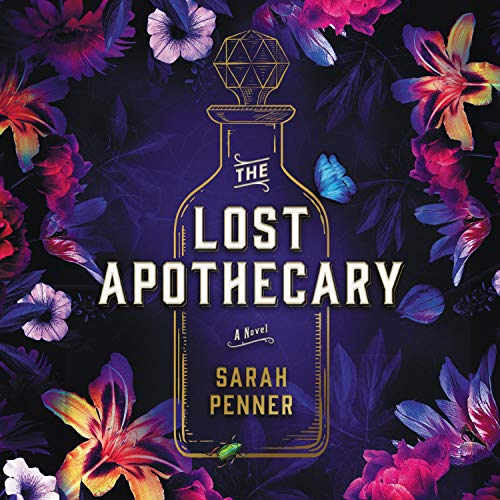
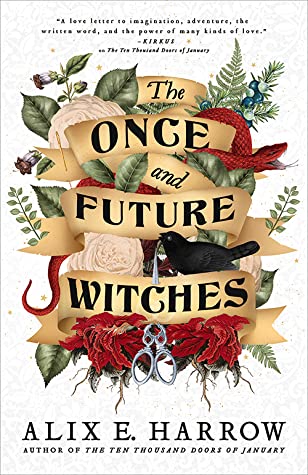
 At first glance, I could tell this book was right up my alley. Badass women, trips down deep back corridors of the darkened streets of historic London, and a bit of a mystery to sweeten the pot. As for the cover, I adore the blend of colors, the font, the aura of mystery. I’m intrigued by stories with dual timelines, though this can become tricky if one is more well executed than the other, so I’m generally wary. It didn’t hurt that this book is a very short read, as I’m woefully behind on my reading goal.
Synopsis
The Lost Apothecary follows three women. In present-day London, we find American tourist Caroline Parcewell, a distraught escapee who fled to London prompted by the discovery of her husband’s infidelity. What was supposed to be a romantic anniversary getaway became a journey to figure out where it all went wrong. However, freed from the shackles of marital obligation, Caroline finds herself making her own choices and taking daring risks for the first time in years, driven only by her own curiosity and thirst for knowledge. An impromptu bout of mudlarking, a concept I found fascinating, led her to an old vial stamped with the mark of a bear. Caroline finds herself drawn to the relic and sets off on a historical scavenger hunt to uncover the truth about her find, a truth that could lead to this unsuspecting tourist unmasking a serial killer from a century ago. Juxtaposed with Caroline’s story, we are presented with Nella, an apothecary in London in 1791, as she reaches a pinnacle moment in her life as an aid to womankind as they battle the evils put upon them by men. When a young girl named Eliza Fanning steps into her shop, Nella finds herself at a precipice that will decide not just the fate of her business, but the life or death fate that awaits her on the other side of a harrowing chain of events.
Review
If you’re looking for a good mystery, this isn’t really the book for you. I won’t say there aren’t any twists and turns, because there’s at least one WTF moment. From the very beginning, we know the identity of the apothecary killer. It’s our job to follow Caroline on her quest. Honestly, it’s not so much a quest to find cool history and unmask a killer, though that part is quite interesting. The real backbone of this story is the journey of self discovery. When we first meet Caroline she’s not just despondent about her marriage. Upon self reflection through the lens of grief, she’s finally reached a point in which she doesn’t recognize the woman she’s become. She used to have a passion for history and literature. After many years of settling, she’s slowly chipped away at the aspects of her personality that used to define her. Upon uncovering the worst of betrayals, she’s come to consider what it was all for and whether she can reclaim a small part of that beautiful spirit that’s eroded over the passing years. I’d be lying if I didn’t say that I don’t identify with Caroline. I, too, have had those moments where I wonder just exactly how I got pushed so off course of my planned trajectory. Unfortunately for me, my rescue won’t be as simple as stumbling upon a mysterious vial that washes from the bottom of the Thames.
While I did identify with part of Caroline’s story, I didn’t find hers near as compelling as that of Nella and Eliza. Part of that is more rooted in the fact that I just find historical fiction more compelling in general, especially this time period in Great Britain from the late 1700’s to mid-1800’s. That’s why I have such a love for literature from that time. It’s a nostalgia for a moment I didn’t actually live through, so I do it vicariously through literature and film. This was a period of great progress but also one in which many people dealt with great pain, especially women. Also, nothing about Caroline’s story was really that surprising, except for one detail later on which wound up being a bit anti-climactic. I wasn’t quite sure how I felt about that part. I don’t do spoilers, so I’m just going to allow you to be confused. If you’ve already read it, I hope you know what I’m talking about. It felt like a very contrived way to make a connection between the two timelines, and I’m not sure that was necessary. The true connection of the story was lecherous bastards and the women who have to put up with their abuse.
On a more serious note, this is a story about women who don’t know the bounds of their own strength and perseverance until they are tested. That’s the part of the story I enjoyed the most. The theme of the enduring power of women throughout history. The specifics may change, but women, in general, still deal with obstacles that test the bounds of our endurance. Thankfully for the men of the world, it’s no longer really necessary to kill them. That part is totally optional. 😉
Overall, I thought this was a pretty enjoyable but fairly standard read in the genre. There was a bit of squandered potential, but overall I did enjoy it. Though I was initially pleased to find this to be a quick read for productivity sake, I do often think a book could have been longer. This is, perhaps, one of those. Strengthen the character development and paint that beautiful portrait of the city so I can immerse myself in it. As a whole, I thought the pacing of the narrative was effective. I never got bogged down with any details. In truth, if a reader gets bored with such a short read, it was pretty shoddily executed. Not the case with this one. It’s definitely an attention grabber, though there’s nothing really that will stick with me long term. As for format, I listened to this one and was very excited to find a brand new book on Hoopla. Hooray! At a little over 10 hours, I moved through it in a couple of days. It’s narrated well by Lorna Bennett, Lauren Anthony and Lauren Irwin. However, Bennett has a much more relaxed pacing to her narration. So, depending on your reading speed (mine is usually at 1.25x), there’s a pretty drastic difference between Bennett (I preferred hers) and the other two. I kept the speed the same without toggling it back and forth, as that would have become irksome quite quickly.
Considering all factors, I give this one a 3.
Pub. date: Mar 2 2021 by Harlequin Audio; ISBN: 1488210764; Runtime 10 hrs, 18 min.
 I’ve always loved classics, but I gravitate more toward 19th century British lit, and authors like Vonnegut often have been relegated to the “I know I should read it and I’ll get to it eventually” pile. We all have one of those piles, correct? That’s why it’s helpful in book club when every now and then a member chooses one of these classics. Such was the situation with Slaughterhouse-Five. And I’m really glad to have finally picked this up. This is a very personal novel for Vonnegut. In 1943, Vonnegut enlisted in the army. He was sent to fight in the European campaign during WWII where he was captured during the Battle of the Bulge. He was sent to Dresden and was, in fact, in a meat locker during the fire bombing of Dresden by Allied forces in February 1945.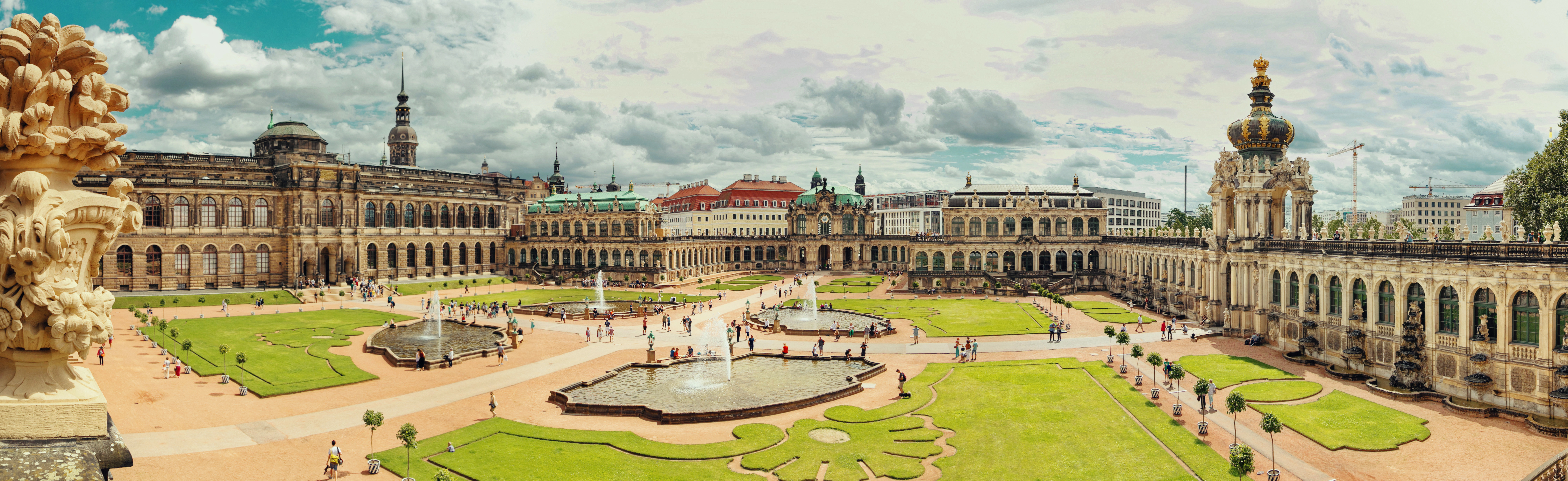

 I’ll start by saying this book was a fabulous book club pick. There’s so much to analyze and to discuss, and I actually found myself growing to admire Vonnegut even more after discussing the book with the other members of Read Between the Wines. Also, I knew this book was on the banned books list, which basically gives me extra incentive to read it. In the Mentalfloss article, “
 If we were to break this down, it becomes fairly obvious that the creation of the Tralfamadorians within Pilgrim’s mind are a coping mechanism. They are a way to explain and process that which is unthinkable. His jumping through time is his way of placing himself within a happier existence, convincing himself that as long as he has been contented and will be again, the present agony doesn’t matter. And the deaths of his fellow soldiers as well as the strangers in Dresden who were all blinked from existence in a raging fireball don’t matter because a being can’t actually die in a four-dimensional reality in which all points in time exist concurrently with one another. It’s both comforting and simultaneously tragic. In a prior life of my own I may have gone down the research rabbit-hole and devoured page upon page of literary analysis from people much smarter than myself. As it is, I’m merely content to regurgitate my gut reactions. I’ve seen people classify this book as science fiction. I would completely disagree with that. Despite the presence of the Tralfamadorians, I don’t believe we are meant to believe they actually exist.
  In my opinion, this novel is an excellent portrait of the living casualties of war. Those who return home haunted by the ghosts of the past. Really, this is a flawless portrait of PTSD. According to the
  If you could sum this book up in one line, it would probably be: Idiots are people too. As usual, Backman presents us with startling truths in a way that also brings a smile to our faces. His writing is always superb, his characters refreshingly quirky, and his stories the kind of heartfelt fare to which you can’t help but return. It’s amazing to me that Backman’s first novel came out in 2012 and he’s since consistently been able to release incredible books on a regular basis.
  I don’t think there’s anything about this book that isn’t charming. Once again Backman has exhibited that he has a very intimate grasp of what it means to be human. He sees people, inside and out, with all their flaws and idiosyncrasies. And he makes that complete package beautiful and understandable. So much of this book is relatable simply because we’re all people. And, honestly, we’re all idiots. To someone, anyway, you are an idiot. And to you, they are an idiot. But what would happen if you were forced to really connect with that person on a level that we never grant to strangers? That’s the question that this book poses. And if you really take time to think about it, you start to see people differently. Deep down we’re all battling so many of the same things. Whether it be crippling anxieties, feelings of inadequacy, unrealistic expectations, abject loneliness, we all have our inner demons that stop us from feeling quite right about where we are in life. These feelings have no regard for how much money or status one has. We’ve all looked in a mirror or listened to our own voices played back to us, cringed, and thought, “why do I have to be this way?” Frankly, if you haven’t had these experiences, you’re probably dreadful to be around.

 In Code of the Hills, Elsie is tasked with prosecuting a particularly difficult child rape and incest case involving a father and his three daughters. In rural McCown County, a fictional county in Missouri that Allen has created for her series, people don’t discuss matters such as abuse or neglect, and they especially don’t discuss incest. Members of the police department and the prosecutor’s office, however, know that such evils roil and seethe beneath the surface of the idyllic facade of this small community. Beautiful rural countryside hides an awful truth. Poverty and drug use are rampant, and mothers often can’t or won’t protect their children from the men in the home preying on them, as interfering could get them hurt or killed. Because you really can’t protect you’re children if you’re dead. Elsie is tasked with proving, beyond a reasonable doubt, that one such father should be put behind bars for the sake of his family’s safety. But as she’s seen in past cases, this is often easier said than done. Elsie will uncover an even uglier side of her town as her very own life is threatened by the supporters of the assailant, people who will stop at nothing to silence women like Elsie. After all, the Bible says a woman shall remain silent in the presence of a man, and there’s nothing more threatening to these people than a woman in a pantsuit with an opinion and a degree to back it up.
 I just finished reading a book by a local author and veteran of the legal profession, Nancy Allen. It’s called The Code of the Hills and is a part of her Ozarks Mystery Series. The series follows a young prosecutor in a rural Missouri County as she tackles difficult cases and the stifling, sexist ideas that permeate her community. I’m currently working on my review for this book and expect to have it posted in the next couple of days.
  I have yet to do an update for my reading challenge, which is on my To-Do list, but my To-Do list is about a mile long so some things have gotten pushed aside. That being said, I have managed to tick a few books off of my 52 book list, including a couple of fairly specialized ones. This one came about when I put a call out on Facebook to my librarian friends for some recommendations. I received some fabulous recommendations, and The Bookshop of Yesterdays caught my attention because it could fit into another category which allowed me to pick one of the others for the recommendation category. So I decided to make this one my Book About Books. And boy, was it a book about books. Among the classic titles dropped in this book are The Tempest, Frankenstein, Bridge to Terabithia, Pride and Prejudice, The Feminine Mystique, Jane Eyre, The Grapes of Wrath, Fear of Flying, and more.
  Miranda Brooks hasn’t seen or heard from her uncle Billy in sixteen years. Her memories of Uncle Billy are mostly happy ones. He was the cool uncle with the cool job and the amazing book store that felt like home. He sent her on rambling scavenger hunts with literary clues that always led to something wonderful. Miranda didn’t care that Billy was completely unreliable, always missing special occasions, a fact that irritated Miranda’s parents much more than it irritated her. Then on a fateful night after Billy missed yet another birthday, Miranda witnessed a terrible argument between her mother and Billy. After that fight, she never saw or spoke to Billy again. After sixteen years, Billy is merely the distant memory of a 12 year old Miranda, but news of his death still strikes a hard blow to her. She’s shocked to find out that Billy left her the bookstore, Prospero Books. Additionally, Miranda starts receiving clues to a new mystery. Billy has sent her on one final quest. One final scavenger hunt that will lead her back home on a journey in search of the ultimate treasure: the truth.
  I’ve seen a lot of buzz about this book, which is what led me to it as a choice. I’m certainly glad I picked it up, because there’s a lot to appreciate, especially for my reading tastes. As a reader, I feel I’m a fair mix of simple and complicated. I don’t necessarily care about genre. I’ll read anything, but it can’t be formulaic and it must have compelling characters. I don’t necessarily have to like the characters, but I have to be able to appreciate them. For this reason, I consume general fiction, literary fiction, classics, horror, science fiction, fantasy, YA, and more and I enjoy them as long as they are well done. I have a fascination and appreciation for history, but I greatly enjoy the additional depth that good historical fiction can lend to a historical time period. Knowing factual information is one thing, but seeing and experiencing fear, loss and triumph through the eyes of a well-drawn character etched in time is far superior than a non fiction book to truly understanding the significance of a historical time period and what it means for the growth of humanity. Good fiction allows the reader to live a moment in time. I’m well aware that this is my opinion, so if you disagree I hope you can forgive me for that and move on. 😉


 I just finished
 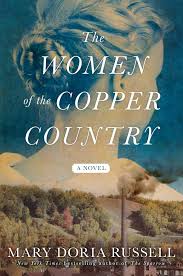 Oh, here we are again. This is the part that always makes me feel like a bit of a failure. Why, you ask? Because these books are usually the same picks every single week due to my sheer fickleness as a reader. I never get around to actually picking them up thanks to a sudden influx of library holds. This time, however, it will be different. I’ve taken a break from library holds until I clear a few off my shelf at home. I’m going back to Mary Doria Russell again. I’ve read every single one of her books, and this is the last one I need to complete the collection. So,
