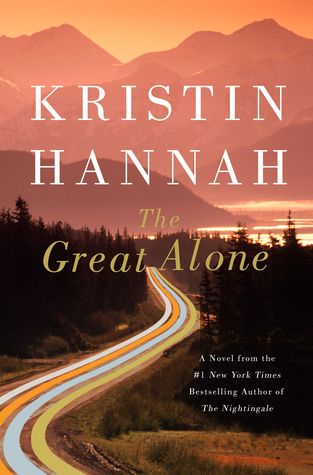
 Unfortunately this will be the last of my 2023 backlog that I’m going to fully review. All of the others I’m just posting quick little goodreads review and starting fresh in 2024 with the blog. I got way too far behind. But this book deserves the full treatment, because Kristin Hannah has an absolute gift. She’s an incredibly versatile author, and though her books often vary in subject matter and time period, they always contain the same elements that elevate them above many other books written by her contemporaries. They manage to contain all the sheer beauty and brutality of life in such an authentic way. In The Great Alone, she allows the setting of a remote and unforgiving corner of the Alaskan wilderness to perfectly encapsulate the tone of this story. Life is brutal. Life is beautiful. Life will gut you and leave you breathless with ecstatic wonder.
Synopsis (from Goodreads)
Ernt Allbright, a former POW, comes home from the Vietnam war a changed and volatile man. When he loses yet another job, he makes an impulsive decision: he will move his family north, to Alaska, where they will live off the grid in America’s last true frontier.
Thirteen-year-old Leni, a girl coming of age in a tumultuous time, caught in the riptide of her parents’ passionate, stormy relationship, dares to hope that a new land will lead to a better future for her family. She is desperate for a place to belong. Her mother, Cora, will do anything and go anywhere for the man she loves, even if it means following him into the unknown.
At first, Alaska seems to be the answer to their prayers. In a wild, remote corner of the state, they find a fiercely independent community of strong men and even stronger women. The long, sunlit days and the generosity of the locals make up for the Allbrights’ lack of preparation and dwindling resources.
But as winter approaches and darkness descends on Alaska, Ernt’s fragile mental state deteriorates and the family begins to fracture. Soon the perils outside pale in comparison to threats from within. In their small cabin, covered in snow, blanketed in eighteen hours of night, Leni and her mother learn the terrible truth: they are on their own. In the wild, there is no one to save them but themselves.
Review
Truly great books do not leave the reader feeling sheer joy. You don’t come away with one emotion. Sometimes you come away feeling this mixture of anger, frustration, elation, heartbreak and exhaustion that makes no sense but feels like exactly what you need. We all know what it’s like to be Leni, in some fundamental human way. We’ve felt the desire to belong, and we’ve come to know that it’s possible to love and hate in equal measure, to fear that which you also desperately need, whatever that may be. And we all know what it’s like to feel the frustration of wanting to fix everything but not knowing how. The flaws of the people Leni loves hold her captive, and try as she might she will never change them. The only thing she can do is learn from their mistakes and grow in a way in which they all seem incapable.
I tried not to hate Leni’s father. I tried to understand how his awful experiences in life had twisted him into someone his family couldn’t recognize, but I’m pretty sure I failed. Let’s face it, many people (too many) have awful traumatic experiences surrounding war and don’t come out as abusive and dangerous individuals. You have to pile all that trauma on top of an already shitty world outlook, a giant dose of misogyny and racism and then you get a man like Leni’s dad. Surviving a war has nothing to do with strength. War doesn’t choose who gets to live and die based on who is and who isn’t a good person. If your weakness is powerful enough, you will still let it destroy you and everyone and everything you love. What I will say is his character is perfectly believable and that’s a very sad reality. There are a lot of people out there suffering under a pain they won’t face in a healthy or meaningful way. They’ll use it as a way to drag others down with them. Hannah found the true survivor’s story by telling that of Leni. Hers is a true strength and a heroism that you won’t hear celebrated in any veterans’ halls, because it’s quiet and understated, but so much more prevalent than any other form of valor you’ll ever find.
Long story short, I absolutely loved Leni’s story even when I absolutely hated it and wanted to throw the book across the room. The reaction was definitely visceral and powerful, and that’s a credit to the novel. This is Kristin Hannah at her best and most infuriatingly profound.
Published February 6, 2018 by St. Martin’s Press. ISBN 9780312577230. Hardcover. 440 pages.
 I am far from the Taylor Jenkins Reid fangirl. This is only the second of hers that I’ve read, though I do plan on picking up more in the future. I feel like readers are in one of two camps with her (usually.) Either you love her stuff or you’re dropping one star reviews simply because she’s permanently ensconced in the popular fiction camp. Frankly, I’ve never thought the latter of the two philosophies to be entirely fair to anyone, not the author nor the readers devoted to their works. Then again, for me a one star review means something is either highly offensive or is just so bad in every single facet to the point I can’t find any redeeming qualities. Those are few and far between. Though, reviews are purely subjective. One person’s masterpiece is another person’s trash. Frankly, that’s what makes literature and life so compelling.
  Coming in at only 166 pages, this little volume barely constitutes a book, but it manages to just tip the scale between novella and novel. This is deliberate on the part of Coetzee who has opted for what is described as “late style.” This phrase was coined in 1937 by philosopher Theodor Adorno who described it this way: “The maturity of the late works does not resemble the kind one finds in fruit. They are for the most part not round, but furrowed, even ravaged. Devoid of sweetness, bitter and spiny, they do not surrender themselves to mere delectation.” In hindsight, that does perfectly summarize this book. We see an aging artist laid bare, stripped down to the raw and ravaged sinew of a once formidable body. Even the cover of the book is simple and abrupt. The keys of the piano as shown are reduced to one octave ranging from A to G. Even this seems to suggest the shortening of time as one inches closer to mortality.
 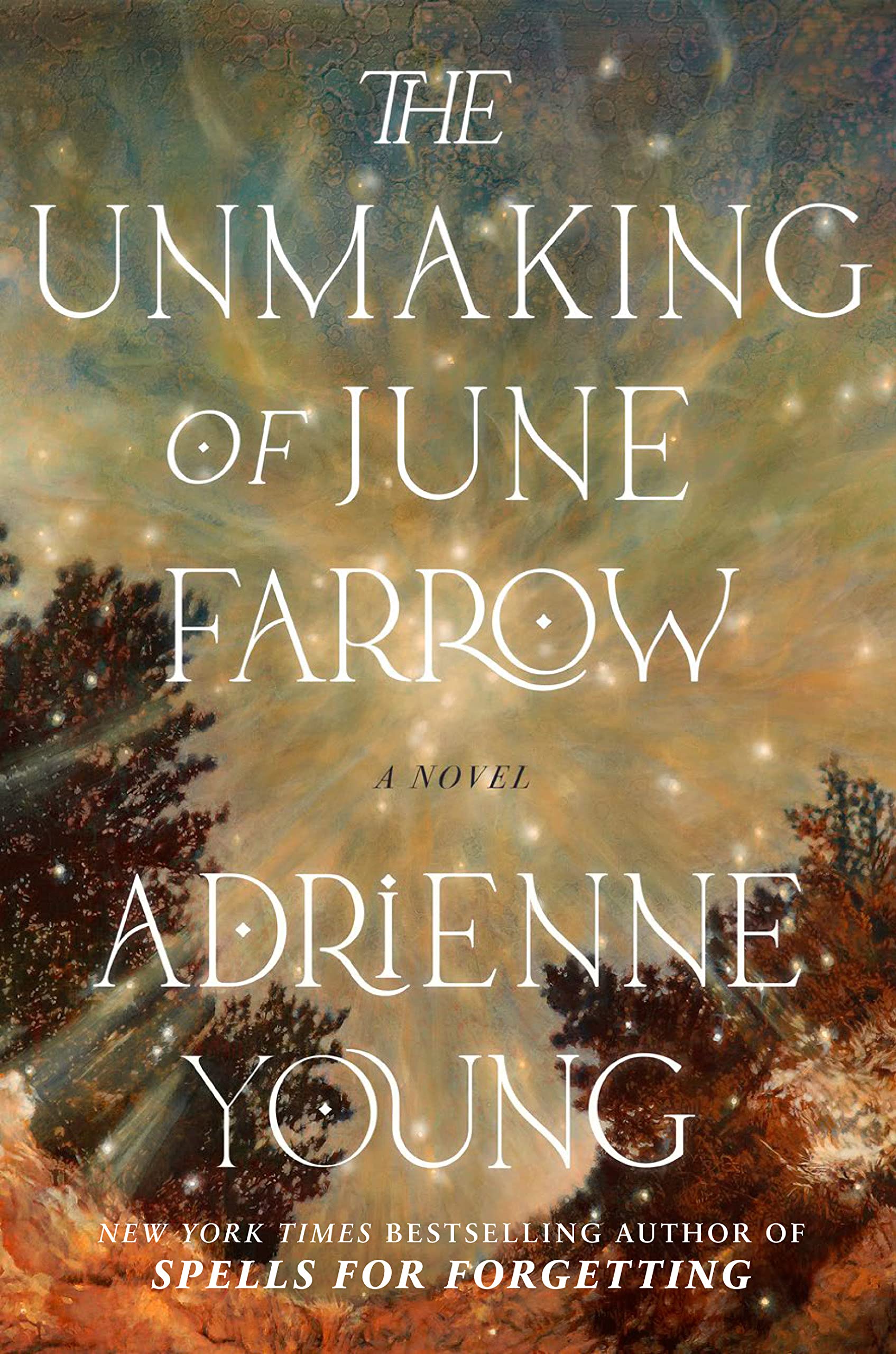 Adrienne Young is quite the prolific author, predominantly writing young adult fantasy but branching out lately to release more adult material. I’ve been under a rock, apparently, because this beautiful novel is the first of hers I’ve had the pleasure of reading. The Unmaking of June Farrow follows, you guessed it, June Farrow. She’s the last in a long line of Farrow women, women who are cursed to suffer the slow descent into mental decline. June is determined to be the last of this cursed line. She will remain alone, never to bring a daughter into the world to suffer the same fate. Now in her thirties, the hallucinations begin and June prepares herself for the end. However, as the hallucinations become ever more powerful, June begins to suspect there’s more to the story of the Farrow women than she’s previously been told. They aren’t just different. They are special in a way the rest of the world could never understand. The more she uncovers, the more June realizes she may not just have to let the curse die with her. She could stop it from plaguing future generations of her family once and for all.
 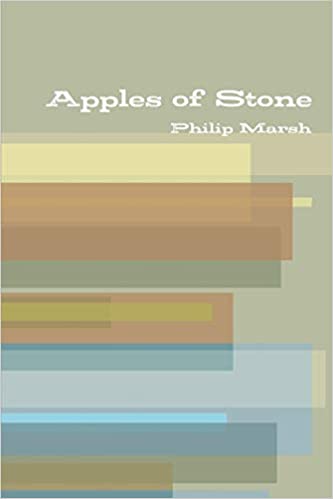 Philip Marsh was a local author, poet, and licensed clinical social worker based in the Ozarks where I live. I never got the chance to meet him, but I do know his brother, a lawyer in Springfield, who passed along Philip’s novel to me. The author passed away in March of 2021 from complications from pneumonia and multiple sclerosis, a disease he’d battled for almost 40 years. Despite these trials in his life, Marsh managed to truly leave his mark on the community in which he lived. Apples of Stone was his only novel. It is very loosely based on the Times Beach, Missouri, environmental disaster. If you mention Times Beach to any Missouri native who was alive and coherent in the 80’s, you’ll probably receive a somber nod of recognition. It was a big deal, and a ghost town was left in its wake to prove just what a big deal it was.
 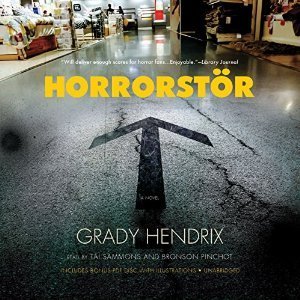 I have never been to one, but I know many people believe there’s nothing on this Earth more terrifying than an IKEA. They balk at the idea of entering the humongous chain store in which one could easily get lost, and they especially balk at taking home a jigsaw puzzle-esque project likely to push them over the edge into insanity. Grady Hendix knows this, and he is playing upon their fears in the most delightful way.
 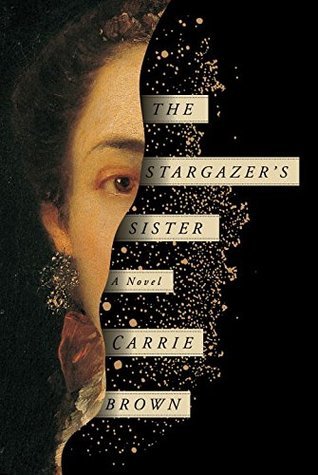 I love this kind of book. The Stargazer’s Sister is the mostly-true story of Caroline Herschel, the also famous sister of legendary astronomer, William Herschel. Anyone with even a passing interest in astronomy will know his name, and even those without that passing interest are familiar with some of his discoveries. Ever heard of Uranus? Yeah, he found it. No big deal, right? He perfected the design of the telescope allowing humans to visually reach farther into the universe than ever before. William features heavily in this novel, but Lina, as Caroline is better known, is the true star.
  The People We Keep follows 16-year-old April Sawicki. Living alone in a motorhome technically owned by her deadbeat dad, her mother existing only in memories from before she ran off, April has only her own grit and willingness to break laws in order to survive. In order to live, she has her music, her one true link to something real and lasting. After a vicious fight with her father, April decides to set off on her own in search of a place and people who could actually feel like home.
  October is a busy month for most of us in my book club, Read Between the Wines, and this month it was my choice for book selection. I chose this short and quick Southern Gothic paranormal mystery for something easy to tackle but also season-appropriate. While Kingfisher has published quite a bit, this is the first of her books I’ve had the pleasure of reading.
  I’m struggling with how to even start this review. It will be heavy, and more than slightly uncomfortable. Honestly, I’m kind of wishing I never lifted this book off the shelf. Maybe that’s why I haven’t posted a review SINCE MAY!!! Good God, what’s wrong with me?
