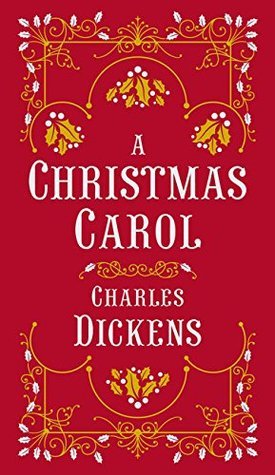
Alas, for my shame. This is my choice for my Bad Reader category in 2024- the book I have seen an adaptation of but never picked up. I know, I know!!! How could I have gone through 40 years of life without ever having read A Christmas Carol??? Honestly, maybe I did at some point but the actual book is buried in my brain beneath the various recreations by film, play, muppet and anything else that dared to take on the most quintessential Christmas tale of all time. Trust me… I KNOW A Christmas Carol. Just this year I saw another hour-long dramatized version at Silver Dollar City complete with a very silly version of The Ghost of Christmas present. I’m telling you, she was something else. I don’t really understand why so many dramatized versions choose to do such odd versions of the ghosts unless it’s just to entertain the children, but some of them can be quite annoying. In the novel, Dickens gave all the ghosts the gravity befitting their station.
I mean, what can I say about Dickens? I actually quite love Dickens and have always found his work to be surprisingly accessible even in today’s modern times where readers want to throw out the fluff in language and get straight to the point. Other readers, anyway. I rather like lyrical prose as long as it doesn’t border on pretentious. A Tale of Two Cities has long been one of my favorite classics, and Dickens’ work has endured because of its accessibility. It doesn’t hurt that the audio version I listened to as I prepared for my own family Christmas was narrated by Hugh Grant. His voice? Also highly accessible and wholly satisfying.
If you are like me and have been so inundated with adaptations that you’ve never taken the time to pick up this super short Christmas novel, maybe do so next year and enjoy a little cozy Christmas reading time. There’s nothing quite like the real thing.
But anyone who doesn’t think this is the best adaptation will have to fight me…
⭐⭐⭐⭐⭐
Rating: 5 out of 5.
Published December 17, 1843 by Chapman & Hall. Edition published December 21, 2020 by Audible Studies. Runtime 2 hrs. 44 mins. Narrated by Hugh Grant.
Well, I sort of made it. I did the reading but I don’t see me getting the last reviews posted before midnight as plans with the family feel a bit more important at the moment. Alas, if the review isn’t linked the review will be coming in the next few days. I’ll also announce my 2025 challenge categories soon. For the most part, it was a great year full of a lot of life changes for me at the tail end that leave me feeling pretty optimistic about 2025. Hope you all are also feeling optimistic and have a very happy and safe New Year’s if you still have yet to see the hour pass. And as always, thanks so much for reading!
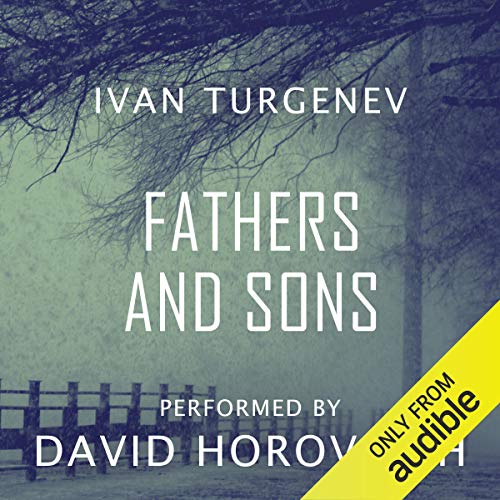
This one is a choice for my reading challenge that’s a new-to-me classic. Not only had I never picked up one of his books before, but I’d been saying his name wrong all these years. Thank you narrator David Horovitch for setting me straight on that one. I will say, it sounds a lot better in real life than the version that was in my head.
Fathers and Sons was released in 1862 and was a bit controversial in Russia at the time, though it would gain great acclaim from other authors like Henry James for its importance as a reflection of the changes affecting Russian society at the time. In the novel, young nihilist Bazarov, a student with a particular affinity for science and an aversion to authority and tradition, goes to visit the family of his schoolmate, Arkady. The young man experiences particular friction with the uncle of his friend, a very traditional member of polite society. He also experiences friction upon returning to his own home to visit his parents. Turgenev set the novel in 1859 just prior to the emancipation of the serfs that would come in 1861. This is an important detail, as this topic presents a defining difference in the competing ideologies held by the two sets of fathers and sons. Turgenev presents these familial relationships in a way that echoes the competing ideologies of the Russian political landscape. Through the introduction of potential love interests, he also manages to weave in the politics of gender and relationships.
I won’t say this is an enjoyable read, but I can see why it’s considered a great classic novel due to the afore-mentioned socio-political aspects, as well as a pretty deep psychological streak. Honestly, the characters are extremely frustrating, especially Bazarov. I appreciate this radicalism, as progress has always been driven by the radicals with big ideas. However, his good ideas were clouded over by his arrogance, stubbornness, and complete inability to be open to other ideas. He was blind to his own prejudices, which seems to fly in the face of his own brand of progressiveness. I do feel that Turgenev effectively presented these separate dichotomies as well as the evolution of progress. It’s important to analyze how families navigated the changing political landscape. It was actually the older generation in the novel that seemed the most open to change, with the exception of Arkady who existed as sort of a mediator between the two opposing parties. He wasn’t quite as radical as his friend Bazarov, and this worked in his favor. He was still capable of critical thinking.
Frankly, today I feel like this is an important lesson we need in the United States. We are an absolute mess, and political differences between parents and children are driving intense divides, and many of the issues at play surround class structure, race relations, gender, and other issues also relevant in Turgenev’s time. These issues will always be relevant. However, it seems that the United States is going the opposite direction, away from progress and back toward more traditional ideas not very conducive to human rights. The parents seem to be more radical and the children more apathetic, which hopefully will change once they see the harm their parents ideas are doing to the political landscape.
The novel takes an interesting and very abrupt turn to the dramatic and utterly depressing near the end, which I found jarring and I wasn’t quite sure what to think. Considering my conflicting feelings about the characters, it was difficult to come to turns with these abrupt changes. It’s difficult to explain in further detail without spoiling the novel, so I’ll leave it at that. Overall, I would give this one 4 stars. I can’t say I enjoyed it but I definitely understand the novel’s importance that cements its place as one of the great volumes in world literature.
⭐⭐⭐⭐
Rating: 4 out of 5.
First published February 23, 1862 by Grachev & Co., Moscow, Russia. Edition published January 1, 2009 by Audible Audio. ASIN B0DM48N4SK. Runtime 9 hrs. 16 mins. Read by David Horovitch.
This is why I do a reading challenge every year and why I often try to put categories outside my comfort zone on my list. Rarely, if ever, would I seek out a book in verse. In this case, I’m so glad I did! Let’s dive in, no pun intended.
Synopsis
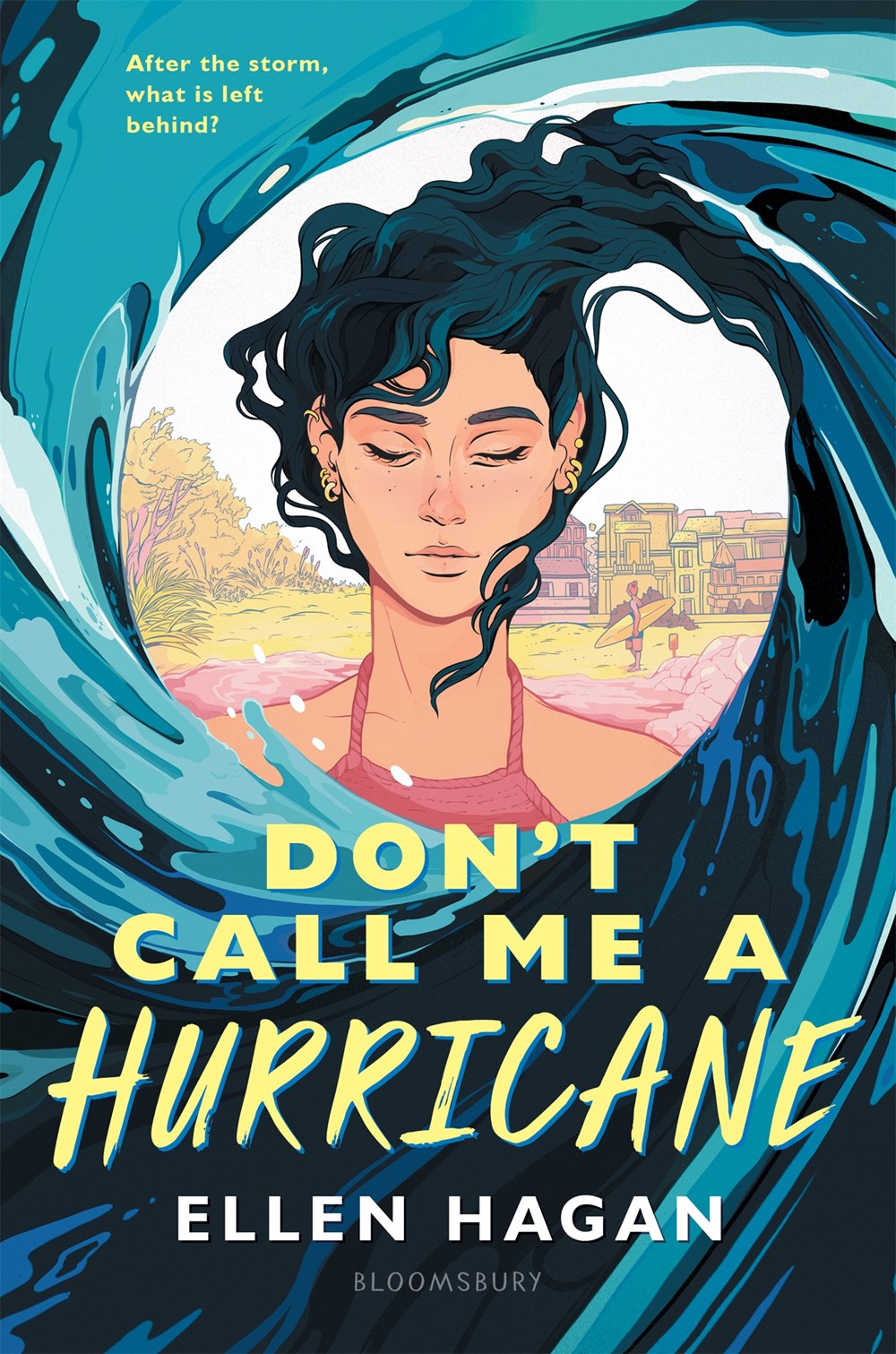
Eliza Marino is a teen who deals with constant threats from external forces. Having survived a hurricane five years previous that threatened to destroy the home on Long Beach Island in New Jersey that she adores, she now spends her days and nights trying to protect it. She fights not just against the ravaging effects of climate change but against the tide of developers who seek to transform the local protected habitats for their own selfish gain. When Eliza meets Milo Harris, the wealthy son of a rich tourist who has come for the summer, she reluctantly agrees to give him surfing lessons despite going against everything he stands for. As the two grow closer over the course of the summer, Eliza finds herself torn between the life she knows she’s meant to live and the boy whose mere presence threatens to destroy it.
Review
As I sometimes do, I glanced through some other reviews upon finishing the book before starting my own review. Obviously, all readers have differences of opinion and view text in certain ways, but I feel a lot of people didn’t really get this book or what it truly symbolizes. Some readers said Eliza wasn’t exactly likeable. Some readers said they didn’t think Hagan’s style was consistent enough. Fair enough, on both points, I suppose. But I’d like to break both those down if I may, because I disagree on both points, especially the latter.
Firstly, let’s take Eliza. She’s a little angsty and hyper-focused on climate change. #1 – she’s a teenager. I don’t think I need to say any more on that point. It speaks for itself. #2 – Five years ago she almost lost her home and her family to the worst disaster that had ever befallen her island. Now she suffers from extreme anxiety and PTSD. She also adores the ocean but must come to terms with the fact that it possesses the dangerous power to wipe out the existence of everything she knows and loves within minutes with one reach of its powerful and all-consuming arm. Let’s just say that her rage and confusion are a bit more complex than that of the average teenager. She has missteps on her quest to save her island, but her intentions are pure and her single-minded passion is quite admirable.
Now let’s move onto style. I absolutely adored what Hagan did with this, and I thought the fluctuations in her style were appropriate for the story. It is a novel in verse, and it does read like a novel. The verse offers the story the kind of ebb and flow that mimics the sea. It could be languid and peaceful, drawing out a scene and reveling in the quietness of the moment, or it could be intense, choppy, and to the point, highlighting the constant danger that lurks beneath the surface of the waves. Maybe some people found this heavy handed, and maybe some people just didn’t get it at all. And maybe I’m making a mistake by inserting my own intent to Hagan’s writing. I have no idea if this was her intent. Either way, I liked it.
Owning to the fact that it is written in verse, this is an exceptionally short read. I managed to read it over the course of just a couple of evenings while on a trip in which I had a myriad of other things to occupy my time. Overall, I give it 4.5 stars.
⭐⭐⭐⭐⭐
Rating: 4.5 out of 5.
Published July 19, 2022 by Bloomsbury YA. ISBN 9781547609161. Hardcover. 400 pages.
I feel I’m cheating a bit with this pick of The Women by Kristen Hannah as my reading challenge choice as a book recommended by a fellow blogger. I have, after all, read a lot of Kristen Hannah and would have eventually picked this one up on my own, but WHO CARES? I was definitely inspired to move it up a bit in the rotation, one would say, by Bob at Bob on Books who even chose it as one of his Best of 2024. That’s high praise.
Synopsis
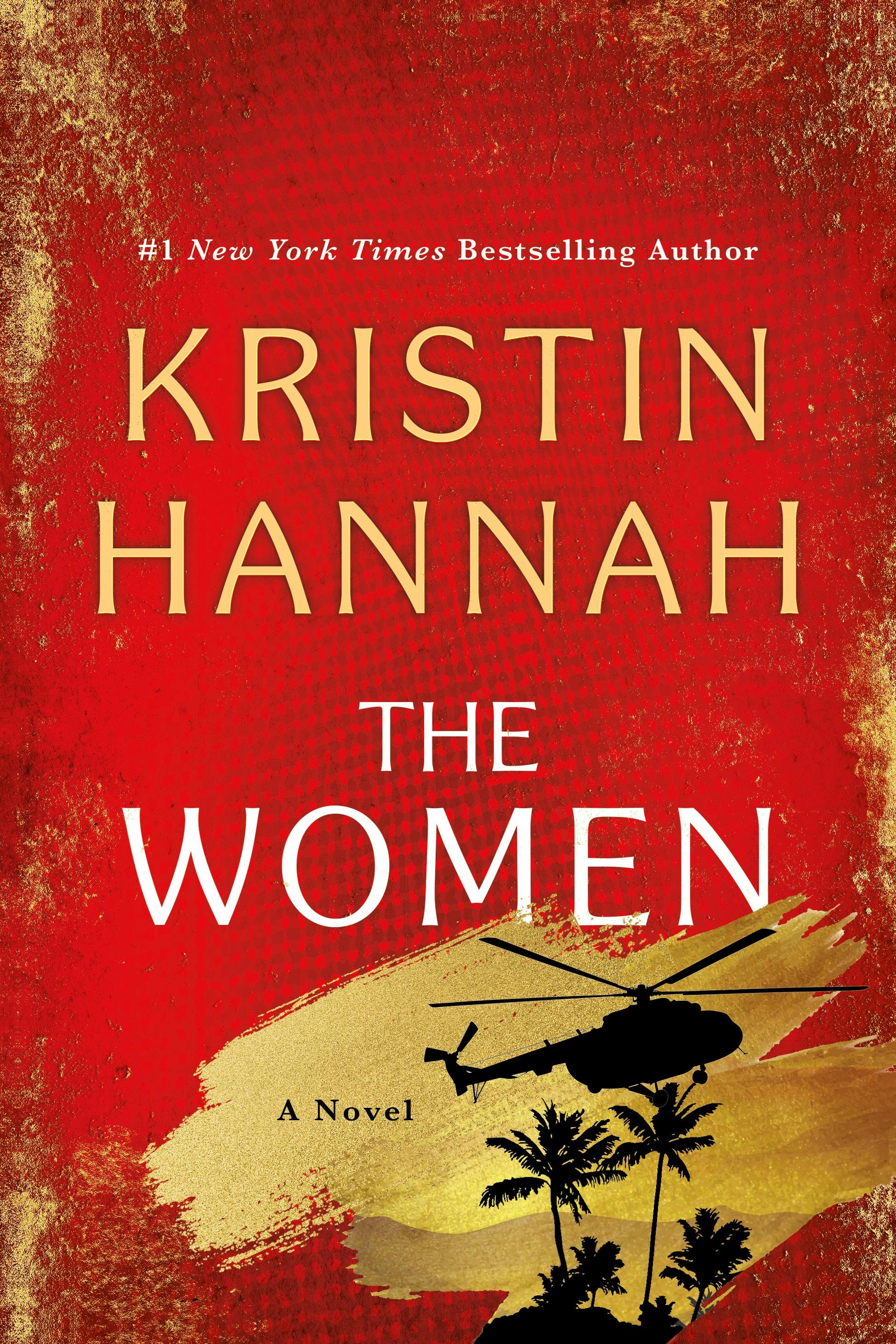
Hailing from a highly respected family with deep military roots, Frankie McGrath grew up believing in heroism, having long admired the family pictures of servicemen on her father’s “wall of heroes.” When her brother, Finley, signs up as a helicopter pilot for the Vietnam War, Frankie chooses to follow him in the only capacity in which she can, as an army nurse stationed in the thick of the turmoil. Though completely ill-prepared, Frankie arrives in Vietnam during a mass casualty event, finding herself thrust into a trial-by-fire situation in which she must endure the most horrifying tests of her courage and endurance or crumple into a heap.
The novel follows Frankie through the horrors of war back to the States where she must endure a new kind of hell, a world that has no respect or understanding for what she’s been through and has no desire to help her come to terms with the things she’s seen and experienced.
Review
I love Kristen Hannah, but let me say this. She does not hold anything back. This is a novel of war, and Vietnam was a particularly brutal and controversial war. Hannah spares her readers nothing. There were times I wondered how any one person could ever mentally or emotionally survive the things Frankie endures during the war. Just when I thought it was bad, it got worse. But that’s what makes this novel so powerful. It’s raw, visceral, and the intent is to make you want to look away from the mental images placed in your head. What’s important is that these moments inspire in us the ability to truly empathize with those heroes who went off to war and came back utterly broken only to be ostracized and vilified at home.
Hannah also doesn’t spare us a deep-dive look into the controversy. She presents the war as it truly was: a senseless, poorly-executed, and patently immoral fuck-up of epic proportions. She does, however, place the blame on the shoulders of those who should have borne it rather than the people sent by the higher-ups to fight such a senseless war. Honestly, put into perspective it becomes so much more tragic realizing so many lives were lost for nothing.
Probably the most poignant aspect of this novel is its treatment of women during the Vietnam war. Their presence was completely and utterly overlooked. These nurses who often had to treat the wounded while their camp was actively being bombed came home looking for assistance with PTSD only to be told that “there were no women in Vietnam,” even by veterans and veterans’ aid groups who should have known better. The way Frankie and her fellow nurses (and other women who served in other capacities) were treated after showing acts of uncommon valor was utterly infuriating, and that’s actually an understatement. There’s also a very powerful family element here that shows the intense strain placed upon Frankie’s relationship with her very traditional parents who seem utterly incapable of embracing the true Frankie, a woman so obviously the antithesis of the debutante daughter they thought they’d raised. The way each family member processes their own separate grief and trauma with bumbling imperfection just accentuates the authenticity of this novel.
For the most part, I loved the way Hannah handled all aspects of the war and the way it followed Frankie home to the United States. She’s such an effective story teller, and she’s crafts her characters and their imperfections deftly and with a purpose. I could have done without some aspects of the love triangle. I would have preferred one of the men be removed entirely because he only provided more frustration in an already frustrating story. Sadly, there was a lot of realism in his character. I’m certainly not complaining about authenticity. The remaining love story arc I found to be a bit predictable, but in this book it was more of a needed sigh of relief. Everything else was so dark and dreary it’s nice to be thrown a tiny little lifeline to relieve some tension.
Overall, I’m very glad I read this book. It will stick with me for a long time and I will recommend it, especially to lovers of historical fiction. I will do so carefully, however, because it’s only suited for those with thick armor against intense brutality.
⭐⭐⭐⭐
Rating: 4 out of 5.
Published February 6, 2024 by Macmillan Audio. ISBN 9781250317957. Runtime 14 hrs, 57 mns. Narrated by Julie Whelan.
I hope everyone had a wonderful Holiday, whatever it may be that you celebrate. For my family, we celebrate Christmas and everyone had a wonderful and relaxing time opening presents and eating wonderful food. The last few days of the year will find me tying up loose ends here at the blog, posting my final reviews, and completing my reading challenge (hopefully). What better way to follow up a Holiday that celebrates cozy goodness and cheer than to talk about a seriously disturbing book!
The Island of Dr. Moreau was published by H.G. Wells in 1896. At the time, it wasn’t exactly welcomed by many sectors of society, many finding it blasphemous and too horrendous for print. (Wonder how those people would have felt about The Human Centipede.) In my words, that’s called being “ahead of your time.” This story of an eccentric doctor who has hidden out on his private island in order to enact some horrific experiments on all forms of living creature, including humans, was certainly shocking in its day, but he certainly wasn’t the first to question the ethical boundaries of scientific research. The people pissed about this one had been pissed for the whole of the 19th century at that point, so nobody really cared what they thought.
This one does pack a punch, however. It is grotesque, violent, and it certainly didn’t age well in some respects. There are some notable blatantly racist passages to the point that the audiobook version inserted a disclaimer just prior to one particularly bad section asserting the publisher’s apologies for what Wells put into print all those years ago. Then again, anyone who is a frequent reader of classic fiction must have a thick skin when it comes to exposure to the bad ideas of our predecessors in history. I will forever be in the camp that we can’t forget about or censor history lest we be doomed to repeat it. We are protecting no one, especially our children, if we deny the ugly parts of our history.
Overall, I think this is an important book in the classic science fiction canon, if only for its place as a subversive text that dared to challenge the delicate sensibilities of polite society.
Yeah, I’m here for that.
It’s a quick read despite being a little difficult to digest at times. I wouldn’t say any character is particularly likeable, but that is somewhat the point in addition to being a reflection of the time. There are certainly some eras I enjoy reading about, but I certainly wouldn’t have wanted to exist within them. *shudder*
Overall, I would give this one 3 stars. It’s important, yes, but it’s not a book I will read again.
⭐⭐⭐
Rating: 3 out of 5.
Published originally January 1, 1896. Edition published 2023 by Findaway Voices. ISBN 9798868639975. Runtime 4 hrs. 12 mins. Narrated by Mike Cuellar
Forgive me if I quickly blaze through my next few reviews. I’ve been moving lately and life has been so chaotic. I find myself at the final hour trying to finish my books and reviews for my reading challenge this year. I’m going to make it, but my reviews might not be quite as well-thought-out as I usually attempt.
For my Oprah’s Book club selection, I chose this one. It’s a very highly-rated memoir about a woman who destroyed her soccer mom existence with a drug habit that led her to financial ruin and then to massive identify theft out of desperation to maintain the status quo. The goodreads synopsis claims this book “recounts her slide” but it’s really more of the upward climb back up that’s the focus of the memoir. We start at the very bottom, the lowest of the low, in which Love is attempting to sign herself into a hotel with a neighbor’s stolen credit card only to have the law come calling not too much later. Sure, she looks back a bit into the “how did I get here” realm, but it’s really very simple. It’s the tale as old as time. What truly matters is how she left that behind and created a future for herself that a ridiculously low number of people are able to obtain.
I found it difficult to get into this one because of the initial frustration. It’s difficult having a birds-eye view into someone destroying their own life and that of their children. You will not like Lara in the beginning chapters, but please stick with it. If anything, this book draws some striking and important attention onto the way our society is not just hesitant to give second chances to people who’ve made mistakes but downright campaigns against them and does everything in its power to ensure they will never again be able to lead a normal lives. You can do your time, but you’ll never be free of the stigma. This book also highlights the importance of finding those people in your life willing to stick their necks out for you, even through a faith that may be tenuous at best. In Lara’s case, she got insanely lucky. But she also had her own tenacity and willingness to fight. She knew she had made terrible mistakes, but she never gave up on the idea that she had something to offer. She was smart, resourceful, and dedicated. Her story shows us that with a little faith placed upon someone hard on their luck, anyone can come back from the hellish existence of an addict. Sometimes opportunity is all one needs to realize their own potential.
Ultimately this is a beautiful story of survival and perseverance. It is, however, also about atonement and a giving back where someone has only been previously willing to take. It’s about forgiveness given and even forgiveness denied. If you’re looking for a good uplifting memoir, this is a good one. There’s a lot of ugly stuff in the world and a story of one person’s escape from the ugliness is quite worth it. The audio is read by the author, which gives it a very personal feel. Overall, 4 stars for this one.
⭐⭐⭐⭐
Rating: 4 out of 5.
Published August 1, 2023 by Simon & Schuster. ISBN 1982197668. Runtime 8 hrs 59 mins. Narrated by the Author.
In my quest to check off more titles on my reading challenge at the last minute, I’ll add this one for my alliterative author pick. It was also the book club selection for Read Between the Wines this month, chosen by me. I did a bit of double dipping, as you can see. Having been feeling a lot of weight in the things I was reading and experiencing, I decided a nice YA title would be a good choice. It wasn’t exactly light, but I certainly could have chosen worse. And a good fantasy is able to pull me out of the overwhelming nature of reality.
Divine Rivals follows Iris Winnow, a young journalist who finds herself battling the conflicting emotions of her rivalry with a fellow journalist from the other side of the tracks, as they used to say. Iris, with her off-to-war brother and substance-addled mentally absent mother, struggles to keep afloat under the mental load that comes with being the lone breadwinner of the family. Roman Kitt, conversely, enjoys a privileged moneyed life but lacks the freedom and independence he desires due to his controlling family. While the two clash on a professional level, they find themselves drawn to one another by threads they never knew existed and will have to choose between what is expected by the outside world and what they want for themselves.
I don’t think it’s too much of a spoiler to say that Iris and Roman find themselves corresponding magically through their typewriters, two devices that have a shared history that left them connected permanently. They are like little teleportation devices for the written word. Old-timey email, if you will. This is essentially a war novel, but there’s a twist. Taking place in the mid-to-late 1910’s, the novel proposes an alternate history in which the mythologies of Gods and Goddesses have a basis in fact and the two warring Gods have returned to wage their war, pulling humans into the line of fire. Iris and Roman join the soldiers at the front as war correspondents, an act that pushes the novel to its dramatic cliffhanger of a conclusion.
What I like about this is the clever conventions Ross uses to set up her narrative. I liked both Iris and Roman and thought they had good chemistry that was fraught with just a bit of angst. It’s certainly a passionate relationship, and I even thought maybe things progressed rather rapidly once they reached the front. Like I said, this is a first book and it has quite the cliffhanger, so be prepared to not have ultimate satisfaction, but that’s something to be expected with this genre so I don’t see that chasing anyone away.
Interestingly enough, more than one of our book club members said they found themselves pulled in more to the story when they read the physical book than when they listened to the audio. I didn’t have any issues with the audio, but that’s food for thought if you’re looking into this book and trying to decide which format to choose. Overall, I found this to be an engaging and enjoyable read and look forward to the second installment.
⭐⭐⭐⭐
Rating: 4 out of 5.
Published April 4, 2023 by Wednesday Books. ISBN 9781250857439. Runtime 10hrs 50mins. Narrated byRebecca Norfolk and Alex Wingfield.
I hope you came here for unpopular opinions, because I’m about to throw one at you. I’m not a big Mark Twain fan. I know, I know, but hear me out… It’s not his ideas. I love the concept of his books. He was ahead of his time, and I think satire is a very effective tool as a force for change. Humor has healing properties, and writers like Mark Twain were positively revolutionary in the world of literature. I value his books and his ideas very much. I just don’t care for his writing style and didn’t exactly enjoy reading his work. I’m sorry, Mark. Please don’t haunt me. Hannibal really isn’t that far from here.
With all that being said, I think that’s what I love so much about this particular novel. Let’s face it. We all know Jim, the escaped slave who accompanies Huck on his journey, is truly the more compelling character. Mark Twain couldn’t really write THAT particular book at the time as it wouldn’t have been as well received by the target audience, but he still presented the character of the honorable and intelligent black man who could actually forge a deep connection with a white boy in such a way that made people question their own preconceived notions and prejudices. And the original really is about Huck’s coming of age to realize the prejudices of his ancestors don’t have to define his own truth or the truth of future generations. Friendship is friendship regardless of race, age, or class. A trusted friend is a treasure, and there’s nothing wrong with doing something your elders tell you is wrong if it’s for the right purpose, especially if it’s to protect someone who needs protection. Wisdom is knowing that the old people who tell you what to do can be stupid, too. That’s a valuable narrative, and I in no way mean to de-value it by showing a preference for this new adaptation. In fact, were I to teach an American Literature course, I’d be teaching these two in tandem because the two different perspectives help the story come full circle.
Percival Everett, in his rewrite of The Adventures of Huckleberry Finn, presents the side of the story Twain didn’t put to paper. It’s the intimate account from Jim’s point of view, including all those times in which Jim is separated from Huck and we don’t get his experiences in the original text. What Everett gives us is a sometimes humorous, always harrowing, and often tragic view into the innermost soul of James. In his novel, James is a highly intelligent self-educated man who strategically wields his ability to play the part of the “dumb slave” for the mere purpose of survival. While covertly teaching the younger generation to read, write, and think critically, he also teaches them how to fly under the radar and tow the line so as to best protect themselves from harm as they navigate the dangerous world of the “peculiar institution” that is slavery. In this way, Jim and James almost become two different people. As the novel progresses, we see James more forcefully embracing his true identity while leaving Jim as a remembrance of a past to which he will not return. In that respect, this story is as much his coming of age as it is Huck’s.
Everett’s writing is stunning, and the moments he crafts are poignant and profound. During one particular confrontation between James and his prior abuser, I found it so damn satisfying and perfect I wanted to engage in a full-blown fist-pumping couch-jumping session of gleeful abandon. I refrained and settled for quiet glee, but it was difficult to control myself.
Like any great novel involving such an ugly time in history, much of this is difficult to stomach. It will make you angry, make you cry, and make you want to rage at the casual callousness and cruelty that infects the entirety of human history, including the history currently being written. The current cancer of human intellect is deflection and denial, a willful ignorance of the past that doesn’t allow for the prospect of remorse. How could history not repeat itself if half of us choose to deny the mere existence of the past? It makes things so much more difficult for those of us who actually want to believe in the capacity for human growth and enlightenment. Pardon me while I take a break to go scream into the void.
Ok, that’s better.
Truly, however, this novel is a marvel. It’s no surprise that it was shortlisted for the Booker Prize. Not having yet read the actual winner, I won’t make the claim that James should have won, but I would say it’s definitely worthy of any and all accolades. I also highly recommend the audio as narrated by Dominic Hoffman. Looking through his catalog of other narrations, I see he also narrated Homegoing by Yaa Gyasi, which is one of the most stunningly beautiful books I’ve ever read. I’m sure he did it justice though I didn’t originally read in that format. Along all fronts, this one is a five-star read.
⭐⭐⭐⭐⭐
Rating: 5 out of 5.
Published March 19, 2024 by Random House Audio. ISBN 0385550367. Runtime 7 hrs 49 mins. Narrated by Dominic Hoffman.
Yes, this will be an actual book review. While my last two reviews were stark reminders of how truly FORKED the United States is, this book is like basking in the warmth of the sun on a sandy beach with a margarita in hand and no worries in your head. In case you are in need of a respite from the perils of the world, look no further than this charming contemporary romance.
Synopsis
Daphne and her fiance, Peter, have the perfect meet cute, a story Peter loves to tell any chance he gets. It would be straight off the screen of a blockbuster romcom if not for one inconvenient detail. With their wedding just around the corner, Peter leaves Daphne for his childhood best friend, Petra. Daphne, having dropped everything to move across country with Peter finds herself without support or even a place to live when she’s ejected from their communal home that Petra will be moving into in her place. The solution? She turns to the one person who can also share in her pain and who now just might need a roommate. The ex of her ex-fiancé’s new fiancé. While they are polar opposites, buttoned-up Daphne and pot-smoking croc-wearing Max form a kind of unique friendship based upon their common desire to irritate the hell out of their exes with their new fake relationship. As they fall further into the lie and Daphne sets plans in motion for the return to her hometown, their shenanigans just might bring them more trouble than they anticipated. And Daphne might come to see she has a few reasons to stay, after all.
Review
You have probably heard me say before that I’m not a big fan of romance. Well, that’s not completely true. I actually love quirky contemporary romances with heroines that don’t seem to be cut out of a magazine and leading men who don’t spend the whole book shirtless with a smoldering smirk. If that is your thing, you go, girl (or guy). I’ll take the book with the awkward librarian who has difficulty connecting with her peers and the scruffy dude in crocs with an affinity for Bridget Jones and farmers’ markets. It’s all in the little details that make characters enjoyable and relatable. Henry really excels at those fine-tuned details in this novel. Her writing is competent, witty, and smart. It’s not just about Daphne’s love story, but it’s Daphne’s human story. It’s her growth as a woman, a friend, and a lover. It’s the way Max opens her up to aspects of the world she’s never let in before and the way she’s willing to make a life of her own, not one that’s built around someone else.
I think that’s often what bothers me about a lot of romance novels. A woman’s worth is not wrapped up in who she is in relation to men. Maybe, like Daphne, she has always viewed herself as important only because she’s in a relationship, but a truly good book will be about her coming of age. It will about her realizing her own worth. I’d much rather see her grow to love herself before focusing on her love for someone else. Only then can she find a partner who values her for the right reasons. It’s certainly not about sex, though a little of that spice is welcome if it’s done well. In this case, I think Henry captured the spice quite well.
Over all, I thought this was a very solid and satisfying contemporary romance that checks all the boxes. It’s sweet, authentic, and highly relatable with an understated spiciness.
⭐⭐⭐⭐
Rating: 4 out of 5.
Published April 23, 2024 by Penguin Audio. ASIN B0CCPPQ38D. Runtime 11 hrs. 23 mins. Narrated by Julia Whelan.

 Alas, for my shame. This is my choice for my Bad Reader category in 2024- the book I have seen an adaptation of but never picked up. I know, I know!!! How could I have gone through 40 years of life without ever having read A Christmas Carol??? Honestly, maybe I did at some point but the actual book is buried in my brain beneath the various recreations by film, play, muppet and anything else that dared to take on the most quintessential Christmas tale of all time. Trust me… I KNOW A Christmas Carol. Just this year I saw another hour-long dramatized version at Silver Dollar City complete with a very silly version of The Ghost of Christmas present. I’m telling you, she was something else. I don’t really understand why so many dramatized versions choose to do such odd versions of the ghosts unless it’s just to entertain the children, but some of them can be quite annoying. In the novel, Dickens gave all the ghosts the gravity befitting their station.
  This one is a choice for my reading challenge that’s a new-to-me classic. Not only had I never picked up one of his books before, but I’d been saying his name wrong all these years. Thank you narrator David Horovitch for setting me straight on that one. I will say, it sounds a lot better in real life than the version that was in my head.
  Eliza Marino is a teen who deals with constant threats from external forces. Having survived a hurricane five years previous that threatened to destroy the home on Long Beach Island in New Jersey that she adores, she now spends her days and nights trying to protect it. She fights not just against the ravaging effects of climate change but against the tide of developers who seek to transform the local protected habitats for their own selfish gain. When Eliza meets Milo Harris, the wealthy son of a rich tourist who has come for the summer, she reluctantly agrees to give him surfing lessons despite going against everything he stands for. As the two grow closer over the course of the summer, Eliza finds herself torn between the life she knows she’s meant to live and the boy whose mere presence threatens to destroy it.
  Hailing from a highly respected family with deep military roots, Frankie McGrath grew up believing in heroism, having long admired the family pictures of servicemen on her father’s “wall of heroes.” When her brother, Finley, signs up as a helicopter pilot for the Vietnam War, Frankie chooses to follow him in the only capacity in which she can, as an army nurse stationed in the thick of the turmoil. Though completely ill-prepared, Frankie arrives in Vietnam during a mass casualty event, finding herself thrust into a trial-by-fire situation in which she must endure the most horrifying tests of her courage and endurance or crumple into a heap.
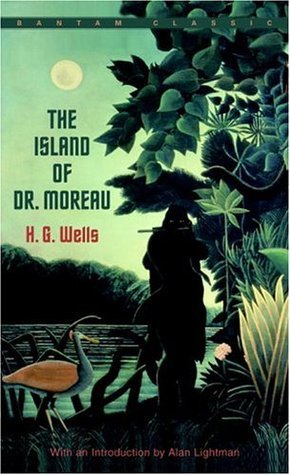 The Island of Dr. Moreau was published by H.G. Wells in 1896. At the time, it wasn’t exactly welcomed by many sectors of society, many finding it blasphemous and too horrendous for print. (Wonder how those people would have felt about The Human Centipede.) In my words, that’s called being “ahead of your time.” This story of an eccentric doctor who has hidden out on his private island in order to enact some horrific experiments on all forms of living creature, including humans, was certainly shocking in its day, but he certainly wasn’t the first to question the ethical boundaries of scientific research. The people pissed about this one had been pissed for the whole of the 19th century at that point, so nobody really cared what they thought.
 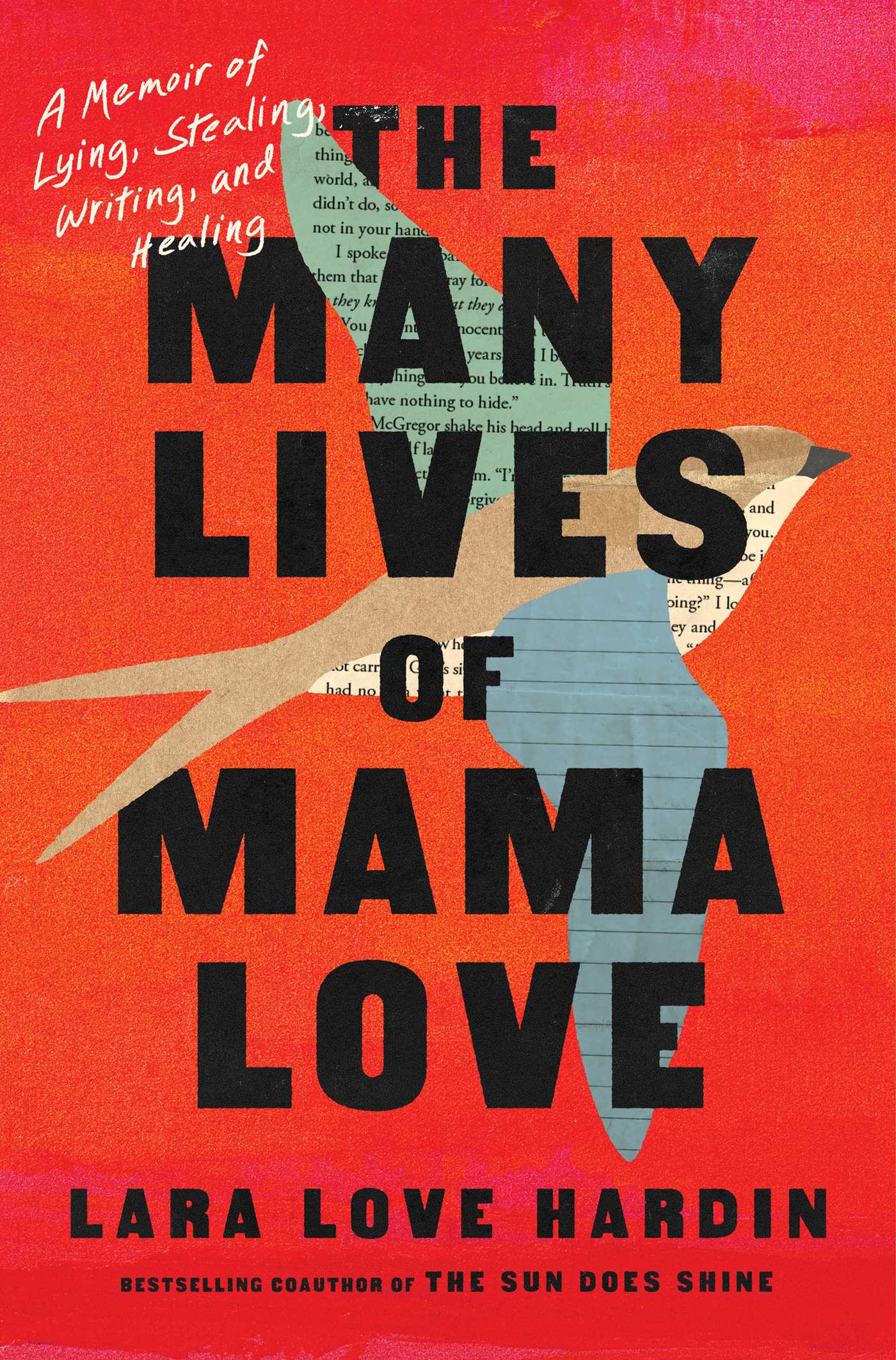 Forgive me if I quickly blaze through my next few reviews. I’ve been moving lately and life has been so chaotic. I find myself at the final hour trying to finish my books and reviews for my reading challenge this year. I’m going to make it, but my reviews might not be quite as well-thought-out as I usually attempt.
  In my quest to check off more titles on my reading challenge at the last minute, I’ll add this one for my alliterative author pick. It was also the book club selection for Read Between the Wines this month, chosen by me. I did a bit of double dipping, as you can see. Having been feeling a lot of weight in the things I was reading and experiencing, I decided a nice YA title would be a good choice. It wasn’t exactly light, but I certainly could have chosen worse. And a good fantasy is able to pull me out of the overwhelming nature of reality.
  I hope you came here for unpopular opinions, because I’m about to throw one at you. I’m not a big Mark Twain fan. I know, I know, but hear me out… It’s not his ideas. I love the concept of his books. He was ahead of his time, and I think satire is a very effective tool as a force for change. Humor has healing properties, and writers like Mark Twain were positively revolutionary in the world of literature. I value his books and his ideas very much. I just don’t care for his writing style and didn’t exactly enjoy reading his work. I’m sorry, Mark. Please don’t haunt me. Hannibal really isn’t that far from here.
  Yes, this will be an actual book review. While my last two reviews were stark reminders of how truly FORKED the United States is, this book is like basking in the warmth of the sun on a sandy beach with a margarita in hand and no worries in your head. In case you are in need of a respite from the perils of the world, look no further than this charming contemporary romance.
