
 If you, like me, are a child of the 90’s or before, you are quite well-versed in the fact that some children’s programs meant to bring joy and comfort dredged up feelings less desirable, often inspiring regular nightmares and originating new deep-seeded fears. Even shows I adored when I was a kid I can watch today and there’s something unsettling about the characters, costumes, and plot points. Sometimes it’s not overt but just a vague sense that things aren’t quite right. Other times the nightmare fuel is quite in-your-face.
If you’re interested in going down this rabbit hole a bit further, see this quite creepy compilation from blameitonjorge:
In her novel, Mister Magic, Kiersten White taps into this nightmare world in a way that’s both clever and effective. This novel finds five members of the Circle of Friends reuniting thirty years after a tragic accident took one of their own, effectively ending the popular kids’ show, Mister Magic. One member, Val, has no memory of the events that transpired before her father secreted her away to a secluded ranch cut off from the outside world. When her four former friends turned strangers re-enter her life, she’ll follow them on a quest to discover her forgotten past, one that will prove to be painful and terrifying.
This novel is a slow burn, a deeply unsettling mystery that unravels just a bit at a time, keeping you on edge before reaching a dramatic conclusion that only heightens the tension. White plants doubts about the nature of reality, as well as doubts about who can and can’t be trusted in this world of secrets buried deep within Val’s memories. The thematic tie-in with children’s entertainment is merely surface-level, as there’s an even deeper metaphor about propaganda, religious dogma, and psychological grooming that resides even deeper beneath the surface. Frankly, this is an utterly brilliant concept, and it’s not one that’s unheard of in the actual world of children’s entertainment, as children’s programming has been used in the past for religious indoctrination and adolescent grooming. To follow another rabbit hole, merely google the cult-manufactured propaganda show from the 80’s titled Life With Grandpa. Don’t blame me when you lose hope in the future of humanity. And for a deep-dive into the show, Nick Crowley has done a fantastic documentary on the show that you can find here:
There’s very little I can say about this book without giving away key points that are pretty vital for the reading experience. It’s an engaging book that really picks up the further you delve into the mystery surrounding Mister Magic, who or what he was, and how the show has faded into merely the ether of vague memories without leaving physical traces of its former existence.
Overall, White is a skilled and succinct writer with a lot to say, and she easily wields her metaphor in a way that inspires both nostalgia and extreme anxiety. I know it’s only April, so it doesn’t carry much weight saying this is the best horror novel I’ve read all year, but it’s likely it could keep that place as my favorite, if only for White’s ingenuity in crafting such a unique story in a genre rife with old and tired tropes. If you do give this one a try, take it slow and savor the slow burn. It’s not a long book, but it’s a deep one.
Published August 8, 2023 by Del Rey. ISBN 9780593359266. 295 pages. Hardcover.
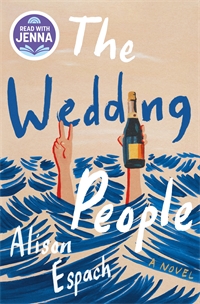 Tonight both the husband and the boy child are away for the evening, and I have four 10-year old girls singing karaoke at the top of their lungs on the floor below me, so I figured it was a great time to catch up on some book reviews. I’ve had The Wedding People finished for more than a couple of months but haven’t come around to writing the review yet. *wrist slap*
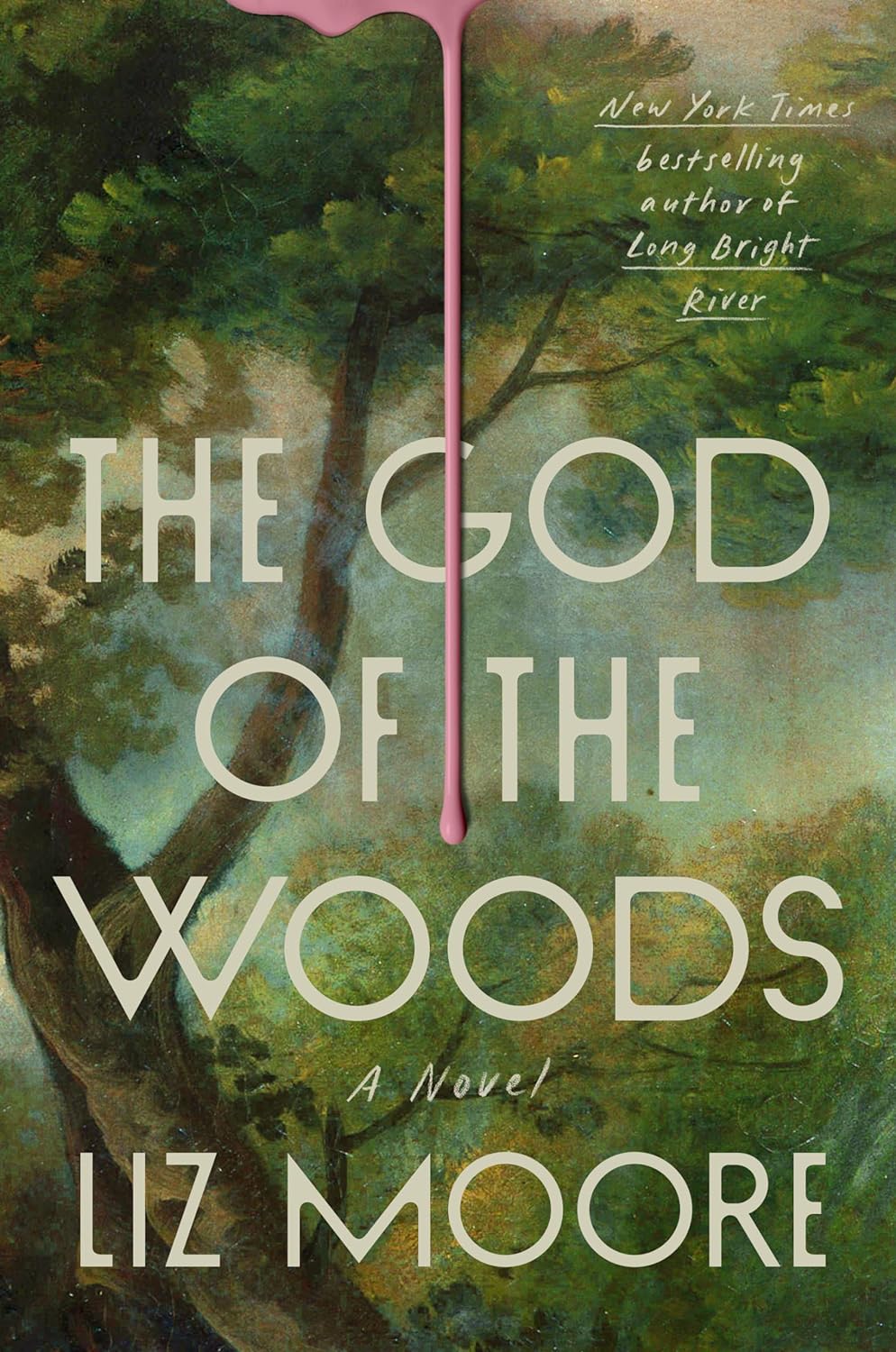 I was first introduced to Liz Moore a few years ago when I devoured The Unseen World, which I noted in my goodreads review from 2017 as “quietly spectacular.” I remember it being a technologically-driven mystery for super smart people, and I often think about the book even today. This novel, The God of the Woods, is an incredibly different type of book. There’s still a mystery involved, but it’s a much more standard type of mystery. Their commonality exists in the fact that both books are extremely well executed by Moore, a human who is obviously very adept at her craft.
  Karen Marie Moning has a pretty big fan base, but I’m admittedly a newbie to her work. Simply from the title, I thought I was picking up a haunted house tale, but that’s not what this is. It is a tale in which a woman inherits a creepy old house from a relative she didn’t know existed, but that’s where the similarities with other novels in the Gothic house trope end. From there, this one becomes a tale of centuries old covens and magical beings. Oh, and it’s the first of a new trilogy. If I’m being completely realistic, I can see this one being one that falls off my radar and I never finish the trilogy. Let’s get into why…
  Any time Liane Moriarty releases a new title, it’s highly anticipated. While I can’t say any of her more recent books have quite blown me away like Big Little Lies which sparked a near obsession in me, I haven’t read any I didn’t like. This particular book has a slightly different tone. The mystery is a bit more understated.
  In February, 1959, a group of hikers, all but one college-aged, but all highly experienced hikers who were quite adequately prepared for their hike into the North Ural Mountains in Russia, perished on their journey under highly mysterious circumstances. Over the past more than 60 years following the incident, numerous theories have abounded, from the natural (avalanche) to the supernatural (aliens) to the human (government conspiracy). Not one of these theories can completely explain every detail of the circumstances surrounding their deaths. What on Earth could cause 9 intelligent, skilled, and experienced young hikers to flee the safety and warmth of their tent in dangerously frigid temperatures without even the protection of shoes?
  Troubled teen, Cindra, having been convicted in an armed robbery scheme along with her boyfriend, arrives at Camp Challenge, a reform camp for girls located in Montana. A former city girl, she will have to navigate her new world in the American west, a world of cowboys and vast wilderness. While at camp, she meets Lucky Turtle, a native man who works at the camp as a driver. Lucky tells her his Aunt told him they were destined to be together. From that moment on, they are thrown into a love story that will span decades and miles and include unbearable hardships.
  I’ll start this review by saying that it was a terrible choice. I’m not saying it’s a terrible book, but it wasn’t a great choice to begin. I’ve never read any of this author’s work before now, and from what I’ve read about the author, this is something that was a little different for him. Le Carré, born David John Moore Cornwell, was a former intelligence officer and British author of numerous beloved novels of espionage. His George Smiley spy novels have amassed a cult following and his work has inspired numerous adaptations for film and television, including 2005’s The Constant Gardener and 2011’s Tinker Taylor Soldier Spy. Following his death in 2020, his son, Nick Cornwell, a writer who publishes under the pen name Nick Harkaway, decided to continue the George Smiley series. In addition, he released his dad’s last manuscript, one which the author had chosen not to publish. According to Harkaway in the afterward for the novel, he believes his father didn’t publish Silverview because it “does something that no other le Carré novel ever has. It shows a service fragmented: filled with its own political factions, not always kind to those it should cherish … and ultimately not sure, any more, that it can justify itself.”
 This is quite possibly the most difficult review I’ll write for 2024. Yes, please ignore the fact that I’m posting my last 3 reviews (3!!!) for 2024 finished books in 2025. Forgive me, I’m not really on my game, as one would say. No… let me change that. That was absolutely on purpose because I’m doing my reviews in a non-linear flashback-laden fashion in honor of this book. You’re buying that, right? Would you instead believe I’ve been stuck in a well for the whole of 2025 having intense life-changing metaphysical experiences?
