
 Any time Liane Moriarty releases a new title, it’s highly anticipated. While I can’t say any of her more recent books have quite blown me away like Big Little Lies which sparked a near obsession in me, I haven’t read any I didn’t like. This particular book has a slightly different tone. The mystery is a bit more understated.
Synopsis
One fateful day on a domestic flight from Sydney to Hobart, the lives of strangers will all converge at the hands of one otherwise ordinary older woman, a woman soon to be referred to as the mysterious “Death Lady.” While in flight and in an uninteruptible trance-like state, the woman systematically points at each passenger and gives them the age and manner of their eventual death. For some, this is no more than a humorous carnival trick quickly laughed off and forgotten, but for others the grim prediction calls into question their own mortality. At the end of the flight, all passengers go their separate ways only to be brought back together when the first passengers begin to die under circumstances oddly in line with those predicted by the “Death Lady.” The novel alternates between the perspectives of those passengers unlucky enough to learn they will soon be expiring and that of the Death Lady herself where we learn how her past history led her to the fateful day that would make her infamous.
Honestly, at times I felt I was reading a Fredrik Backman book and not a Liane Moriarty book, which is not at all a bad thing. While all of her books are very character-driven, this one is very character-woven. Each person has his or her own place in the tapestry and they all come together into something quite moving, including Cherry, our supposed “Death Lady.” The novel still has that biting humor I expect from Moriarty, but the conclusion is less dramatic and more sentimental than I would normally expect from her. In a way, that’s refreshing, but it was also a bit more anti-climactic. Still satisfying, but not exacly explosive.
What I love most about Moriarty is her ability to bring something new and unique to the surface with every new title. She really digs deep and doesn’t just rehash the same old story with a fresh wrapping. I can’t tell you how refreshing that is, and it’s testament to her ingenuity. Both she and Backman are experts at crafting characters that stick with you. Not only that, but they can place these perfectly imperfect people in situations that feel authentic and pushes whatever narrative they’ve crafted into a conclusion that’s quite moving. I guess you can say I have a type because I’m all in for that. Moriarty isn’t just a writer. She’s a true storyteller. It doesn’t hurt that the audiobooks of every single one of her titles are narrated so superbly by Caroline Lee, sometimes with help from other talented individuals. I absolutely believe that has an effect on my enjoyment factor.
Honestly, when I meet someone who is a reluctant reader, I always have Moriarty in mind as a recommendation. If anyone can intrigue and spark a new-found love of reading, it’s her. Loving her books is effortless.
Published by September 10, 2024 by Random House Audio. ASIN B0CVSJJLW4. Runtime 15 hrs. 53 mins. Read by Caroline Lee and Geraldine Hakewill.
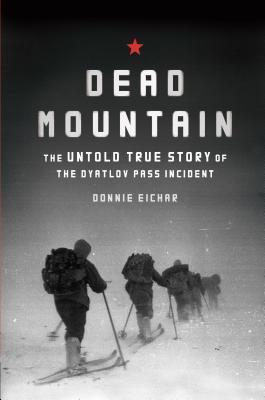 In February, 1959, a group of hikers, all but one college-aged, but all highly experienced hikers who were quite adequately prepared for their hike into the North Ural Mountains in Russia, perished on their journey under highly mysterious circumstances. Over the past more than 60 years following the incident, numerous theories have abounded, from the natural (avalanche) to the supernatural (aliens) to the human (government conspiracy). Not one of these theories can completely explain every detail of the circumstances surrounding their deaths. What on Earth could cause 9 intelligent, skilled, and experienced young hikers to flee the safety and warmth of their tent in dangerously frigid temperatures without even the protection of shoes?
  Troubled teen, Cindra, having been convicted in an armed robbery scheme along with her boyfriend, arrives at Camp Challenge, a reform camp for girls located in Montana. A former city girl, she will have to navigate her new world in the American west, a world of cowboys and vast wilderness. While at camp, she meets Lucky Turtle, a native man who works at the camp as a driver. Lucky tells her his Aunt told him they were destined to be together. From that moment on, they are thrown into a love story that will span decades and miles and include unbearable hardships.
  I’ll start this review by saying that it was a terrible choice. I’m not saying it’s a terrible book, but it wasn’t a great choice to begin. I’ve never read any of this author’s work before now, and from what I’ve read about the author, this is something that was a little different for him. Le Carré, born David John Moore Cornwell, was a former intelligence officer and British author of numerous beloved novels of espionage. His George Smiley spy novels have amassed a cult following and his work has inspired numerous adaptations for film and television, including 2005’s The Constant Gardener and 2011’s Tinker Taylor Soldier Spy. Following his death in 2020, his son, Nick Cornwell, a writer who publishes under the pen name Nick Harkaway, decided to continue the George Smiley series. In addition, he released his dad’s last manuscript, one which the author had chosen not to publish. According to Harkaway in the afterward for the novel, he believes his father didn’t publish Silverview because it “does something that no other le Carré novel ever has. It shows a service fragmented: filled with its own political factions, not always kind to those it should cherish … and ultimately not sure, any more, that it can justify itself.”
 This is quite possibly the most difficult review I’ll write for 2024. Yes, please ignore the fact that I’m posting my last 3 reviews (3!!!) for 2024 finished books in 2025. Forgive me, I’m not really on my game, as one would say. No… let me change that. That was absolutely on purpose because I’m doing my reviews in a non-linear flashback-laden fashion in honor of this book. You’re buying that, right? Would you instead believe I’ve been stuck in a well for the whole of 2025 having intense life-changing metaphysical experiences?
  Alas, for my shame. This is my choice for my Bad Reader category in 2024- the book I have seen an adaptation of but never picked up. I know, I know!!! How could I have gone through 40 years of life without ever having read A Christmas Carol??? Honestly, maybe I did at some point but the actual book is buried in my brain beneath the various recreations by film, play, muppet and anything else that dared to take on the most quintessential Christmas tale of all time. Trust me… I KNOW A Christmas Carol. Just this year I saw another hour-long dramatized version at Silver Dollar City complete with a very silly version of The Ghost of Christmas present. I’m telling you, she was something else. I don’t really understand why so many dramatized versions choose to do such odd versions of the ghosts unless it’s just to entertain the children, but some of them can be quite annoying. In the novel, Dickens gave all the ghosts the gravity befitting their station.
  This one is a choice for my reading challenge that’s a new-to-me classic. Not only had I never picked up one of his books before, but I’d been saying his name wrong all these years. Thank you narrator David Horovitch for setting me straight on that one. I will say, it sounds a lot better in real life than the version that was in my head.
 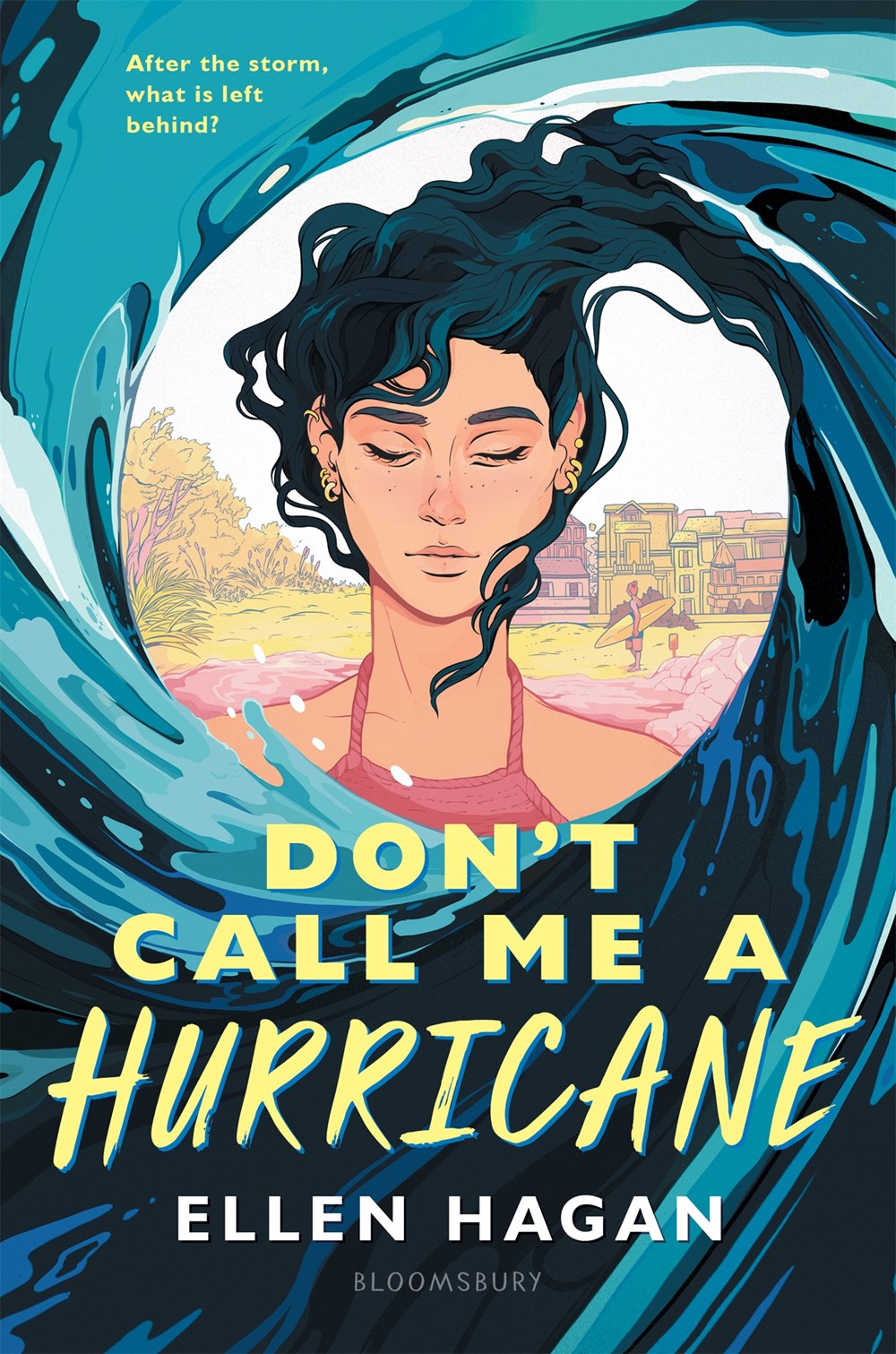 Eliza Marino is a teen who deals with constant threats from external forces. Having survived a hurricane five years previous that threatened to destroy the home on Long Beach Island in New Jersey that she adores, she now spends her days and nights trying to protect it. She fights not just against the ravaging effects of climate change but against the tide of developers who seek to transform the local protected habitats for their own selfish gain. When Eliza meets Milo Harris, the wealthy son of a rich tourist who has come for the summer, she reluctantly agrees to give him surfing lessons despite going against everything he stands for. As the two grow closer over the course of the summer, Eliza finds herself torn between the life she knows she’s meant to live and the boy whose mere presence threatens to destroy it.
  A Librarian and Her Books