I’m introducing a new Wednesday meme since I really haven’t had much book review progress this week! This one is called Shelf Control, and it’s hosted by Lisa @ Bookshelf Fantasies. The concept is to pick a book that you’ve had on your shelf for a while but haven’t read and do a little feature on it. I have sooooo many books at home that I’ve set aside for a rainy day. If you’re like me, you keep patronizing the library and have a constant stream of new reads, so you completely neglect the books you have at home. For the last few months of this year, I’m absolutely determined to tackle some of these dusty, lonely books. For my first episode today, I have the perfect one to feature!
Today’s shelf control pick is:
The Master by Colm Toibin
Synopsis: “‘Colm Tóibín’s beautiful, subtle illumination of Henry James’s inner life’ (The New York Times) captures the loneliness and hope of a master of psychological subtlety whose forays into intimacy inevitably fail those he tried to love.
Beautiful and profoundly moving, The Master tells the story of Henry James, a man born into one of America’s first intellectual families who leaves his country in the late nineteenth century to live in Paris, Rome, Venice, and London among privileged artists and writers. With stunningly resonant prose, ‘The Master is unquestionably the work of a first-rate novelist: artful, moving, and very beautiful’ (The New York Times Book Review). The emotional intensity of this portrait is riveting.”
Why I chose it: I chose The Master because it’s been on my shelf for a really long time. It’s a book published in 2004, and this version is a 2005 edition, and it’s probably been on my shelf for that long. It’s moved in boxes to a couple of different houses with me. I have it on my list to pick up ASAP, and I’d already decided on it for my reading challenge pick of “A book you own but haven’t read.”
I positively love Henry James. The Turn of the Screw has long been one of my favorite psychological horror novels. My son is named Henry, partly after Henry James. But if you ask my husband it’s because of Superman. Please don’t tell him the truth and blow my cover.
There you have it! That’s my shelf control pick for this week. What’s one book on your shelf that you’ve been really wanting to finally get to. Which one calls to you from it’s place late at night when your brain is fighting sleep? Feel free to share in the comments.
Welcome to another week of WWW Wednesday, a weekly meme where bloggers share their weekly progress and plans for their future reading adventures. This meme is hosted by Sam at Taking on a World of Words. Sadly, I do not have much to report this week. I went on a girls’ trip this weekend, which was super fun but I didn’t get any reading time at all. The rest of the week has been fairly busy with school being about to start up again next week. Consequently, this will be a very short post.
The Three W’s are:
What are you currently reading?
What have you just finished reading?
What will you read next?
What am I currently reading?
Positively no news. I’m still reading The Secret Keeper of Jaipur and Nine Perfect Strangers. Both are extremely good, and I have made progress. I was honestly hoping to finish both of them by this morning, but I didn’t quite make it. By the end of the day, I should have them both finished.
What have I just finished reading?
Errr…. I finished reading the instructions for setting up my new coffee maker. Does that count???
What will I read next?
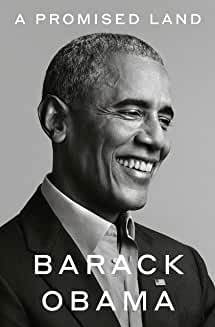
Nothing really new here to report either. I will pick up The Comfort of Monsters by Willa C. Richards in hardback. And I’m still planning to start A Promised Land by Barack Obama even though my friend who is reading it now mentioned the audiobook is almost 30 hours long. *gulp* I usually shy away from audiobooks that long and opt for the hardback book, so keep me in your thoughts. I just really want to hear this one in Obama’s own voice. Maybe I’ll break it up and have a second shorter audiobook going so that I don’t get fatigued. We shall see.
Welcome to another Top Ten Tuesday. This series is hosted by That Artsy Reader Girl and features a new topic each week, chosen by the host. This week’s topic is Top Ten Favorite Places to Read. What are your favorite places to get some reading time? Here are mine:
Bed: This is one of my most common reading places. I’ve recently gotten back into the habit of getting a few chapters in before I turn in at night.
Car: Honestly, I get a very huge chunk of my reading done during my commute. And no, I’m not one of those annoying drivers who puts a book on the steering wheel and threatens to kill people. I do a lot of audiobooks! If it weren’t for audio, I wouldn’t have near as much reading time as I do.
My library (working): I spend a lot of time shelving legal books and pocket parts, which can be a pretty monotonous task, so I generally have an audiobook going while I work. It’s definitely a way to be personally productive while also being professionally productive.
My back deck: I love to sit outside on nice days on the back deck with a good book. It’s been way too hot lately, but in the Spring I did a fair amount of this when I could, though my opportunities are very limited.
Comfy chair: I do a fair amount of reading in my rocking chair in the living room or curled up on the couch. If I’m home and not in bed, that’s typically where I am.
Coffee shop or cafe: If I’m out to lunch or just have some time to kill, I’ll generally take myself to a coffee shop for some reading time.
Poolside: Let’s face it, this doesn’t really happen very often. If I’m at a pool, I’m with my kids in the water with them or constantly being disrupted by them calling for my attention. But, if the opportunity comes, I enjoy it.
Park or other scenic spot: Another thing that I don’t do nearly enough. I enjoy going out to a park or a lakeside and finding a cozy spot, maybe with a blanket and reading in the quiet while soaking in the fresh air.
At the gym: This is another audiobook spot. I have trouble exercising when I have nothing to do, so I often take that opportunity to tune into my audiobooks. I’ll bring an actual book sometimes, but it can be hard to focus depending on what I’m doing, so audio generally works best.
While doing housework: I’ll often turn an audiobook on my phone while I’m moving about the house doing dishes, laundry, or other housework. It makes an enjoyable task somewhat enjoyable and gives me some reading progress as an added bonus.
There you have it! Those are my favorite reading spots. What about you? What’s your favorite place to curl up with a book? Feel free to share in the comments.
Today I begin my TBR adventure at 499 books. Here we go!
22
The Secret Garden by Frances Hodgson Burnett
Synopsis: “The plot centers round Mary Lennox, a young English girl who returns to England from India, having suffered the immense trauma by losing both her parents in a cholera epidemic. However, her memories of her parents are not pleasant, as they were a selfish, neglectful and pleasure-seeking couple. Mary is given to the care of her uncle Archibald Craven, whom she has never met. She travels to his home, Misselthwaite Manor located in the gloomy Yorkshire, a vast change from the sunny and warm climate she was used to. When she arrives, she is a rude, stubborn and given to stormy temper tantrums. However, her nature undergoes a gradual transformation when she learns of the tragedies that have befallen her strict and disciplinarian uncle whom she earlier feared and despised. Once when he’s away from home, Mary discovers a charming walled garden which is always kept locked. The mystery deepens when she hears sounds of sobbing from somewhere within her uncle’s vast mansion. The kindly servants ignore her queries or pretend they haven’t heard, spiking Mary’s curiosity.”
Verdict: This is one of those classics I’ve always had on my list to read. I’m definitely keeping it on here.
KEEP
145
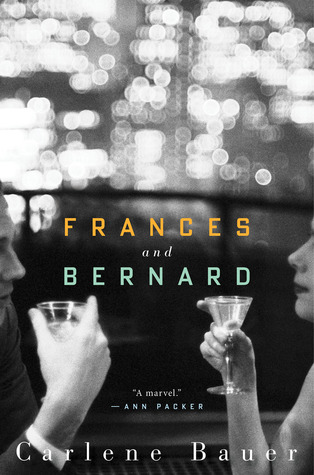
Frances and Bernard by Carlene Bauer
Synopsis: “In the summer of 1957, Frances and Bernard meet at an artists’ colony. She finds him faintly ridiculous, but talented. He sees her as aloof, but intriguing. Afterward, he writes her a letter. Soon they are immersed in the kind of fast, deep friendship that can take over—and change the course of—our lives.
From points afar, they find their way to New York and, for a few whirling years, each other. The city is a wonderland for young people with dreams: cramped West Village kitchens, rowdy cocktail parties stocked with the sharp-witted and glamorous, taxis that can take you anywhere at all, long talks along the Hudson River as the lights of the Empire State Building blink on above.”
Verdict: I do not remember adding this one at all. It would appear this is an epistolary novel that was inspired by the real life correspondence between the writers Flannery O’Connor and Robert Lowell. That, alone, is intriguing. Based on the reviews, though the average isn’t really that great at 3.68, it would appear maybe it’s one that I would like. I’m going to tentatively keep it for now.
KEEP
467
Song of All Songs by Donna Dechen Birdwell (Earthcycles #1)
Synopsis: “Long after the apocalypse, Earth has repeopled itself. Twice.
Despised by her mother’s people and demeaned by her absent father’s legacy, Meridia has one friend—Damon, an eccentric photologist. When Damon shows Meridia a stone he discovered in an old photo bag purchased from a vagrant peddler, she is transfixed. There’s a woman, she says, a dancing woman. And a song. Can a song contain worlds? Oblivious of mounting political turmoil, the two set out to find the old peddler, to find out what he knows about the stone, the woman, and the song. But marauding zealots attack and take Damon captive. Meridia is alone. Desolate. Terrified. Yet determined to carry on, to pursue the stone’s extraordinary song, even as it lures her into a journey that will transform her world.”
Verdict: There are very few reviews, but they are very good. One review, alone, made me decide this book is probably for me. I’m going to keep it and hope I can get a hold of it at some point.
KEEP
54
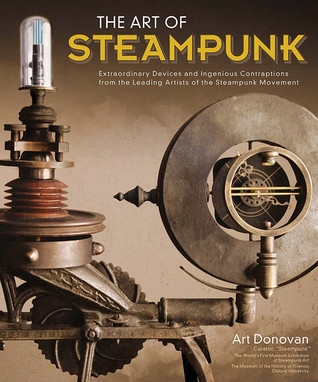
The Art of Steampunk by Art Donovan, et al.
Synopsis: “The Art of Steampunk seeks to celebrate the world of Steampunk: a world filled with beauty and innovation. A world in which steam power and technology intertwine to create machines that are not only functional and practical, but unique and striking.
Inside, you will find the fantastical and stunning artwork of Steampunk artists from around the world. The 17 artists featured on these pages, among the frontrunners of the Steampunk genre, have had their work displayed at an exhibition at The Museum of History of Science at the University of Oxford, UK and have attracted the media attention of BoingBoing, one of the world’s largest blogs. Their artwork consists of everything from clocks and watches to light fixtures and jewelry, but every piece demonstrates hours of painstaking work and devotion from its creator. You will find that the artists themselves are just as unique and colorful as their masterpieces. Fully embracing Steampunk ideology, many have adopted a Victorian alter ego—a mad scientist persona to match the complicated intricacies of their artwork.”
Verdict: While this does look interesting, and I do enjoy steampunk, I mainly like it for the fiction. This it the type of book I’d probably pick up in a bookstore and peruse to see the images, but I don’t really feel the need to keep it on here to seek it out. I’ll remove it.
REMOVE
91
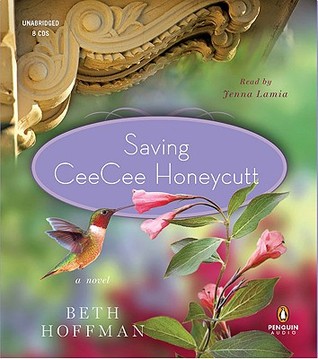
Saving CeeCee Honeycutt by Beth Hoffman
Synopsis: “Twelve-year-old CeeCee is in trouble. For years she’s been the caretaker of her psychotic mother, Camille— the crown-wearing, lipstick-smeared laughingstock of an entire town. Though it’s 1967 and they live in Ohio, Camille believes it’s 1951 and she’s just been crowned the Vidalia Onion Queen of Georgia.
The day CeeCee discovers Camille in the front yard wearing a tattered prom dress and tiara as she blows kisses to passing motorists, she knows her mother has completely flipped. When tragedy strikes, Tootie Caldwell, a previously unknown great-aunt comes to CeeCee’s rescue and whisks her away to Savannah. Within hours of her arrival, CeeCee is catapulted into a perfumed world of prosperity and Southern eccentricities—a world that appears to be run entirely by women.”
Verdict: For some reason, I’m not really feeling this one at the moment. I’m not really in the mood for sugary sweet. I think I’ll remove it.
REMOVE
Well, there you have it! I kept three reads and removed two leaving me with a total of 497 heading into next week. Thanks for stopping by, and happy reading !
Welcome to another week of WWW Wednesday, a weekly meme where bloggers share their weekly progress and plans for their future reading adventures. This meme is hosted by Sam at Taking on a World of Words. Sam has been taking a brief hiatus from her postings as a new mama adjusting, so swing by her page and tell her congrats!
The Three Ws are:
What are you currently reading?
What have you just finished reading?
What will you read next?
What am I currently reading?
I’m currently reading the last book (that’s already published) in the Liane Moriarty library. I’ve loved all her other books, and so far I’m really enjoying Nine Perfect Strangers as well. I should finish it by this Friday, more than likely. On audio, I’m getting to revisit Lakshmi and crew from Alka Joshi’s The Henna Artist with the sequel, The Secret Keeper of Jaipur. I hadn’t realized how much I missed these characters, and I’m really enjoying this followup book.
What have I just finished reading?
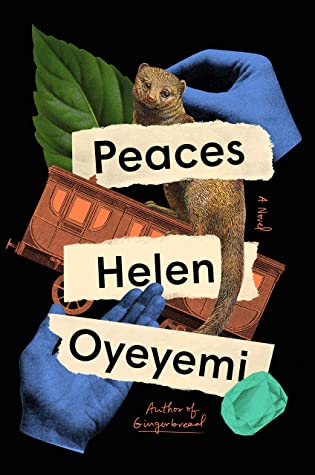
This week I posted reviews for The Nature of Witchesby Rachel Griffin and Peacesby Helen Oyeyemi. I was pleasantly surprised, though a little confused, by Peaces. But Nature of Witches left me very underwhelmed and disappointed. You can click on their titles to read my reviews.
What will I read next?
Next, I’m going to pick up a book I got from the library called The Comfort of Monsters by Willa C. Richards. I’m not really sure what I’ll pick up on audio, but I’m considering going ahead and doing A Promised Land by Barack Obama on Audible. I’ve been on hold for it for a really long time through the library, and I want to use it as my Nonfiction bestseller for my reading challenge. If I’m still really far down on the list, I’ll use a credit for it.
There you have it for this week! What have you been reading? And what’s next for you? Feel free to share your posts. Until next time, happy reading!
I had such high hopes for this book. First of all, the cover had me entranced. It’s quite lovely and really sparks curiosity. Sadly, upon reading it I found it didn’t live up to my expectations and didn’t live up to the hype. Also… warning to you, but this review gets very snarky. I promise you I’m not a mean person.
Synopsis
In the Universe of The Nature of Witches, witches have lived alongside non-magic humans, called shaders, for centuries. Witches have controlled the climate using power from the sun, and each single witch’s power peaks during the season in which they are born. Clara is an Everwitch, a witch of immense power whose power has no peak but who can control the weather in all seasons. The problem? Clara’s power targets those she loves the most with disastrous consequences. Living a solitary existence, Clara wishes her power away, despite knowing that her power is vital to saving humanity as the climate becomes more erratic due to the shaders’ past irresponsible behaviors. When Clara falls in love with a fellow student visiting from another school, she will have a choice to make. Will she allow her power to be stripped, saving the boy she loves and allowing herself to be with him, or will she further isolate herself in order to hone her powers and save humanity?
Review
In the essence of being totally fair, I first want to talk about what worked for me, because this novel has a lot of positive aspects. Firstly, it’s a unique take on the popular witch tale that blends together the classic themes of witching with a naturalist approach, pulling in current events with the climate change tie-in. It’s true that our ecosystems have their own systems of checks and balances, and human behaviors do a lot of damage to these systems when we disrupt the natural order. Using witches and their powers as natural guardians for the planet is quite clever, and that’s one of the things that most excited me about this book.
There were also some lovely passages and lovely scenes. I especially liked the way Sang and Clara left messages for one another with the flowers during a period where Clara felt the need to distance herself from him for his safety. Both understanding the symbolism behind each plant, they were able to communicate without actually meeting. This was a beautiful concept, and it made me feel like I was misjudging Clara, because it’s the one time I felt like I was really seeing an important part of who she was. But for the rest of the book I basically couldn’t stand her.
That brings me to what I didn’t like, and it was typically wrapped up in Clara’s character. She was a snotty little brat most of the time who sat around feeling sorry for herself. Sure, she acted as if she was doing it to protect other people, but she never tried to figure out what to actually do about it without hurting other people mentally and emotionally. And, seriously, you basically know that the fate of the entire world rests on your shoulders and you’re the only one who can save the entire planet, and you would even consider stripping yourself of that power just so you can have a boyfriend? Truly, how selfish and irrational can one person be? If this seemed to be just a momentary phase in this book, I may have overlooked it. But it just so happened to be the main conflict, which slowed the pace and made the whole thing seem monotonous and infuriating. Consequently, I never really grew to like Clara at all, and I tended to celebrate when one of the other characters called her out for her ridiculous behavior. Both Sang and Paige were much more compelling characters, and they both deserved better than Clara if I’m being honest. I didn’t actually feel a connection between Clara and anyone, including Sang. I realize this all comes across as a little harsh, because I do understand that Clara had been through some devastating losses in her life for which she felt responsible. And I do realize this was her reckoning with her past and her future, figuring out her place. But there were simply things I couldn’t overlook.
Speaking of monotonous, the love story. Perhaps I am over the whole YA romance genre in general. Maybe I just don’t remember what it was like to be young and “in love” and over the moon with someone for the first time. I am, after all, a 37 year old woman and I’ve just passed my 15th year of marriage, so perhaps I’m jaded. I understand that’s a powerful feeling and young people have a hard time setting that aside to focus on, I don’t know… the coming apocalypse or something trivial like that. But if you are facing the coming apocalypse and can’t stop getting distracted by the fire in your loins, get out of the way and let someone else take over the hero stuff, because you’re going to get me killed. And I don’t like that. Don’t get me wrong, I realize a lot of people like this concept in fiction and find it swoon worthy. That’s just not me. I’m way too cynical and get annoyed easily with the mushy stuff when it distracts from the plot. I was told she was head over heels in love with Sang, but for the life of me I couldn’t figure out why. They didn’t have much chemistry. I could kind of see why she liked him, but I couldn’t see what attracted him to her. She was kind of a jerk for more than half the book.
Ok, now I have to touch on my biggest problem of the whole book, and in doing that I have to give away the end. I’m so sorry, but I found the ending so laughable I couldn’t contain myself. So here’s your warning…
I’M ABOUT TO COMPLETELY SPOIL THIS BOOK!!!!! STOP READING IF YOU MUST RIGHT HERE!!!
I’m sorry, but once I realized this, I could not stop finding it funny. Clara had to reset herself and then everything was fixed. Just like that. The eclipse drained other witches of their power completely, but Clara was the only exception to the rule. In her case, there was a bug in her software and she needed to reboot. And she was way too willing to try this despite the fact it was barely a theory (which she had just read for the first time about 30 minutes before), and if it didn’t work everyone on Earth was screwed. Alas, all was fine and everyone got what they wanted, the world was saved, and Clara hopefully gets to satiate that sexual frustration before she winds up blowing up the world herself with the sheer force of her explosive desire. Oh, Happy day! It was all just terribly convenient for me, and I had trouble buying it.
I also consider myself a very environmentally conscious person, and I thought Sang’s little project of finding a way to murder weeds without causing them the pain of pulling them was utterly ridiculous. A very petty issue, but it made me do a fair amount of rolling my eyes. I love the Earth, but WEEDS??? Again… harsh, I know.
Anyway, I know my reaction isn’t typical. I know this book is getting rave reviews among readers, making me the exception rather than the rule, but this just wasn’t the book for me.
⭐⭐
Rating: 2 out of 5.
Published June 1, 2021 by Sourcebooks Fire. ISBN 1728229421. 384 pages.
Welcome to another Top Ten Tuesday. This meme is hosted by Jana, otherwise known as That Artsy Reader Girl. Today’s topic surrounds side characters in books who didn’t get enough air time and deserve their own book. Wow, this one is a bit challenging, but I’m looking forward to revisiting some of my past reads.
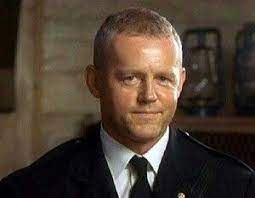
Brutus Howell, The Green Mileby Stephen King
Admittedly, this one really has much more to do with the movie than it does the book. The adaptation for The Green Mile was hands down one of the best I’ve ever seen, and it really goes down to the casting across the board. Michael Clarke Duncan was just perfection as John Coffey. But there was something about the way David Morse played Brutus that simply made me love him. Maybe it’s the kindness of his face, but when I finally got around to reading the book, it was, of course, Morse I pictured even though he’s not particularly what’s described as the character in the book, though his demeanor matches quite well.
Uncle Willy “Unc” from Chasing Fireflies by Charles Martin
To be fair, this book is very much about Uncle Willy, but we don’t really get his perspective except for his brief “Willyisms” that are so full of wisdom. Maybe it’s better to see his character through the eyes of someone else, as Uncle Willy is extremely humble, but that also means there’s so much more going on in his head. His story is so incredibly heartbreaking, but we don’t really get to immerse ourselves in the true depth of his emotion.
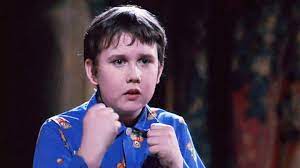
Neville Longbottom from Harry Potter by J.K. Rowling
Ok, I couldn’t NOT do this one. For some reason, I always had much more of an affinity for Neville than any other character. He’s just so wonderful, quirky, and authentic. I think it would be great to get something from Neville’s point of view.
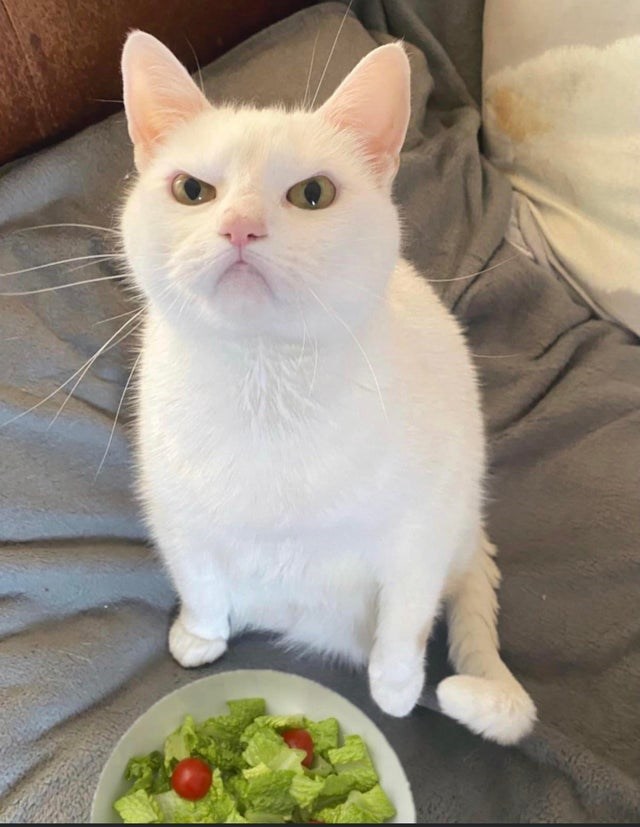
Mogget from The Abhorsen series (Old Kingdom) by Garth Nix
I positively adored Mogget. In the books, he mostly appears as a snarky white cat, an extremely powerful being trapped in the body of a small furry companion. I listened to this whole series, which is expertly narrated by Tim Curry, and his voicing for Mogget was literally the most spectacular thing about the books. I would trek across the universe for something from his perspective.
Rosie from Water For Elephants by Sara Gruen
As you can see, I’m fond of the animal’s perspective. This would be a very different kind of book seeing things from the perspective of Rosie. Rosie was the elephant, and if you’ve read this book, you know she plays an incredibly pivotal role in the novel. How fascinating it would be to see things through the eyes of such a remarkable and intelligent creature who sees all and isn’t able to truly communicate her feelings.
Rocky from Project Hail Mary by Andy Weir
If you haven’t read this book, I don’t want to spoil anything. But Rocky was my favorite character and I positively loved him. I think things would be fascinating from his perspective. Also, if you haven’t read this, go read it right now!
Deborah from The Secret Life of Bees by Sue Monk Kidd
This is a rather interesting one. Deborah is a bit of an absent character in the novel. She’s the dead mother of Lily Owens, and the novel follows Lily’s quest to find out what really happened to her mother. I think it would be interesting to read a prequel from Deborah’s perspective, but I think this could also work from T. Ray’s perspective, Lily’s father. Either way, you have a character whose depth we haven’t really fully explored.
Margo from Paper Towns by John Green
Ok, now this one isn’t for the reason you think. While I liked this novel, I did NOT like Margo. But I think this really comes down to the fact that I didn’t really understand her. Perhaps seeing things a little bit from her perspective would help with this issue, so she is still one who comes to mind. Perhaps I wouldn’t feel so detached from her and wouldn’t judge her so harshly for her selfishness.
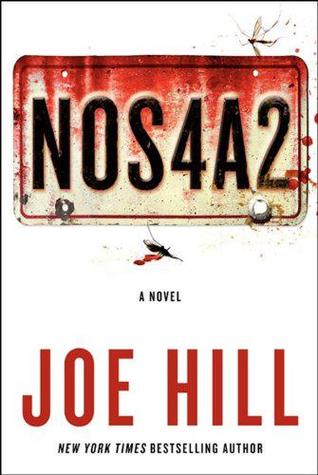
Lou Carmody from NOS4A2 by Joe Hill
I really liked Lou in this book. I thought he was somewhat of a moral center, from what I can remember. It’s been a while. Though he wasn’t perfect, he was someone Vic could actually count on. I think his perspective would be unique and endearing, though maybe not quite right for a horror novel, because he’s just too timid and good natured.
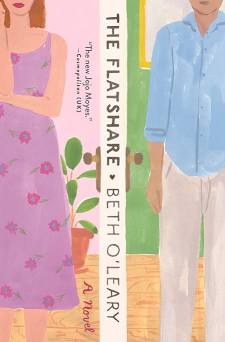
Richie from The Flatshare by Beth O’Leary
This is a great opportunity for O’Leary to do a companion book. Richie’s story is so full of things that we just get a periphery glance at. And, sure, we do get the finalization of his story, so to read a book about him we would be going into it knowing what inevitably happens, but it would be really great to get the context and the in-between stuff, and it would be great to get to know Richie in a way that isn’t just phone calls and letters and a brief part at the end of The Flatshare. He’s a great character who is enigmatic, and we could see both where he goes after the novel and all the stuff that happened before to land him in prison.
And that’s it! Those are my choices for secondary characters who need a story of their own. Hope you enjoyed, and I look forward to hearing your choices as well. Happy Reading!
Yeah… I have no idea how to properly review this book. I’m not even sure I 100% understood it, to be honest. All I can say is I will do my best.
Synopsis
When Otto and Xavier take a non-honeymoon honeymoon on a train called The Lucky Day to celebrate the fact they have decided to share a last name without actually being married, things take a turn for the odd. The two board the train with their pet mongoose, Arpad Montague XXX. On board the train bound for an undisclosed location, they meet the eccentric owner of the train, Ava Kapoor, and the fairly odd people with whom she keeps acquaintance. Oh, and Ava also has a pet mongoose. Doesn’t everyone? They find out over the course of the journey that Ava is set to come into a large inheritance if she can merely prove that she is sane upon reaching her thirtieth birthday. Doesn’t seem like it would be too difficult a task for most people, but Ava claims never to have actually seen a pivotal character who does actually exist and has been seen by everyone else. No one really knows whether she actually can’t see him or whether she has been playing a cruel and elaborate joke on him. When this character begins appearing on the train to threaten her inheritance, things get interesting.
Review
This book is outlandish. In some ways, it’s outlandish in a good way, but it also lost me more than a few times. I loved the ambiance. Despite being a modern tale, it has the feel of a classic Agatha Christie mystery, complete with a train that exists as a character in and of itself. It’s complete with its own post office, dining car, and even a bazaar where one can find the most eclectic of items for purchase from equally eclectic merchants. I love books where the setting takes on a life of its own, and we’re introduced to it in the same way we would be a character. I think it takes a lot of skill to do that as a writer, and Oyeyemi is definitely a gifted writer. Her prose is extremely pleasant to read, and it’s full of extremely profound and beautiful passages that stop you in your tracks.
I enjoyed the characters, especially Otto and Xavier (pronounced Sah-vee-ay in the audiobook version.) Even peripheral characters, of equal importance in this story, were extremely vivid and well drawn. Character is a driving force of her novel, but there’s something very fluid about character as well. Ultimately, this is a novel about being seen by those in our lives in a conceptual sense. She presents this as a literal act of being seen, but as the reader we are to view this in the metaphorical sense instead. What is it like when people in our lives transition from being before our eyes, held in high esteem, to moving to the background as a mere shade of memory in the backs of our mind? We no longer see them. They cease to exist in a real tangible sense, and psychologically that has an impact on all parties involved.
Of course, all of this Oyeyemi throws at us in an extremely jumbled fashion that leaves us with more questions than answers. There were several characters in this book that were, perhaps, one character seen by each of our main characters in a different way, so they therefore took on a different form in the eye of the beholder. In one case, Xavier had encountered this man two different times in his life and referred to him as two different people, but in his mind he understood him to be the same person. He looked and acted differently, as Xavier’s perception of him had changed so he therefore took on a different identity as perceived by Xavier. Are you confused by this? I would agree. I’m still a bit confused, to be honest, but I also feel like it’s a pretty brilliant concept that is beginning to make sense.
Our main narrator, Otto, is presented as someone we like very much. He’s charming and witty, and we enjoy seeing things through his eyes. However, when Xavier gets a chance to have a say, we find out that Otto is a compulsive liar, which then throws literally everything we learned into doubt. If he’s an unreliable narrator, can we trust anything that we’ve learned thus far? I mean, most of it is so unbelievable that’s it’s easy to doubt all of it. Perhaps what Oyeyemi is really trying to tell us that nothing really is surreal, but our brains as an interpretive force are unreliable, so the world becomes surreal around us simply in our processing of information. It’s a conundrum.
Our modern action was disrupted from time to time by short vignettes of past experiences. Oyeyemi flowed into these stories in a wave-like fashion, fluidly transitioning into them before gently pulling the reader back. Each of these stories provided a little context that allowed us to better understand the characters and their various connections to one another. This is where I become a bit torn with this book. I understand what Oyeyemi was trying to do, but I felt like there was a bit much to take in. If attempting to interpret this book gives you a headache, it ceases to become pleasant. That being said, there’s a small sector of the population who positively love that kind of challenge, and they are the ones who give 5 stars to this book. To each their own.
The pacing of this novel was quite good except at the very end. It’s a short novel, and a lot happens over the course of the book. At the very end, it surges forward at an incredibly rapid pace, as if the train has picked up speed way too close to the station and threatens to overtake it without stopping to let us off. And that left me a bit confused once again, because I’m not entirely sure what actually happened or why. Overall, I have very mixed feelings about the book. I did enjoy the ride, however, so I’m going to give it a 3 1/2.
⭐⭐⭐⭐
Rating: 3.5 out of 5.
Published April 6 2021 by Penguin Audio. ISBN 9780593394564. Runtime 7 hrs 50 mins.
This is my first week doing the Let’s Talk Bookish meme, hosted by Rukky @ Eternity Books & Dani @ Literary Lion. This is a weekly meme where each week bloggers discuss a different topic, suggested by bloggers. This week’s topic is: WHAT IS YOUR POSTING TYPE? (Suggested by Nicole @ Thoughts Stained with Ink.
This is an interesting question for me, as I consider my blog to be something that’s still very much a work in progress. When I first started, I thought I was just going to be writing book reviews, but I’ve slowly started to implement different kinds of postings.
Do I schedule my postings before publishing?
I don’t really do any scheduling. I do have the weekly posts I always plan to do that day, but for reviews they are really just free flowing and they come whenever I get something finished. I rarely wind up posting on weekends, but I generally have some kind of post, whether it be review or other, in progress at all times. I really have more of a mental schedule that changes pretty frequently more than an actual physical schedule.
How much editing do I do?
I do a lot of editing. I generally try to get the text down of everything I want to say. I go in after the fact and add any images, and then I add links. Then I go through and read through everything in draft form and make edits. Then I preview my post and look for any errors and inconsistencies. I’ll generally do one more read-through before posting.
How often do I post per week?
This really fluctuates depending on how many reviews I post a week. I try to post at least 3 times a week. Tuesday through Thursday I usually try to do a weekly meme, so if I also post a review I might post twice in one day. I have posted as much as 6 times a week so far, but rarely more than that.
How much actually blogging versus networking do I do?
I’ve really started to focus on my networking a lot more now that I have my blog content to a point where I’m able to get things up a bit quicker. I try to take some good time out at least once per day to visit other bloggers, read reviews, comment, and get to know the other people in the community. As I’m still rather new to the scene, I think this is an important step, not just for putting my blog out there for others to see, but to help me learn and grow and really get to know other bloggers. It’s also great for getting recommendations for books I might want to read and review. At this point, I’d say I have about a 70/30 split. 70% of my blogging time I spend on working on my own content/writing and 30% I spend networking with with others.
How has my blogging style changed since I started?
I really started back seriously around October of 2020. I was originally focused on just posting reviews and honestly had no idea what I was doing. I learned a lot by seeing what other bloggers were doing, and I’m still in a big transitional period. The biggest thing that’s changed is I focus a lot more on networking than I did in the beginning, and I’ve gotten a lot quicker in my writing and posting process.
If you are a blogger, what’s your blogging style? What works for you?
First, a disclaimer. I haven’t studied poetry since college, and even then it was just a couple of classes. I’ve never really been a reader who has gravitated toward poetry, and it’s very easy to say I’m pretty rusty when it comes to literary interpretation of verse. I was inspired to read Rilke’s collection entitledNew Poemsbecause I needed to read poetry for my reading challenge. I’m glad I did, as it was a nice little piece of nostalgia. However, I don’t feel at all qualified to write an actual review of this because well… I’m not qualified.
Rilke was an Austrian poet, born in 1875. His poetry has been translated by various people over the years. This particular version was translated by Joseph Cadora, so a lot of credit goes to Cadora for the retention of both the intense lyricism and meaning of Rilke’s original text. I did a very minor amount of research into Rilke to glean an overall view of his life, which is often important in understanding how to interpret the work of a poet.
The poetry in New Poems was very much inspired by Rilke’s work with the sculptor, Auguste Rodin. Though Rilke was born in Prague, he later did a lot of traveling, hobnobbing with scholars, artists, philosophers, and writers to glean inspiration for his work. He lived in Paris for 12 years, and from the years of 1905 to 1906 he worked as an assistant to Rodin, living at Rodin’s Paris estate. In fact, Rilke would marry a sculptor and former pupil of Rodin’s, Clara Westhoff. While the poet was in his 20’s and the sculptor, Rodin, in his 60’s, the two shared an incredibly strong bond, and the years he spent in the company of Rodin had a lasting impact on Rilke’s later work. They would have a rocky on and off relationship that lasted until the sculptor’s death in 1917.
Rilke elevated art in his mind to the ideal pinnacle of human existence, and he had an extremely critical view of organized religion. Religious imagery is peppered throughout his poems. In one entitled Pieta, Rilke puts his own twist on the concept by depicting the dying Jesus in the arms of Mary Magdalene as she laments the fact they were never lovers, an extraordinary opportunity lost to them. Cadora’s translation of each poem is accompanied by an explanatory paragraph that often weaved in facts about Rilke’s life that aided in the poem’s interpretation. In the case of Pieta, it was interesting to note that Rilke was inspired by Rodin’s prior sculpture of Jesus and Mary Magdalene in his own version of the Pieta.
Other common themes found in Rilke’s New Poems are mythology, childhood, flowers, art, and various other things. Most of the poems are extremely short in length, but they pack a lot of meaning into just a few stanzas. Rilke experiments with rhyme and meter, but each poem is extremely lyrical and powerful, positively bursting with imagery and symbolism. A beautiful example is the way he describes the dancer in his poem entitled Spanish Dancer:
As a match in the fingers first glows white
then bursts into tongues of flame that flare,
in the ring of spectators it seems to ignite,
with blistering heat, abrupt and bright;
her spinning dance seeks to spread like fire.
To some, Rilke may be a bit flowery and verbose, but I tend to enjoy his lyrical quality. From my reading into his life, it appears Rilke’s work went through many different transitory periods, and I’d definitely be interested in reading work from both the earlier and later periods of his professional life to compare and get a good gauge of how he evolved as a writer. Perhaps one day I’ll take that on. For now, I’m satisfied with having had my introduction to this highly acclaimed poet with this collection. 4 Stars.
⭐⭐⭐⭐
Rating: 4 out of 5.
Published 2014 by Copper Canyon Press. ISBN 9781556594243. 460 pages.