
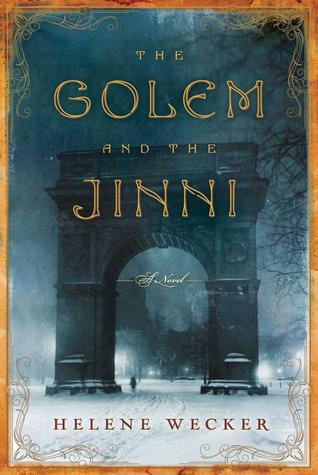
 I have a lot of respect for this book. It’s wildly inventive, a truly unique blend of magical realism, historical fiction, and coming of age drama. The coming of age part is in a pretty roundabout way but I still think it’s highly applicable. There are multiple layers to the appeal of this book. Lovers of historical fiction will adore the meticulous research and the dedication to authenticity that accompanies the characters and setting. They will also marvel at the way Wecker seamlessly incorporates real folklore and legend from multiple cultures into the fantasy elements of the story. And obviously, fantasy lovers will love the more unique elements and the captivating way Wecker blends fantasy and reality.
The Golem and the Jinni follows two central characters: Chava, a golem, a creature made of clay created by a black magic dabbling rabbi to become the wife of a European immigrant who dies at sea, and Ahmad, a centuries old Jinni from the Syrian desert who finds himself accidentally released from the copper flask in which he was trapped. Both find themselves alone in an unfamiliar world in New York City at the end of the 19th century at the height of the immigration boom. As both struggle to fade into the multi-hued tapestry that has become New York City, they encounter one another and develop an unlikely but impenetrable bond that comes from their shared experience and sense of danger as something not human that would be rejected and vilified if exposed. Their stories converge in a way that is believable and natural, helping to bring their vulnerabilities and complexities to life.
Though Chava is in possession of superhuman strength and an ability to read the thoughts and desires of people she meets, she’s not without vulnerabilities. In fact, from a historical perspective both the stories of Chava and Ahmed pay homage to all immigrants who found themselves struggling in a foreign land during this period of great change. People from all over the world brought skills and knowledge that paved the way for progress and survival. Communities grew from a combination of shared struggles and triumphs. While their abilities may be of a supernatural nature unlike those of their fellow immigrants, Chava and Ahmad learn to hone their skills to ensure their respective communities see their value while not giving away the true nature of their gifts. Wecker presents a fascinating and illuminating view of New York City at the turn of the Century. As people began sinking into the melting pot that would become the United States as we know today, this book highlights the cultural divides and prejudices rampant at the time. Mistrust and superstition caused clashes between people of different beliefs and backgrounds, and the city was harsh and unforgiving.
This book is a truly unique experience, and I can’t wait to get my hands on the sequel to continue the saga of Chava and Ahmad. I also think this would make a fabulous film, so I hope one day this comes to light. 4 1/2 stars.
Published April 23, 2013 by Harper. ISBN 0062110837. Hardcover. 486 pages.
 Well, I will be completely up front with you. With my next several reviews, I’m going to have to be very concise. I’m desperately behind. My era of distraction and disillusionment has not yet abated, and I’m going to have to do something about it unless I want to just abandon all hope of completing my goals for this year. I’m not yet ready to do that. Perhaps you will be grateful with me for not being quite so long winded.
  Victoria Schwab is really quite versatile. She is a prolific writer with more than 20 distinct titles to her name just at the age of 34. That’s quite the breakneck pace of authorship. Admittedly, I’m rather skeptical of authors who crank novels out so quickly. What I often notice is that a superb debut is often followed by a string of lackluster disappointments. I realize much of this is due in part to pressure put on authors by publishers and die-hard fans salivating over what could be the next big obsession. I sympathize, because that must be a dreadful feeling. Don’t get me wrong, I’m not at all claiming Schwab is guilty of this. Frankly, I haven’t read enough of her work to make up my mind, because I’m still relatively new to the Schwab library. If you’ve read quite a lot of her work, please feel free to weigh in in the comments.
 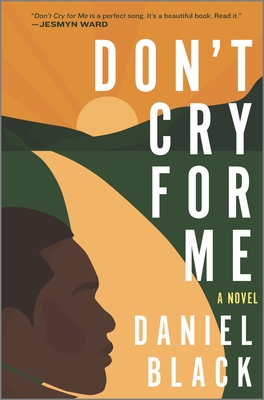 Let me preface this review by stating that as a white heterosexual female, I’m not exactly the target audience for this book, but I still found it to be quite possibly the most powerful and illuminating read of the year. Every letter of this epistolary novel made me deeply contemplate some aspect of humanity or it broke my heart, sometimes both in equal measure. The only reason pain destroys us a little at a time is we don’t give ourselves time to contemplate it. We suppress and deny until what remains is a shell of who we once were. Empathy doesn’t flee the human heart overnight. This can be on a more personal level or on a grand scale that alters human history. As people, we can stop ourselves from thinking, but we can’t stop ourselves from feeling. What happens when one allows emotions to overtake without the benefit of thought? People get hurt. That’s why I’ll never stop arguing that proper education is the solution to our societal problems. And a proper education includes fiction. In fact, literature is essential to a proper understanding of history. I am fascinated by history. I love history. But the history I love is not facts and figures.
  I thought about posting merely a series of GIFs exhibiting various emotions as representative of my thoughts on this book. I guess I’ll give you a little bit more than that. But, for the record, my search for said GIFs would include such search terms as WTF, OMG, and holy fuckballs, Batman.
  Let me start this review by stating I love what Madeline Miller does. There’s a relatively new push in the entertainment industry to take classic stories of good versus evil, hero versus villain, and add layers of complexity where there once was a simple formula of black and white. Not to say this is a completely new phenomenon, but we’re seeing it pop up on a much larger scale in recent years. We’ve seen this in the Disney universe with movies like
  With Achilles, anyone who isn’t familiar with his name has been living under a very large rock. He’s given his own hero tale within the Greek myths, a tale which has spawned numerous appearances for him in novel, television and film. Most notably, Brad Pitt portrayed the great hero in the 2004 film,
  I would say the power of a book lies in whether or not it delivers to a reader a simple story or a true reading experience. I’m not necessarily saying one or the other is a good or a bad thing. You can have a great story that is pretty unforgettable, but that story doesn’t perhaps bring with it all the aspects of a full reading experience. It’s sort of the difference between going on a vacation by taking an air conditioned tour bus and slapping on hiking boots and footing it across the countryside. The first is easy and enjoyable. The second is difficult but personally fulfilling in a way you couldn’t get from the first. That begs the question, what does it take to live an experience? Just think of a time in your life that you had a mind bending life altering experience? What did that feel like? Maybe it felt good, in a way. Or, at least, the end of that experience brought some clarity. It changed you, altered your perception of the world or of yourself. But during that experience you probably ran through a wide range of emotions. Amusement, frustration, fear, confusion, sadness, exhaustion, to name a few. Or maybe you had absolutely no fucking clue what you’d taken away from it. Not only is that completely valid, but it’s pretty much the entirety of human existence wrapped into one analogy. Do any of us really know what the hell is going on or why we are here? No, we don’t.
  Well, it’s positively shameful that my last review was posted in February. Frankly, I’m so far behind on reviews not sure how I will catch up, but my next few may be pretty short. I have still been reading, but the overwhelming nature of life lately has left me both without time or motivation to put my thoughts in writing. Frankly, that’s not really fair to the books or the authors who took the time to put pen to paper with their own thoughts. But that’s the nature of life, as well.
  My last review for The Bell Jar was super heavy, so I thought I’d follow it up with something super fun. My daughter, who is 7, is reading well above her grade level so we’ve moved on to chapter books. On one trip to the library, we stumbled across this one. She is feline obsessed, so naturally we had to pick it up even it was a bit mature still for her as a middle grade book. Look at that cover! How could you not want to know what lay within the pages? So I read a little of it to her each night, and I think I liked it even better than she did.
  Every now and then, there’s a story behind the story. Fiction is a veil cast over a haunting reality. Many authors’ own lives were as intriguing and sometimes heartbreaking as the tales they wove into the tapestry of literary canon. Those like Kurt Vonnegut, as discussed in
