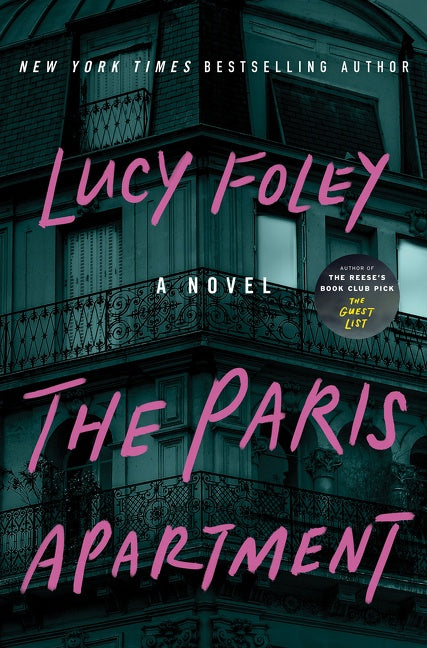
I recently embarked on an impromptu Lucy Foley mini-marathon, consuming three of her books in a row over the course of a couple of weeks. I guess I was just in the mood for something engaging and exciting but not super complex. This will be the first three of the reviews, and it is the first one I completed. I won’t spend a whole lot of time on these reviews while I’m attempting to catch up, so don’t expect any of the reviews to be extremely detailed.
Synopsis
Jess, an extremely down on her luck woman who finds herself needing to flee after getting herself into a spot of trouble, heads to Paris to stay with her half brother. When Jess arrives, she finds that Ben lives in a lavish apartment that seems a little outside the economic grasp of a struggling journalist. Also, he was expecting her arrival, so when Jess arrives and Ben is nowhere to be seen, she begins to get suspicious. Her suspicions grow with each tenant she encounters, each with varying degrees of friendliness but all with an interest in her that makes her uneasy. As Ben’s absence becomes more and more unsettling, Jess begins to uncover clues that point to a hidden truth Ben had stumbled upon that someone else wished to stay buried, even if it meant silencing Ben to make sure the story never surfaced.
Review
Having read three of her books now, I do admire the fact that Lucy Foley comes up with fresh ideas. I don’t find her thrillers to be formulaic, which is a bit of a pet peeve of mine in the thriller genre. There are similarities, but not enough to make me feel like she takes the same plot and changes names and a few details and calls it a day. There’s maybe SOME of this in the next two books I’ll review, but it’s not the case with this one. More on that later.
Her characters are well developed, being fairly complex with compelling backstories that unfold as the story progresses. I like that her characters are both difficult to love and difficult to hate, a quality that should be present if a character is properly developed in a book such as this. The Paris Apartment is well paced, really picking up toward the middle and end and bursting toward a dramatic conclusion. Thankfully, I also didn’t feel like this one had too much predictability. There wasn’t much that was utterly shocking, so I didn’t have to pick my jaw up off the floor, but there were a few scattered surprises that kept things interesting.
Overall, I would say this one is a pretty standard but enjoyable thriller and would make for a great winter fireside read.
⭐⭐⭐
Rating: 3 out of 5.
Published February 22, 2022 by William Morrow. ISBN 9780063003057. Hardcover. 360 pages.
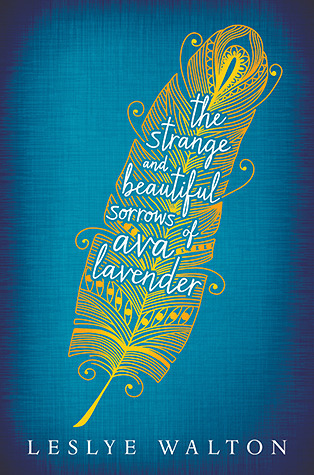
I can’t believe it took me so long to read this book. It’s going on a decade old now! Let me tell you, this book has the perfect title. The entire book is strange and beautiful in the best way. First I want to start by saying that I find books like this kind of difficult to review. My thoughts aren’t nearly so clear-cut. They are a jumble, and it goes way beyond character/plot/writing. That is to the book’s credit, but it’s much more difficult for me to put into words because it’s all about how cohesive this work truly is. How do you describe all the various layers that make things fall into place so perfectly?
The Strange and Beautiful Sorrows of Ava Lavender is a multi-generational family saga following the women of the Roux family. Romantic love has never served the Roux women well, so when Ava is born her mother and grandmother desire to keep the young girl sheltered from the evils of the world. Ava is a beautiful winged creature, one which they are sure the outside world will not understand. Every single character in this book has a very high importance, and they are each rich and compelling in their own unique way. If I did a deep dive into the complexity of each this would become a dissertation, and I doubt you all want that.
As with any young girl her age, Ava desires independence and freedom. She wants to fly but has always been told she can’t. This is heavily symbolic of how parents transfer their own pain to their children in the form of control, reducing the amount of experience the children are allowed so as to save them the pain they themselves experienced younger in life. Give them wings but then tell them they can’t fly. In trying to protect them, the parents unwittingly strip their children of the knowledge and the courage to protect themselves. Pain helps us learn how to get up. Ava could never learn how to fly if she’s never allowed to fall. In any other book, that could be an extremely heavy-handed metaphor, but it isn’t for this one. Walton wields it expertly, weaving it into the story through her finely tuned use of magical realism.
Books like this remind me of art from the impressionist movement. Like those paintings, the brush strokes blend together, understated lyrical language that’s totally void of pretension. There’s an atmospheric, hazy quality but the image when seen from a distance is perfectly clear. It’s only after you’ve viewed it in its entirety that you truly understand what the creator is trying to convey. You think about it for days and marvel at how just one body of work could contain so much meaning and depth.
I’m not sure if that makes any sense whatsoever, but it’s what came to mind after reflecting on this book. I think this impressionistic quality is also why I felt like the story took place much earlier than it actually did. It spans from the 1920’s to the 1950’s, but it has such a classic romantic era literature feel, which I love. There’s so much heartbreak, which makes this an incredibly difficult read in certain places. As a matter of fact, the book takes a shockingly violent turn near the end, which some readers may find too traumatic, especially considering it is such a blindside.
Lastly, I want to address the ending. No, I won’t spoil it, but I will mention that this is one of those endings that is up to interpretation. Frankly, I like books like that. However, I know some readers hate it. It’s a fabulous discussion point for book clubs. This book sparked the kind of interesting and thoughtful discussion we hadn’t experienced in Read Between the Wines for a while. We stayed on topic almost the whole time! Usually things kind of go off the rails, especially after the wine or margaritas hit.
In short, this book is a thing of beauty and a crowning achievement for Leslye Walton. What’s more impressive is this was her debut novel. What a way to begin a literary career! I loved it and will retain this story within my brain for years to come.
⭐⭐⭐⭐⭐
Rating: 5 out of 5.
Published March 27, 2014 by Candlewick Press. ISBN 9780763665661. Hardcover. 301 pages.
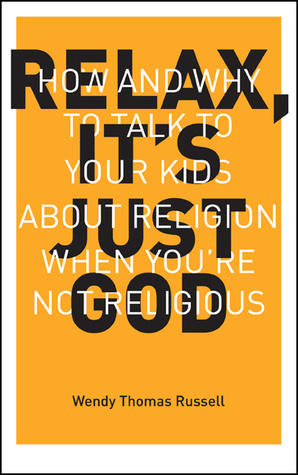
For a lot of parents, myself included, this is a very tricky subject. I admit, I’ve struggled with the notion of God and religion since having children. I live in a deeply red state. Christianity is used as a weapon to speak out against tolerance, it’s used in support of bigotry and oppression, and it’s used as a way to stop our children from learning vital information they need to become critical thinkers. Adults think the terrorists who stormed the capitol are heroes, women should shut up and take a seat, and books should be burned in the church parking lot. Most people believe children should be taught the world is 6,000 years old and Noah had a big-ass farm on a boat (Seriously, where did they find the bamboo to feed the pandas?) If anything, I believe these mixed messages are damaging to our children. So how do you approach religion with your kids when you don’t buy into the dogma?
Many people of my generation can give you some horror story of growing up “in the church.” I was lucky enough that I felt I was more exposed to it without being fully inundated on a daily basis. I was allowed the freedom to make my own choices. Many people are told allowing their children to make their own choices is detrimental to their spiritual well-being and eventual fate. In response, they force their kids to believe and ensure they have no access to outside ideas simply because they are so afraid their children will burn in the fires of hell, enduring unspeakable torment for the rest of eternity. Can we admit this is an over-dramatic move from a God who is a bit of a diva? This is not healthy in any way. People like me do not believe fear must be a driving force of becoming a good person. Additionally, if I wind up being wrong, a truly wonderful and kind God would not send a good person to hell for not taking a bath in his holy water while letting a serial killer go to heaven simply for “accepting Jesus” before he’s executed. That just simply doesn’t make sense, and I think I’d rather go to the bad place with the people who give that kind of God the side-eye.
But here is the simple truth. In an area such as mine, deeply held religious beliefs are still the norm and no matter how much I try to shelter my children from harmful ideas, they will confront them on a daily basis. Today is election day. We will go out and vote for school board members, and half of the candidates believe children shouldn’t have access to books they deem “inappropriate, subversive or immoral.” The boogeyman is in the bathroom, and the satanists are coming for our kids. For those of us who attempt to teach our children to be independent critical thinkers, there will be a lot of hell to pay. When other children are born into an environment in which “the truth” is vehemently articulated as coming straight from a dusty old book full of so many contradictions and, frankly, pretty hateful and bloody stuff, what kind of person will those kids become (besides Trump supporters)?
Russell’s book fills a major void in the minds of parents like myself who worry about these very things. The answer, which would surprise many secular parents, is not to shelter our children from religious ideologies but to expose them to them in a way that is all encompassing and compassionate. Every child should know that people believe a great many different things, and faith can often be a driving force. Education is always the answer, in my experience, and this includes religious literacy. The more we know the more we are able to wield our intellects in a way that can shelter us and our children from damaging ideas and hurtful words. Should my children grow up and want to explore an ideology different from mine, that will be ok. That will be their choice. They should always be encouraged to ask questions, for that will open the door for them to develop their own ability to ask and contemplate and answer their own questions when they are adults. They will have the mental and emotional fortitude to do so, but they will do so in a way that’s respectful and tolerant of all peoples of all faiths, including those who have no faith in a supernatural entity or entities.
Russell’s book is practical, concise, and immensely helpful. She offers recommendations for children’s books that can help with various subjects, including other religions and very deep and difficult subjects such as death and grief. She illustrates her points with real life examples and even includes a world religions cheat sheet at the end that parents can use to increase their own understanding of the basic facets of the major world religions. I think this would be a fabulous book to own so you can revisit it when you’re feeling on shaky ground or when jackass Billy tells your kid that they are going to hell because they don’t believe Jesus took his dinosaur to the groomers for a nail trim. Yes, I jest, but I do feel it’s incredibly important to teach our children to be respectful of another’s ideals, even if that child does not return that respect. They should have compassion in that instance, because it means that child was not taught respect. Instead, they were taught to hate and distrust those who don’t share their worldview, which is dangerous in the long run. Responding with more hate will merely exacerbate the problem and lead us toward a more divisive future.
In short, this is a fabulous resource for parents who want to raise kind, intelligent, compassionate kids who aren’t afraid to be who they are and don’t have confusion about the world in which they live.
⭐⭐⭐⭐⭐
Rating: 4.5 out of 5.
Published March 31, 2015 by Brown Paper Press. ISBN 9781941932001. Paperback. 196 pages.
Forgive me. This will probably be one of my reviews where I get a little snarky. I hate that I do that, but at least I’m self aware. First of all, I love the title. That’s actually why I picked this book up on a whim. The cover is very simple but intriguing. Disappointingly so, I found out the title was later changed to the much more Hallmark-esque title of Life and Other Happy Endings. (WHYYYYYY????) Switching Death to Life takes out all the intrigue.
The synopsis is one that’s been told before, but there are some twists on the cliche. Jennifer Cole is told that she’s dying of a blood disorder and only has three months to live. As she begins to re-evaluate her life, she decides to write letters to the people with whom she has unfinished business. These people consist of her spoiled, narcissistic sister, her jerk-wad narcissist of an ex-husband, and an ex-boyfriend. You guessed it: also a narcissist. I’ll give Cantor some extra credit for a realistic portrayal of humanity.
I didn’t dislike the character of Jennifer, but I find myself feeling very tepid toward her. Yes, she has some good moments, but overall she just frustrated me with her nonsensical decisions. And yes, I realize that anyone who has been told they have three months to live is bound to make some nonsensical decisions, but I got the impression that Jennifer has a lifetime achievement award in poor decision making. We do get to see her growth in this arena, so that’s to the book’s credit. Add to that the fact that the book takes some pretty predictable turns, there wasn’t much to keep my interest. On the whole, however, I do appreciate that the book is well-written and does well with the introspective nature of the character. I thought the range of her emotions through her ordeal was quite authentic which did help me empathize with her to a greater degree.
Now, on to the strangest decision in the whole book. Let’s talk about THAT sex scene, shall we?? WARNING: MAJOR SPOILER COMING, SO SKIP THE NEXT PARAGRAPH IF YOU MUST!
Even if I’m dying, I don’t see myself having sex with a stranger under a tree at 6 am in a public park. Then again, maybe it’s all prude central up in here, so who am I to judge? I think I would have been more ok with this knowing it was JUST a spur of the moment decision by a dying desperate woman. After all, when faced with imminent mortality, all we truly want to do is feel something deeply, be spontaneous, be wild for the first time perhaps. Ok, I can roll with this. But in an odd but saccharine turn, she winds up WITH the guy she met in the park. I had to ask myself, would I want to spend forever with a man who would ALSO spontaneously have sex with strangers in public parks at 6 am???? He was not dying. He was just willing to screw anything and everything without questioning who/what/when/where/why. That’s a pretty big red flag, right?? Maybe he felt sorry for her and wanted to show this dying woman a good time, but that might even be worse. Pity sex? Ugh!! Using her because she’s vulnerable and willing and, hey, a man has needs, right? Ick. Were this an episode of “How I Met Your Mother,” it could only air on Cinemax after 11. Due to the way his character is introduced and then dropped for the whole rest of the book, he has almost zero character development. We aren’t able to develop any attachment to him. He’s purely inconsequential until we are later told he’s not. It’s been a while since I’ve read this, and I can’t even remember HIS NAME!! I feel like it’s not ok that the dude who winds up being the leading man is someone I can’t remember beyond my fleeting curiosity regarding the unpleasantness of dewy morning grass on his bare buttcheeks. We don’t even have time to figure out if he’s a narcissist or not, and Jennifer has a type so I’m betting he is.*
In summary, I found this one a little disappointing. It’s an interesting idea that opens up some amazing possibilities for character development. The execution was just a little lacking for me.
*I’m so sorry this paragraph wound up being so long.
⭐⭐⭐
Rating: 2.5 out of 5.
Published June 6, 2019 by Pamela Dorman Books. ISBN 9780525562115. Hardcover. 352 pages.
I have counted up the number of books I’ve read but not reviewed, and I’m too embarrassed to tell you what that number is. Rest assured, it’s bad. Obviously, I’ve been reading a lot but not much more. Sure, reading a lot is a very positive step, and I’ve read some great works by some fabulous authors. This is one example. I’m a sucker for historical fiction, but I have to admit that sometimes certain subjects get a little old and I get a hankering to take a break and find a subject or time period that I really don’t know much about. Christina Baker Kline excels at this. She strikes me as an avid researcher who loves to delve into the little-known gems of world history and then shares the knowledge she’s gleaned with her audience in a way that’s both educational and compelling.
Synopsis
The Exiles follows the lives of three women from very different backgrounds who find themselves suffering a similar fate. Evangeline, a governess to a wealthy family in London, is cast aside after being seduced by her employer’s son and falling pregnant. As the family desires to dispose of her quickly and quietly, they conveniently accuse her of a crime she didn’t commit. With no one to speak for her to clear her name, she is jailed and then sentenced to life in exile at “Van Diemen’s Land,” a penal colony in Australia that is in need of women to balance against the droves of male prisoners who have been sent to their own exiles. Essentially, these women are relegated to the status of breeding livestock. Go forth and multiply, indeed. Aboard the ship, Evangeline meets Hazel, a girl accustomed to the unpredictable life of poverty and cruelty that befalls a woman of her station. Though Hazel is barely more than a child, she has endured so much in life that she has a hardened and weathered exterior that Evangeline lacks. Occupying the land that awaits their arrival is Mathinna, the orphaned daughter of an Aboriginal Chief that has been taken from her people and thrust into white society in the home of the governor.
Review
As with almost all historical fiction involving women, this is a difficult read. I willingly confess that I was completely ignorant as to the plight of female prisoners sent to Australia in the nineteenth century. Women guilty of the smallest of crimes, and often those guilty of nothing at all but being born poor or for trusting the wrong man, were forced from the only homes they’d ever known into a harsh and unforgiving world full of some extremely dangerous men. What did not surprise me was the story of Mathinna. In fact, Mathinna is the only character from Kline’s book who is based on the life of a real woman. This fact makes her story all the more heartbreaking. It’s quite disgusting how the Governor’s wife parades Mathinna around like Paris Hilton with her handbag dogs to prove that “the savages may be tamed.” Children like Mathinna were given education but were still told they were a lesser race, no more than show ponies learning cute tricks. And like the cute fluffy Easter bunnies bought as gifts, they soon lost their appeal and were left in the cold. Let me tell you, no creature on this Earth, human or otherwise, deserves that kind of fate. Ok, maybe Hitler. Take his ass to the South pole and drop him off. Anyone else? Nope.
Kline’s book is full of compelling characters, and you really find yourself drawing closer to them, fully invested in their stories. She does throw some curve balls along the way, one in particular that left me a little speechless, but once I sat and thought about it, it made sense. You can’t have a story like this without throwing in some awful, heinous stuff we don’t want to admit truly happened. It would be disingenuous and disrespectful to the women who truly lived lives such as these to gloss over the authentic depth of their pain. We need to feel it to make sure it’s never repeated.
Overall, I think this is a very important and compelling work of historical fiction. It’s well-researched and finely crafted. Thematically, it’s not an easy read, but I maintain that historical fiction, if done correctly, presents some difficult topics. It forces us to come to terms with our past demons while simultaneously celebrating the people who battled those demons and eventually brought the world forward into a more enlightened time.
⭐⭐⭐⭐⭐
Rating: 4.5 out of 5.
Published August 25, 2020 by Custom House. ISBN 9780062356345. Hardcover. 370 pages.
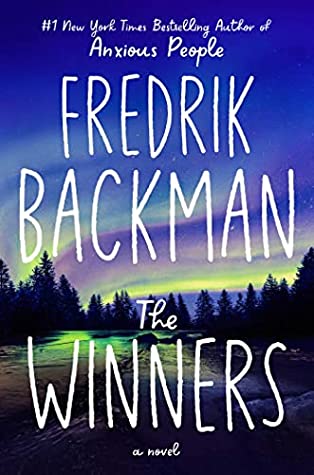
Of all the literary voices currently on the scene, Backman’s may not be the loudest, but his is certainly one of the most powerful. He has this way of writing something that is extremely heavy but, typically, he does it in a way that is enjoyable and not at all an arduous experience. Packed full of of hilarity and lightness, his books inspire so many good feelings it makes the difficult life and death stuff easier to process. Beartown is one of the few exceptions to this. Each installment (Beartown, Us Against You, and The Winners) is really quite heavy, both thematically and in overall tone. While I sort of missed that feel-good aspect of Backman’s work that endears me to him so much, I still found this series to be utterly masterful. I’ll try to cover some of the highlights, but Backman does so much right I’m not sure I could ever express everything. It’s something you have to experience yourself. It’s the cumulative reading experience, and it’s a feeling that doesn’t happen often upon finishing a book.
First of all is the setting. Beartown is this tiny town forgotten by most but comprising entire world for some. It’s desolate and freezing, and its citizens live for one thing: hockey. Beyond that, people hunt and drink and have terrible opinions. The thing is, to the reader, Beartown is so vivid. Honestly, it takes all three books to really develop this full and all-encompassing picture of Beartown. By the end, you see it as both the broken and beautiful place it is, and you understand why it will forever have such an intense pull on those that escape their bleak existences. It will always still be home, and no one will ever understand it as deeply as someone who has stood on the freezing ground and felt the life force that pulses beneath the soil. Beartown is as present in the mind of the reader as any other character. There’s this overall feeling of uneasiness. What makes the reader even more uneasy is the way Backman manages to dangle so many frozen carrots along the way, warning of terrible things to come. Sometimes you even know what is going to happen, but you don’t quite know how or why. It’s a dark, cloud-filled sky of literary foreboding. Even when you see it coming, you don’t really see it coming. You still aren’t prepared for the gut punch. Backman’s method is highly effective. I tore through this series at a speed I haven’t achieved in a really long time. It’s about hockey. I couldn’t give a flying puck about hockey, but somehow Backman pulled me in anyway.
Hockey, however, is merely a device in this book. It’s a symbol of that thread through society that takes hold, permeates the masses, and spreads toxicity at a terrifying pace. This toxic culture elevates some and stomps on others without reservation or remorse. Seething beneath the surface is a bubbling poison just waiting for the right moment to spill over. Backman uses one word, at first representative of the sound a puck makes against a hard surface, but with the cadence reminiscent of the ticking timer of a bomb: Bang, bang, bang. This starts off inconsequential, merely a word in place of a sound. By the end, it has become something so sinister it makes your skin crawl to see or hear it uttered.
Sometimes I read books and I think, “ok, they are trying to pack way too many themes into one book.” They become cluttered and confusing because the author is attempting to do something daring and profound but it falls short. Backman, on the other hand, effortlessly weaves in a complete picture of societal ills. Encompassed within it are all the multiple layers for a full understanding of exactly how everything is connected. We not only see the dominoes fall, but we see precisely how they were set up in such a way to bring the whole thing down. There’s no good or evil. There are contextual experiences and histories that lay the foundation for a character’s actions, whether they be good, evil or somewhere in between. The complexity to Backman’s characters doesn’t feel forced. It feels like life. And with people who seem so real, their pain and their confusion only has a deeper effect on the reader. This series is an exploration of human emotion, strength, frailty, and the enduring power of love. But it’s also about the horrible power love has to bring us to our knees, to destroy us. In some cases, loss of love strengthens like armor. In those where loss has the opposite effect, it makes victims of some and villains of others.
While it’s ultimately hopeful, this series did manage to leave a raw, open space in the pit of my stomach. The final book in this series is called The Winners. The irony of that title is not lost on me. There really are no winners, and if there are it is never without a price. As a world society, we have come so far. But we still have so far to go. How much will we allow to happen before we really be the change that’s needed? Most days I fear the answer to that question. One thing I know for sure, we’d get there a hell of a lot faster if more people had the emotional intelligence of Fredrik Backman.
⭐⭐⭐⭐⭐
Rating: 5 out of 5.
Beartown. Written by Fredrik Backman, translated by Neil Smith. Published April 25, 2017by Atria Books. ISBN 1501160761. 418 pages.
Us Against You. Written by Fredrik Backman, translated by Neil Smith. PublishedJune 5, 2018 by Atria Books. ISBN 1501160796. 448 pages.
The Winners. Written by Fredrik Backman, translated by Neil Smith. Published September 27, 2022 (first published October 6, 2021) by Atria Books. ISBN 1982112794. 673 pages.
While I maybe didn’t have the best luck with life in 2022, I did have some good luck with books. The House in the Cerulean Sea is one of those books you don’t realize you need until you pick it up and find yourself smiling despite yourself. It’s quirky, a little weird, and wildly original.
Synopsis
Linus Baker is quite bored, even if he doesn’t quite realize it. He lives alone with a cat who begrudgingly tolerates him in exchange for periodic sustenance, hates his job as a case worker for the Department in Charge of Magical Youth which he is, unfortunately, very good at, and derives pleasure only from his collection of old records. When Linus is sent to evaluate an orphanage on a remote island where the most dangerous children are being kept, he is thrust into a world of secrets and enchantments that will change his life in a number of ways. And he might just find precisely what he didn’t know he was looking for in the first place.
Review
To say this book is a breath of fresh air would be putting it mildly. It’s full of the most delightful characters, each of which is unique and lovely in their own way. The atmosphere of the book, the beautiful island and the haunting old house with all its charms, and even the town with its eclectic mix of humans, is utterly captivating. This is one of those books you’ll want to imagine in vibrant color and intricate detail. Klune manages through expert writing to paint vivid and beautiful images that will stick with you for some time.
On the surface, this seems like a feel good novel about friendship, but it’s also so much more than that. Mixed among the humor and captivating fantasy elements is more than a smattering of depth. This novel explores real-world issues through fantasy in a way that’s both powerful and enjoyable. You’ll find yourself contemplating prejudice, morality, and the line between good and evil. What makes one evil? Is a person evil simply because we say they are? Is it wrapped up solely in nature, or is there a driving force behind the descent into darkness that’s rooted in rejection and fear of someone or something who is different? Can this concept be challenged by opening our hearts and our minds? And what’s the point in which prejudice is so ingrained it can’t be changed, if ever? I absolutely love when I find a book that is this enjoyable that can cause me to contemplate such subjects so deeply. Klune made me laugh and made me think, and that’s a testament to his skill. He’s a natural story-teller, and this book is simply delightful. Oh, and the sweet love story brings on some serious tingles.
⭐⭐⭐⭐⭐
Rating: 4.5 out of 5.
Published March 17, 2020 by Tor Books. ISBN 1250264294. Runtime 12 hrs, 12 mins. Narrated by Daniel Henning.
When I decided to restart the blog, I couldn’t think of a better book to begin than a review for this gem. This was my favorite of my reads for 2022. It’s a debut novel from Shelby Van Pelt, and I certainly hope to see so much more from her in the future, because I need to regularly ugly cry at the end of a book to remember I am actually human.
Synopsis
Tova Sullivan lives a quiet life keeping her little house tidy and working as a night shift janitor at the Sowell Bay Aquarium. She doesn’t need a job, but she needs the distraction that staying busy gives her. Tova carries around the kind of sadness very few humans could ever understand, but when she meets Marcellus, the giant Pacific octopus living at the aquarium, she doesn’t know just how much change he will bring to her life.
I loved Van Pelt’s development of character. She seamlessly crafted these perfectly flawed people in separate spheres of this delightful universe and brought them together in such a satisfying way. Marcellus the curmudgeonly octopus is what you get if you take Backman’s Ove and give him eight tentacles and nine super-charged brains. Definitely listen to this one, because Michael Urie stole the show with his narration of Marcellus. The rest is narrated by Marin Ireland, pretty much a legend in audiobook narration. There’s a whole host of other delightful and quirky characters who make up this novel, and each of them has a very important part to play.
All the characters are flawed, but none was quite as flawed as Cameron, the young man who moves from California to Sowell Bay in search of information about his past. Honestly, I had trouble viewing him as a man in his 30’s. He read like some deadbeat teenager. Sure, he had his reasons, and he was supposed to be presented as a stunted adult. I in no way am trying to say Van Pelt did anything wrong in the way she presented him. He was precisely as he was planned. That didn’t make him any less annoying, but I totally understand him and appreciate the complex human that he is.
Hands down, my favorite human character was Ethan, the colorful owner of the local food mart. Of course, I loved Tova dearly and was rooting for her to find her peace, but Ethan just brought a smile to my face every time he popped up. I thought he was the soul of this book, representative of the depth of goodness at the heart of a rugged and shaggy world that’s often judged by its rough exterior versus the more understated side full of warmth and humor. The prose of this novel is lovely, and it really lends so much more beauty to an already incredible setting in Sowell Bay, Washington, on Puget Sound. I’ve always wanted to visit that part of the country, and now I want to visit even more. Though there’s probably a risk of me hanging out at an aquarium trying to bond with an octopus, and I’d probably get kicked out.
Let me say this: I liked this book up until the very end. And then Van Pelt did something that changed the way I felt. She made me love it instead. She took three words she’d already presented us with and then she laid them back at our feet with a different context and it brought instantaneous clarity (and quite a few tears). I think it takes legitimate skill to write something that can put so much power into mere words, especially so few. I’m not going to explain that any further, because I don’t want to spoil too much, but when you read this you will know what I’m talking about. Suffice it to say, this book has one of the most beautiful scenes I’ve read in a long time.
Basically, this book has everything you could want. It’s highly emotional, possessing both that feel-good vibe that readers love and a deep complexity that examines how we humans process pain and loneliness. There’s a bit of mystery, though I feel like certain details are pretty obvious pretty fast. But the driving force of this novel is not mystery or intrigue, it’s love and forgiveness and friendship and all manner of gushy things. It does refrain, however, from verging over into too much sentimentality. It rides that fine line of perfection that acknowledges the harsh realities of life without neglecting that good things exist. In short, you should read this. Everyone needs Marcellus in their lives.
⭐⭐⭐⭐⭐
Rating: 5 out of 5.
Published May 3, 2022 by Ecco. ISBN 0063204150. Runtime 11 hrs and 16 mins. Narrated by Marin Ireland and Michael Urie.
I chose this book a few months ago for my month’s pick for Read Between the Wines, my book club. I came across the audiobook on my app and was intrigued by the cover. It was touted as a book for lovers of Where the Crawdads Sing, of which I am one. So I was pretty much sold.
Synopsis
It is Mississippi in the 1920’s and two girls from different sectors of life come together after both experience tragedy. Ada, after running away from her abusive father to Baton Rouge with a lover, returns to the Trace because she has been abandoned and has nowhere else to go. Matilda, the fiery daughter of sharecroppers, fleeing from some unknown force of evil, comes upon the stilt house of Ada and her father on the swamp. Together the girls forge an unlikely friendship that’s full of secrets from their pasts, secrets that will come out as the girls get pulled further into a dangerous world they never sought but found them anyway.
Review
This is a creative plot, and it’s quite well paced. I didn’t have any trouble keeping my interest focused on the narration. I liked the main characters for the most part, but I didn’t like the fact that this book portrayed a very black and white view of the world. Good was good and evil was pure evil. The villains were quite over the top, and there was little to no complexity to their story. Matilda was probably the most complex and well-drawn character, and it was her story that really pulled me in. I enjoyed the way her story unfolded, little by little and layer by layer. As with many other stories about black Americans in this time period in the South, her story is bleak. It’s really hard to wrap my mind around the idea that one person could endure so much damn heartbreak, but history is unfortunately full of them. Frankly, I commend Mustian for not sugar-coating her past. This novel is certainly not meant to be a feel-good Hallmark movie, but it certainly is about the fierce and intense fortitude that come with being a woman in a completely unforgiving world. Both Ada and Matilda are a testament to that, both in very similar ways and in very different ways. Thankfully, this ultimately means the difficult aspects of this book wind up being infused with a lot of hope. There is a silver lining.
Ultimately, this book does represent precisely why historical fiction is one of my all-time favorite genres. It lays a foundation. It provides context for precisely where we’ve come and how we attained progress to get to where we are today. And each character pays homage to the real souls who had to fight and suffer to show us the path we needed to take. Despite some minor quibbles I may have had with the novel, it is a worthwhile read even if it isn’t perfect.
⭐⭐⭐
Rating: 3 out of 5.
Published April 6, 2021 by Blackstone Audio. ISBN 9781665105644. Runtime 9 hrs, 56 mins. Narrated by: Johanna Parker.
For starters, this is not a book review. No, those will be coming in droves for the next few weeks. I don’t think I’ll be posting a review for every book I read over the last few months, but I will try to do some highlights, starting with one that I had already started reviewing and abandoned. This post is, quite possibly, one of those cliched mea culpa posts that start flooding in at the beginning of every new year. I could say it’s my “New Year’s Resolution” to restart my blog, but I don’t really believe in resolutions. Sure, it’s a principle which acts as a driving force to get us moving, but the whole concept generally gets in the way and causes us to give up on our resolutions. Merely stating you are going to do something doesn’t tackle the reasons behind your getting to that point in the first place. You have to tackle the driving force that pushed you off course, and that’s often full of complexity.
2022 for me was rough. I won’t go into all the nitty gritty, but I struggled in more ways than one. I think as a rule we as humans only give up on one thing when the shit hits the fan and life gets complicated. We give up on ourselves, and we neglect ourselves. That just causes our mental state and our emotional well-being to unravel to a greater extent and then we have even less motivation to fight for ourselves. How bad it gets before we decide to do something about it varies from person to person. For me, I’m still not sure I’ll be successful at regaining much of anything, but I’m not yet willing to give up. The truth is, I’m not really one to talk about anything. I’ve always been the strong one, the one who was there to listen to anyone else and offer advice. I don’t know how to sit in the other seat, because I don’t like being vulnerable. And even when I have tried, it’s backfired and I wind up feeling even worse about myself. So I shut my mouth again. It turns out I’m really total shit at following my own advice.
I know it’s possible to claw your way back up and find inner peace and regain some semblance of your old self that believed you have what it takes to do something that makes you happy. I’m not talking about “success” in the traditional sense. A sense of purpose doesn’t necessarily bring money and fame. I just want to feel like I mean something. Like I didn’t sell myself short. I’ve seen it happen. I’ve seen someone hit absolute rock bottom and use it as a way to follow a crazy dream and it worked! My problem is that I’ve never actually followed the dream, and now my self doubt wonders if I’m actually strong enough to do it. I have a lot to be thankful for. I love my family and I live for them. I’m just not sure I JUST want to live for them. I want to live for me, too.
When I first started this blog, it was because I wanted to reconnect with that part of myself that was passionate about literature. I missed academia. I wanted to write again. Even if I was writing about the writings of other people, it gave me a purpose beyond the monotony of everyday life that I sometimes feel is crashing down around me. Obviously, getting back to where I was a year ago in regard to this blog is a good first step in trying to reinvigorate all that. There’s so much I need to fix, both personally and professionally. And I will start by trying to fix me.
 I recently embarked on an impromptu Lucy Foley mini-marathon, consuming three of her books in a row over the course of a couple of weeks. I guess I was just in the mood for something engaging and exciting but not super complex. This will be the first three of the reviews, and it is the first one I completed. I won’t spend a whole lot of time on these reviews while I’m attempting to catch up, so don’t expect any of the reviews to be extremely detailed.
 I can’t believe it took me so long to read this book. It’s going on a decade old now! Let me tell you, this book has the perfect title. The entire book is strange and beautiful in the best way. First I want to start by saying that I find books like this kind of difficult to review. My thoughts aren’t nearly so clear-cut. They are a jumble, and it goes way beyond character/plot/writing. That is to the book’s credit, but it’s much more difficult for me to put into words because it’s all about how cohesive this work truly is. How do you describe all the various layers that make things fall into place so perfectly?
  For a lot of parents, myself included, this is a very tricky subject. I admit, I’ve struggled with the notion of God and religion since having children. I live in a deeply red state. Christianity is used as a weapon to speak out against tolerance, it’s used in support of bigotry and oppression, and it’s used as a way to stop our children from learning vital information they need to become critical thinkers. Adults think the terrorists who stormed the capitol are heroes, women should shut up and take a seat, and books should be burned in the church parking lot. Most people believe children should be taught the world is 6,000 years old and Noah had a big-ass farm on a boat (Seriously, where did they find the bamboo to feed the pandas?) If anything, I believe these mixed messages are damaging to our children. So how do you approach religion with your kids when you don’t buy into the dogma?
 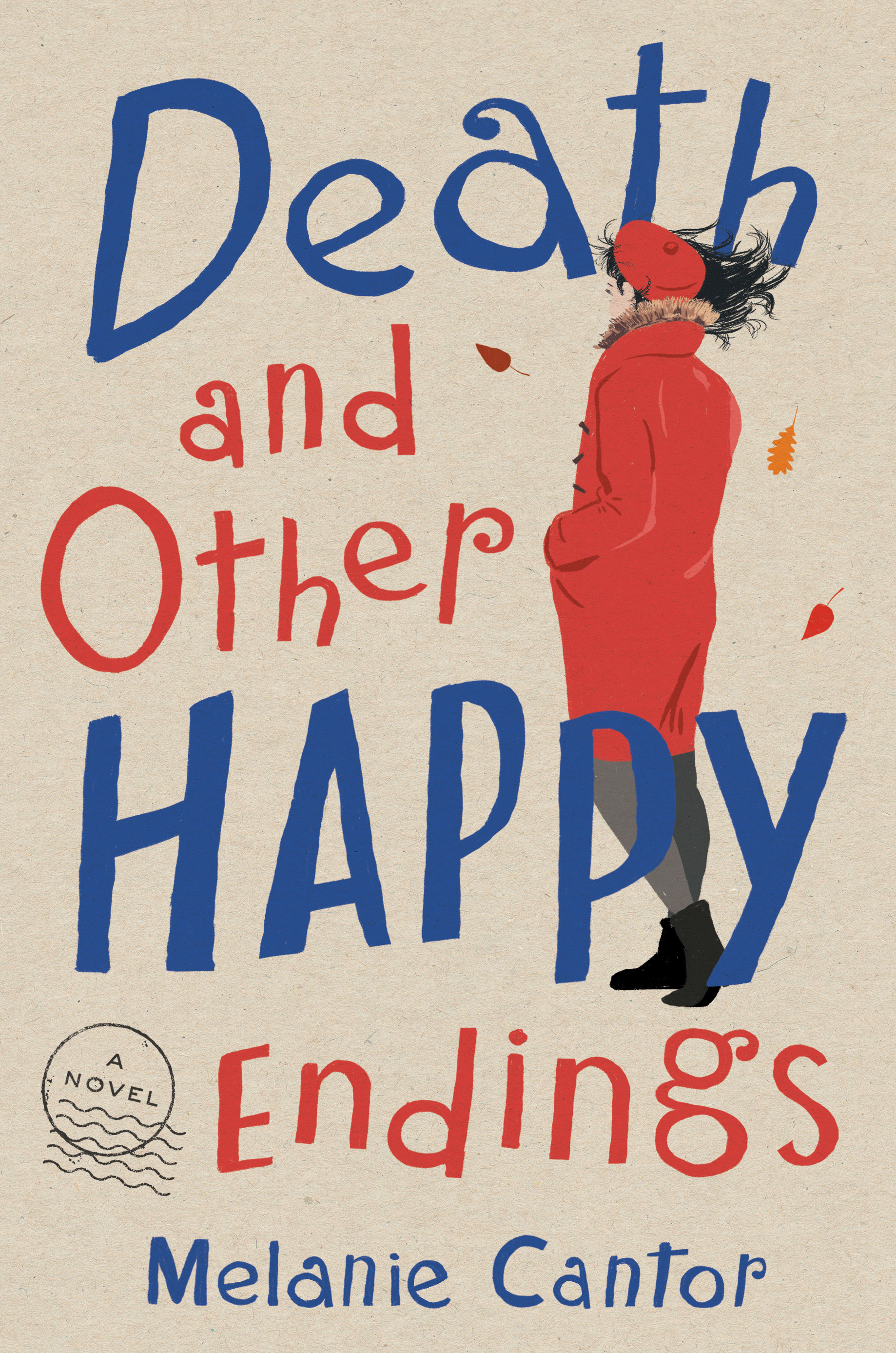 Forgive me. This will probably be one of my reviews where I get a little snarky. I hate that I do that, but at least I’m self aware. First of all, I love the title. That’s actually why I picked this book up on a whim. The cover is very simple but intriguing. Disappointingly so, I found out the title was later changed to the much more Hallmark-esque title of Life and Other Happy Endings. (WHYYYYYY????) Switching Death to Life takes out all the intrigue.
  I have counted up the number of books I’ve read but not reviewed, and I’m too embarrassed to tell you what that number is. Rest assured, it’s bad. Obviously, I’ve been reading a lot but not much more. Sure, reading a lot is a very positive step, and I’ve read some great works by some fabulous authors. This is one example. I’m a sucker for historical fiction, but I have to admit that sometimes certain subjects get a little old and I get a hankering to take a break and find a subject or time period that I really don’t know much about. Christina Baker Kline excels at this. She strikes me as an avid researcher who loves to delve into the little-known gems of world history and then shares the knowledge she’s gleaned with her audience in a way that’s both educational and compelling.

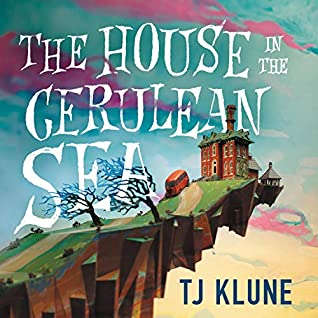 While I maybe didn’t have the best luck with life in 2022, I did have some good luck with books. The House in the Cerulean Sea is one of those books you don’t realize you need until you pick it up and find yourself smiling despite yourself. It’s quirky, a little weird, and wildly original.
 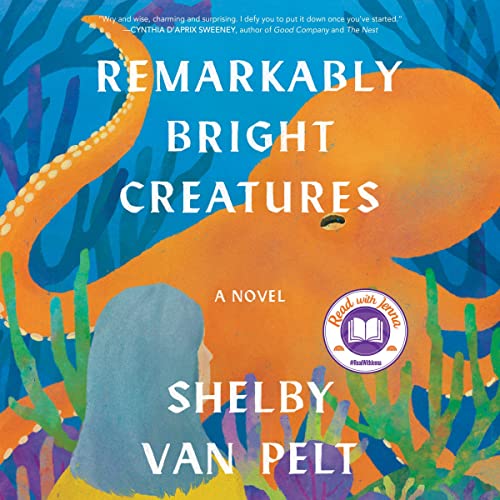 When I decided to restart the blog, I couldn’t think of a better book to begin than a review for this gem. This was my favorite of my reads for 2022. It’s a debut novel from Shelby Van Pelt, and I certainly hope to see so much more from her in the future, because I need to regularly ugly cry at the end of a book to remember I am actually human.
  I chose this book a few months ago for my month’s pick for Read Between the Wines, my book club. I came across the audiobook on my app and was intrigued by the cover. It was touted as a book for lovers of Where the Crawdads Sing, of which I am one. So I was pretty much sold.
  A Librarian and Her Books