
*Trigger Warning: This book review contains talk of very difficult subject matters that might be upsetting for some readers. I’m also going to say some potentially controversial things about religion, so reader beware.*
 If ever there were a person qualified to write a legal thriller, it’s Nancy Allen. Ms. Allen is a former Assistant Missouri Attorney General and assistant prosecutor out of Greene County, Missouri, which is the exact location in which I sit while writing this review. She currently teaches law at Missouri State University, my alma mater, and uses her expertise and knowledge of the legal profession to write incredibly compelling legal thrillers. You can find her on the web at http://www.nancyallenbooks.com/. The Code of the Hills is the first novel in the Ozarks Mysteries series. The series follows assistant prosecutor Elsie Arnold as she navigates the frustrating and sometimes stifling environment of the legal field in a small deeply conservative and religious community. She sometimes finds herself taking on cases that not many would want to tackle.

“As a prosecutor who had handled many of these cases, she knew that a strict code of silence generally accompanied a family history of abuse. And something must have happened to crack it. She knew all too well the ways in which terrible wrongs could be hidden from the world.”
– Nancy Allen, Code of the Hills
Synopsis
 In Code of the Hills, Elsie is tasked with prosecuting a particularly difficult child rape and incest case involving a father and his three daughters. In rural McCown County, a fictional county in Missouri that Allen has created for her series, people don’t discuss matters such as abuse or neglect, and they especially don’t discuss incest. Members of the police department and the prosecutor’s office, however, know that such evils roil and seethe beneath the surface of the idyllic facade of this small community. Beautiful rural countryside hides an awful truth. Poverty and drug use are rampant, and mothers often can’t or won’t protect their children from the men in the home preying on them, as interfering could get them hurt or killed. Because you really can’t protect you’re children if you’re dead. Elsie is tasked with proving, beyond a reasonable doubt, that one such father should be put behind bars for the sake of his family’s safety. But as she’s seen in past cases, this is often easier said than done. Elsie will uncover an even uglier side of her town as her very own life is threatened by the supporters of the assailant, people who will stop at nothing to silence women like Elsie. After all, the Bible says a woman shall remain silent in the presence of a man, and there’s nothing more threatening to these people than a woman in a pantsuit with an opinion and a degree to back it up.
Review
I’ll begin by saying that it’s really obvious that Nancy Allen knows her stuff. Working for the Court system for over 15 years, I’ve seen my fair share of court records from abuse and neglect and child molestation cases, and this book is not wrong. But the saddest reality is that the people tasked with interfering in these cases, from social workers to attorneys, can only do so much and can only do so within the confines of the law. We see Elsie struggle to hold her composure in the rodent and cockroach infested home of a mute little girl, trying desperately to reach her, realizing that even after the father is removed from the home there is still so much standing in the way of this little girl ever having a normal life. Elsie relies on the testimony of two older girls, girls whose years of abuse have already caused irreparable damage. Even when child welfare agencies get involved, it’s often a long and agonizing process that only does further damage to the children.
The real foe, however, for Elsie, is not the defendant. It’s the raging patriarchal prejudice that dictates the decisions made by many members of the community, event those at the top. This book presents us with religious folk, members of what I would call a cult, who sit self righteously in their pews on Sundays and then commit evil and threatening deeds on behalf of a child molester simply because, in their estimation, fathers have inalienable rights as heads of household. These people use threats and coercion to protect the evil and vile criminals in society under the guise of “family values.” There’s a part of me that wants desperately to believe people like this don’t really exist, but I’ve also heard enough crazy ramblings over the past several years to know that OF COURSE THEY DO.
This book also highlights the inherent institutional sexism that even to this day slithers its way through the legal community, ensuring that women have to be twice as good at their jobs as their male counterparts to even be considered for the kind of upper level positions men have enjoyed for years. And many times these positions of power weren’t gained with merit but with political posturing. That good ole’ boys club card is good for a lot more than just entry to the country club for a round of golf. That being said, it’s not just men that enjoy the spoils of political posturing, as evidenced by Elsie’s horrible boss, the wife of some powerhouse businessman and political donor who’d racked up a few favors with higher-ups, ensuring his wife’s appointment despite the fact she doesn’t have a clue what she’s doing. That’s all just a very small taste of what’s in this book. And it’s a big, infuriating mess of WTF. And it will piss you off because there’s so much fact interspersed amongst the fiction.
Let’s talk about Elsie for a moment. On the one hand, I really like the fact that Elsie is actually believable, relatable, and quite flawed. When I say quite flawed, I mean she’s the kind of woman I want to take by the shoulders and shake while yelling, “WHAT THE HELL IS WRONG WITH YOU????” But, the thing is, I KNOW what’s wrong with Elsie. Because I feel like a lot of us women who were raised in communities like Elsie’s in Southwest Missouri and similar locales can completely understand what it’s like. Here we are looking at other women in other situations saying, “I could never be like that.” We see the woman being abused by her husband and say, “how can she put up with that?” Or maybe, “why doesn’t she just leave?” But then how many of us have ever been in a room with one of those cock-sure masters of the universe who were born on a pedestal and found ourselves flustered and cowering? Or even merely just disrespected and ignored at a car dealership or a bank or wherever else you encounter the “men are the heads of the household” mentality. How many of us have disappointed ourselves by giving in and just letting things go in these situations, not standing up to the old man who tells us all our problems will be fixed if we’d just find a husband? In Elsie we see a woman who originally believes herself to be strong, confident, and very unlike the women she often encounters in her profession. But everything that happens to her challenges that notion. It opens her mind to the notion of sisterhood and understanding that as women, we’re all fighting somewhat the same battle. And, often, that battle is with those elements of ourselves that echo the sentiments we’ve always been fed that maybe, just maybe, we can’t really measure up. The challenge is how to arm ourselves against the vicious attacks that aren’t necessarily physical but are still just as damaging. Unfortunately, we carry damage from the toxic things we’ve been fed in childhood and find ourselves tasked with retraining our brains. My favorite thing about Elsie, ultimately, was that I saw a lot of growth in her. I won’t lie, though, the journey was a bit tough to bear and I didn’t always like her. Then again, I don’t always like myself either.
This whole story was tough to bear. Perhaps it hit a bit close to home. I mean, it literally is home. It’s a birds-eye view into all the things I hate about the community in which I live. The religious zealotry that dictates decisions and has permanently altered political ideals, cherry picking the most atrocious things from the Bible to excuse their prejudices. I’m not trying to make this a critique of religion, of course. I don’t find these opinions I’m discussing to actually be biblically based, but a pure bastardization of the original principals. It’s mostly driven by fear instead of by faith, and that’s where communities go astray, and that’s why rational people find themselves leaving organized religion in droves. Can you blame them?
Needless to say, this book is a challenge. It’s emotionally challenging, it’s heavy, and it drains you of just a little bit of hope for humanity with each page. Ultimately I think the journey was worth it, and these are definitely topics that need to be discussed. I’m not one to put down something just because the message is a little irksome. If it’s important, it needs to be said, and I need to absorb it and carry it with me into the future. I realize I wound up making this review a bit long without really talking much about the substance or the writing. Overall, I can tell that Ms. Allen has a lot of experience in the legal field. Very much of the narration deals with procedural legalese, though it was easily digestible and I didn’t feel like the story got lost in all that, so well done. It was good but not necessarily masterful writing. Sometimes I felt like I needed a break, because it’s full of such awful negative stuff. Then again, that’s what an authentic story is: depressing and soul-sucking descent into humanity’s abyss. Overall rating, 3 1/2 stars.

 On audio, I’m tackling another book by an author who is on my list to read their entire body of work, Fredrik Backman. I absolutely adored A Man Called Ove and read a couple of others after that. So this time I’ve picked up Anxious People. This is a book that’s been getting a lot of buzz, and the reviews have been pretty great. I’m almost finished with it, so I should have my review come out pretty soon. Backman seems to have this knack for deeply understanding the human condition, and his books are almost instantly relatable.
  In hardback, I am reading a classic. Kurt Vonnegut’s Slaughterhouse Five. This is one of those books I’ve been telling myself for years are a must read, but for some reason I never actually picked up a Vonnegut book. Thankfully, one of the members of my book club chose this for our selection a couple of months back. Yes, this means I didn’t get it read in time and it’s been languishing, but I’m determined to set aside my other pursuits in order to finish it by the end of this week. While this isn’t a long book by any stretch of the imagination, it is one to be carefully considered and not rushed through. Just because an author uses fairly simple language doesn’t mean there aren’t deeply complex ideas at play. I should have a lot to say about this one in the coming days.
  I just finished reading a book by a local author and veteran of the legal profession, Nancy Allen. It’s called The Code of the Hills and is a part of her Ozarks Mystery Series. The series follows a young prosecutor in a rural Missouri County as she tackles difficult cases and the stifling, sexist ideas that permeate her community. I’m currently working on my review for this book and expect to have it posted in the next couple of days.
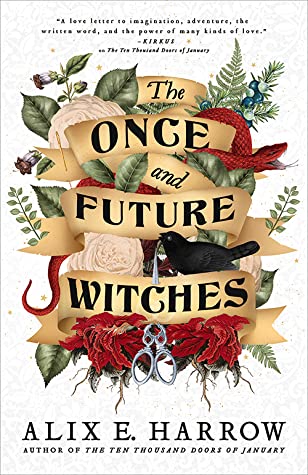
  I have yet to do an update for my reading challenge, which is on my To-Do list, but my To-Do list is about a mile long so some things have gotten pushed aside. That being said, I have managed to tick a few books off of my 52 book list, including a couple of fairly specialized ones. This one came about when I put a call out on Facebook to my librarian friends for some recommendations. I received some fabulous recommendations, and The Bookshop of Yesterdays caught my attention because it could fit into another category which allowed me to pick one of the others for the recommendation category. So I decided to make this one my Book About Books. And boy, was it a book about books. Among the classic titles dropped in this book are The Tempest, Frankenstein, Bridge to Terabithia, Pride and Prejudice, The Feminine Mystique, Jane Eyre, The Grapes of Wrath, Fear of Flying, and more.
  Miranda Brooks hasn’t seen or heard from her uncle Billy in sixteen years. Her memories of Uncle Billy are mostly happy ones. He was the cool uncle with the cool job and the amazing book store that felt like home. He sent her on rambling scavenger hunts with literary clues that always led to something wonderful. Miranda didn’t care that Billy was completely unreliable, always missing special occasions, a fact that irritated Miranda’s parents much more than it irritated her. Then on a fateful night after Billy missed yet another birthday, Miranda witnessed a terrible argument between her mother and Billy. After that fight, she never saw or spoke to Billy again. After sixteen years, Billy is merely the distant memory of a 12 year old Miranda, but news of his death still strikes a hard blow to her. She’s shocked to find out that Billy left her the bookstore, Prospero Books. Additionally, Miranda starts receiving clues to a new mystery. Billy has sent her on one final quest. One final scavenger hunt that will lead her back home on a journey in search of the ultimate treasure: the truth.
  I’ve seen a lot of buzz about this book, which is what led me to it as a choice. I’m certainly glad I picked it up, because there’s a lot to appreciate, especially for my reading tastes. As a reader, I feel I’m a fair mix of simple and complicated. I don’t necessarily care about genre. I’ll read anything, but it can’t be formulaic and it must have compelling characters. I don’t necessarily have to like the characters, but I have to be able to appreciate them. For this reason, I consume general fiction, literary fiction, classics, horror, science fiction, fantasy, YA, and more and I enjoy them as long as they are well done. I have a fascination and appreciation for history, but I greatly enjoy the additional depth that good historical fiction can lend to a historical time period. Knowing factual information is one thing, but seeing and experiencing fear, loss and triumph through the eyes of a well-drawn character etched in time is far superior than a non fiction book to truly understanding the significance of a historical time period and what it means for the growth of humanity. Good fiction allows the reader to live a moment in time. I’m well aware that this is my opinion, so if you disagree I hope you can forgive me for that and move on. 😉



 I just finished
 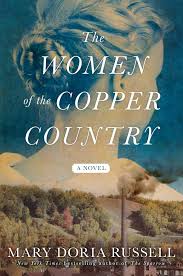 Oh, here we are again. This is the part that always makes me feel like a bit of a failure. Why, you ask? Because these books are usually the same picks every single week due to my sheer fickleness as a reader. I never get around to actually picking them up thanks to a sudden influx of library holds. This time, however, it will be different. I’ve taken a break from library holds until I clear a few off my shelf at home. I’m going back to Mary Doria Russell again. I’ve read every single one of her books, and this is the last one I need to complete the collection. So,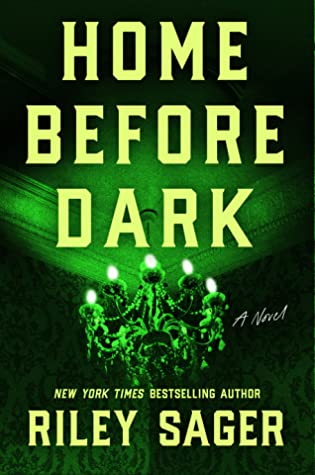
 A New Year brings new ways for me to increase my productivity and reach my goals. I restarted my blog late in 2020 and didn’t do any reading challenges, so it’s time to change that for a new year. This can help me with my accountability and keep me focused on what to do next. I would like to keep my goals quite attainable this year. Since I had my children, I’ve noticed the main thing that’s suffered has been my reading. Since reviving my blog, I’ve really been trying to manage my time wisely and make time for the things I enjoy, reading to be at the top of that. As my typical Goodreads reading goal has been a book a week, this one seems to be the perfect challenge for me. I hope to exceed that by far this year, but this is a goal I consider pretty attainable, so why push it?


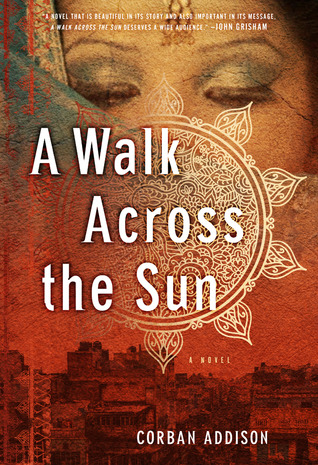 In 2012, I picked up a book from the library by an author whose name was new to me. The cover art was absolutely stunning and I instantly thought, “This looks like my kind of book.” I mean, look at that cover! There aren’t enough heart emojis to describe its loveliness. The novel,
 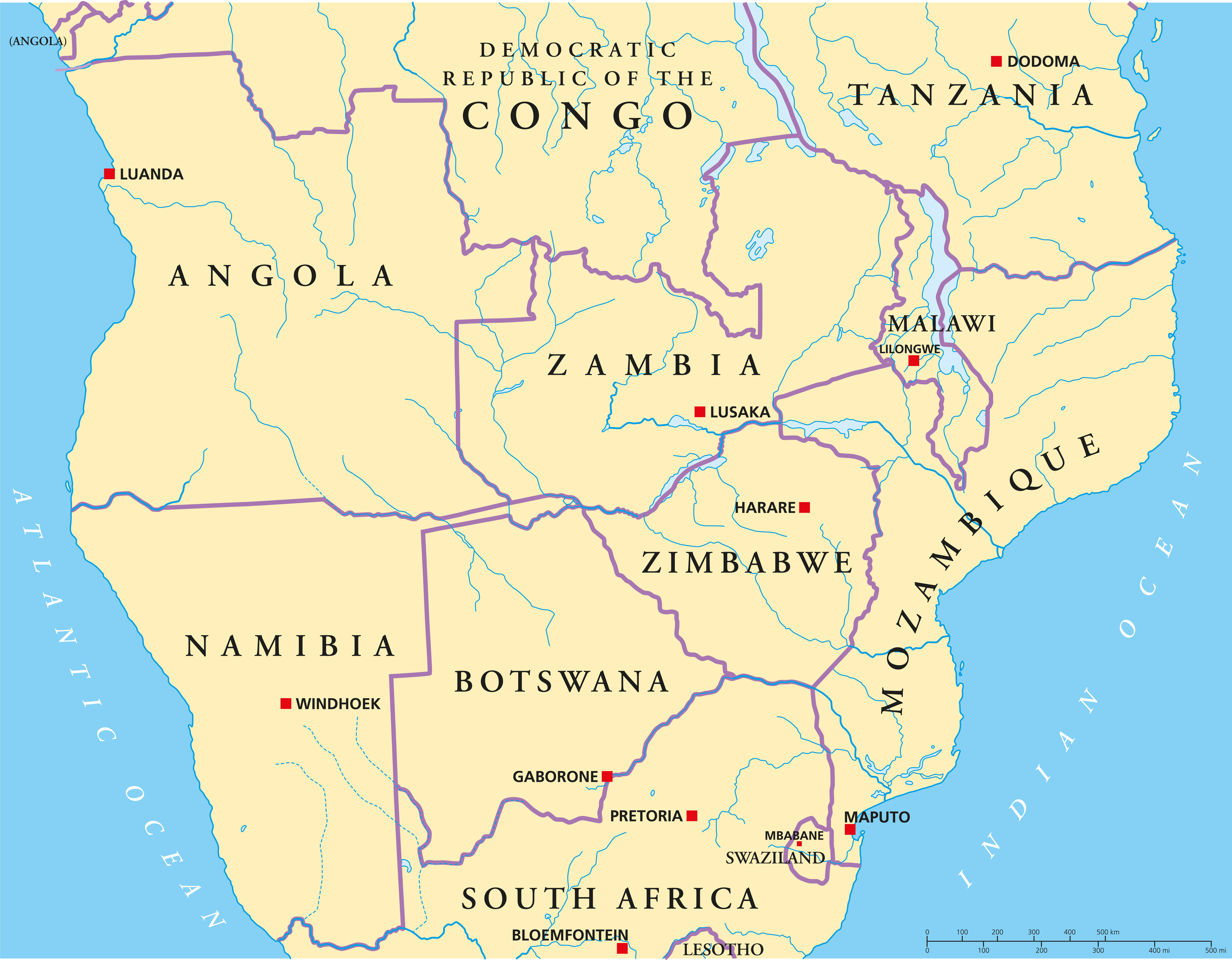 Zoe Fleming is a young American human rights lawyer working in Lusaka, Zambia in 2011. Zoe works with a small team of lawyers who investigate serious sexual crimes against children. When Kuyeya, a young girl with Down Syndrome is found walking the streets of the city after having been raped, Zoe and her team, aided by veteran police officer Joseph Zabuta, begin the search for clues as to who could have perpetrated such a heinous crime. Their search for answers leads them down rabbit holes into the past of the young girl’s deceased mother, unraveling mysteries along the way that implicate powerful people in Zambian society while also setting important legal precedents that could help future victims of violent sexual crimes in Africa. But what will these powerful people do to stop their secrets from being unveiled, and how much will seekers of justice have to lose in order to see justice prevail?

 A Librarian and Her Books