 Perhaps because I live in an utterly land-locked state in the middle of the United States, I have a bit of a fascination with the ocean. I’m known to periodically pick up books on ocean ecology, watch programs like Jeff Corwin’s Ocean Mysteries, and click on any article even remotely ocean related. To this day, I can totally nerd out to the 1989 James Cameron movie The Abyss, the film that made me fall in love with both the ocean and Ed Harris in equal measure. You should go watch it as soon as you finish this review. Frankly, I find it so strange people are so obsessed with getting into space when there’s so much still to discover within our ocean ecosystems. There are vast expanses beneath the depths that are completely unexplored. Maybe that’s a good thing, because where humans enter comes eventual destruction, but the idea of the unknown is still utterly fascinating and more than a bit frightening to me. When I saw this book on Overdrive through the Springfield-Greene County Library system, I downloaded it since I was in the market for a new audiobook. It’s read by the author, naturalist Sy Montgomery, and chronicles her experiences visiting with several different octopuses at the New England Aquarium (and the author clears up the debate: octopi is incorrect). She later learns to dive and visits various destinations to connect with octopuses in their natural habitats.
Let’s get one thing straight right from the start. This is not really a science book. Sure, there are smatterings of scientific facts about octopuses and lots of discussion of their neurological makeup and their fascinating levels of intelligence. But more than that, this is a human story. It’s a story of growth and connection. Honestly, it’s a story of friendship. So much so that I’ve placed this one in my reading challenge as number 28: A Book About Friendship. It’s not just human to cephalopod friendship, though there really is a lot of that, but it’s also a story of human to human friendship. 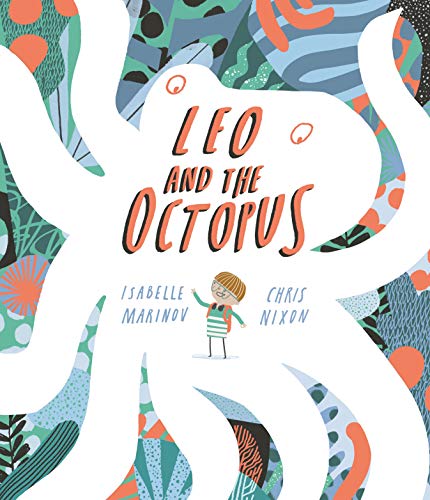 This book discusses numerous people whose lives were changed by their work in the aquarium and their acquaintance with the octopuses and the other people who cared for them as well. One of the most touching stories was a teenage girl with autism and a history of suicidal thoughts who found comfort and purpose amongst her 8 tentacled companions. Animals, in general, are incredible forms of therapy for people who find it difficult to fit in. Just last night I came across another book, this time a children’s book about a young boy with autism whose visits to the octopus tank at the aquarium make him feel more comfortable in the world around him. It’s called Leo and the Octopus and it’s by Isabelle Marinov and illustrated by Chris Nixon.
I also want to address the elephant in the room. I saw a lot of reviews on goodreads from people who were adamantly opposed to this book for its casual tone toward the treatment of the octopuses at the aquarium. It is true that the animals profiled were taken from the wild not because of illness or injury but were captured wild simply for their inclusion in aquarium exhibits. Frankly, I dislike this practice as well. In some cases, one incredibly tragic and disheartening story in particular, the animals were kept in very small barrels for much longer than they should have been until bigger habitats were available. I understand the point these reviewers make, and this didn’t really sit well with me either.
That being said, it is expressly stated in the book that the New England Aquarium increased the size of their habitats and, by the end of Montgomery’s tenure shadowing the staff and animals at the aquarium, conditions were so much better for the animals. Montgomery presented a picture of incredibly caring people who were doing the best they could and cared very deeply for the animals in their care. I detest for-profit institutions that are run for greed rather than for the purpose of conservation, preservation, and education of the public. However, in a great institution, an animal is given the chance to live out a long and healthy life in captivity free from predation. Additionally, humans who encounter them are able to grow their appreciation and understanding for these incredible animals and their ecosystems. This, in turn, teaches us how to be better shepherds for them in the wild with a much healthier respect for them and their boundaries. Montgomery spoke vividly about watching people visit the aquarium, their initial reactions to the octopus being one of fear and disdain but transforming to awe and something akin to love by the time they walked away. Yes, there are some unfortunate negatives, but I would argue the benefit these kinds of programs gift to the world is worth it. In some cases where humans have encroached so fully into an animals’ territory, zoos are the only thing saving some species from extinction. With that being said, I refuse to make villains of the people who are actually trying to educate others about the value of these animals to the natural world, but only if they are doing so in responsible and ethical ways.
Back to the book, as I previously mentioned, I listened to the audio version of this, and it’s read by the author. The first thing that struck me was that Montgomery simply oozes a kind of childlike glee and wonder. You can hear her passion and her enthusiasm for the octopus in her voice, sometimes to an almost annoying degree. Though, I’m cynical and easily annoyed by overly cheery people, so take that criticism with a grain of salt. The writing isn’t superb. In fact, I saw one reviewer positively skewering Montgomery for her overt overuse of the simile. For my part, I view Montgomery as a scientist first and a writer second and applaud her effort to share her research with the world, so I’m not going to quibble over the fact that she’s no John Steinbeck.
Overall, this book is an enjoyable read that will provide you a more intimate glimpse into the soul of the octopus. I give it 3 stars.
The Soul of an Octopus. Published May 12, 2015 by Highbridge Audio. ISBN: 9781451697711. Runtime 9 hrs, 12 mins. Read by Sy Montgomery.
 To be honest, I don’t read a lot of murder mysteries. To date, this is only my 2nd Agatha Christie novel, and I chose this book because I chose Christie as my author for the reading challenge whose first published novel I would read. I knew I wanted to choose an author with a prolific writing history whose works are considered classic. Christie wrote this novel in 1916 while the Great War was raging, and it was published in the United States in 1920. I’m glad I chose this one, as it’s an important piece of literary history. It’s not only Christie’s first novel, but it’s the first novel featuring one of her most famous characters, Hercule Poirot.
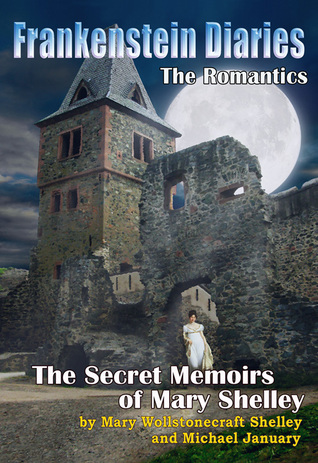


 This was by far my most anticipated book of 2021. I positively loved
 I JUST finished a fabulous audio that was much anticipated by loads of people, including myself, and I absolutely loved it so I haven’t yet started another one. I haven’t been nearly as productive in hard copy as I was with audio seeing as how I was busy with child dance rehearsals and subsequent recital last week. As a result, I’m still on Agatha Christie’s
  Same answer as last week in hard copy format. I’ll pick up Jeanine Cummins’ Oprah’s book club selection,
 I should probably start this review with a bit of a disclaimer. I find myself at a loss of words as to how to adequately approach a review for



 Nothing to See Here is the most recent book from author, Kevin Wilson, a Tennessee-based author, which is apparent when reading this novel. Nothing to See Here takes place in Tennessee and pays homage to the State, its landscape such as the beautiful Smoky Mountains, and various famous Tennesseans. For example, there’s a delightful discussion about precisely why Dolly Parton is the greatest thing to ever hail from Tennessee, being especially greater than that asshole, Andrew Jackson. Plus, Jackson wasn’t born in Tennessee, so they don’t really have to claim him.
 Over the weekend, I finished
  So once I finish the Christie book, I will most definitely be starting that one. On audio, I have no idea. I will be a bit of a free agent in that regard. I want to start one recommended by my sister,
  A Librarian and Her Books