
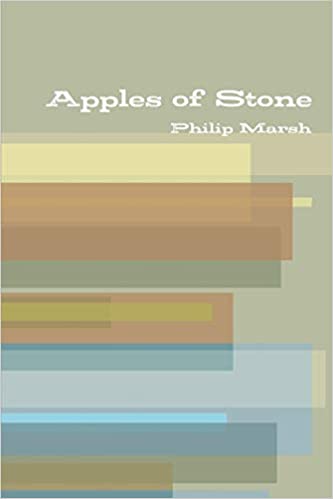
 Philip Marsh was a local author, poet, and licensed clinical social worker based in the Ozarks where I live. I never got the chance to meet him, but I do know his brother, a lawyer in Springfield, who passed along Philip’s novel to me. The author passed away in March of 2021 from complications from pneumonia and multiple sclerosis, a disease he’d battled for almost 40 years. Despite these trials in his life, Marsh managed to truly leave his mark on the community in which he lived. Apples of Stone was his only novel. It is very loosely based on the Times Beach, Missouri, environmental disaster. If you mention Times Beach to any Missouri native who was alive and coherent in the 80’s, you’ll probably receive a somber nod of recognition. It was a big deal, and a ghost town was left in its wake to prove just what a big deal it was.
Let’s just drop a disclaimer right now. This is not a book that’s going to leave you feeling warm and fuzzy. The goodreads synopsis for this novel reads: “It is also a tragedy involving altruism, human weakness, and corporate greed.” That all becomes abundantly clear once you start reading this. Is it worth it? I think so, though I did have my issues with it. Quite major issues, actually.
First of all, I absolutely hated the main character, Elliot. I don’t use that word lightly. I hated this guy. He was selfish, arrogant, more than a little stupid, and a raging misogynist. Mind you, it was the 1980’s and it’s the Ozarks, so I guess most men were this exact dude and many still are. I am in no way under the illusion that I’m supposed to like Elliot. Marsh was a smart man. He knew what he was writing, and I have a feeling he knew a few of these gems of toxic manhood disguised as altruistic liberals. Elliot had good intentions, sure. He was willing to put himself on the line for his community. He fought for justice and brought light to a serious environmental issue when no one else would. He just makes a LOT of mistakes, all of which are tied to his penis. Not literally, ouch. I mean, we all know that the penis is the holy and divine gift from God to the male species that ensures they never have to be held accountable for anything ever again.
I mean, this is basically an Ozarks Shakespearean tragedy. The Montagues and Capulets are going to screw up so many times you have no choice but to clutch your almost empty bottle of wine while slumped against the wall decrying the imminent demise of humanity. TAKE ME NOW, CRUEL WORLD!! Come to think of it, I think there’s a deleted Avengers scene where Thanos reads this book and then decides to annihilate half of humanity. Frankly, I’m not 100% certain he didn’t have a point.
I have to talk about the part I don’t really want to talk about but I feel it necessary. I despise having to hate on female characters, but Julene positively sucks! Why does Julene exist? Why does there have to be a slutty temptress who spouts misogynistic BS into the ear of our main character to make things even worse? And why the ever-loving-hell is she his cousin giving this the ever-so-icky theme of Ozarkian incest? I tried to sympathize with Julene, I really did. I do feel as a woman in the 1980’s there are certain things about her that I admire. She is fiery and gives zero fucks about what anyone thinks of her, and I absolutely admire that. But when she confidently told Elliot that if lets his wife wear the pants, so to speak, she’d never respect him, I let out an audible gasp of disgust.
I believe this is one of those cases where a man of a previous generation struggles to write a female character that isn’t a caricature of womanhood. She’s sexy, immoral and manipulative, and not quite smart enough to not need the man to fight her battles for her. And Elliot is just as culpable as Julene, but somehow we’re left with this vague notion that everything is her fault and Elliot is just a victim of her diabolical feminine wiles. Don’t get me started on the poor wife. That woman deserved so much better than the life she was given on this planet, and I wish she’d been given the grit and determination of Julene. Instead, she’s a totally different caricature of the weak and simpering wife who pretends she doesn’t but really does need the man to complete her. Ultimately, I get what Marsh was trying to convey, especially after things come to an inevitable conclusion that I won’t discuss for giving anything away. Greed and selfishness reign supreme no matter how much money you have or how good your intentions may be.
I felt the best and most important character in this was Paul, Elliot’s brother. A former professional baseball player now experiencing crippling pain, Paul wrestles with the dissipation of his former glory and imminent mortality. It was Paul’s terminal cancer diagnosis that originally alerted Elliot to the environmental dangers affecting the community, issues that became even more clear when Elliot connected with neighbors experiencing strange symptoms that couldn’t possibly exist by coincidence in such a small geographic area. Frankly, I think there was something really powerful about Paul’s story that got overshadowed by Elliot’s lusting after his damn cousin for most of the novel.
Don’t let David or I dissuade you from picking this one up. As long as the People suck and then you die theme isn’t a total turnoff for you, there’s a lot of depth in this story. I mean… they don’t ALL die, though some people probably deserved it, but that’s just life. As much as he may like to, Thanos can’t actually snap his fingers and make ONLY the sucky people disappear. We’d lose some good ones and be stuck with some douche canoes. This is why we have wine and ice cream.
Marsh was a skilled writer. The pacing is good. The characters may be terrible people, for the most part, but they certainly aren’t lacking in complexity. There’s some action and excitement along the way, and even some surprises, though most of those also aren’t good surprises. Overall, however, upon reflection I’m glad I read this one and it is a story that will stick with me.
Published June 16, 2013 by LuLu publishing. ISBN 9781304117755. Paperback. 382 pages.
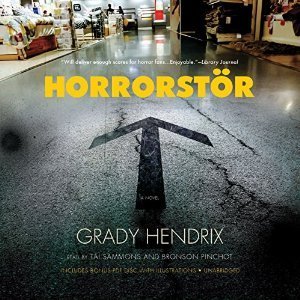 I have never been to one, but I know many people believe there’s nothing on this Earth more terrifying than an IKEA. They balk at the idea of entering the humongous chain store in which one could easily get lost, and they especially balk at taking home a jigsaw puzzle-esque project likely to push them over the edge into insanity. Grady Hendix knows this, and he is playing upon their fears in the most delightful way.
 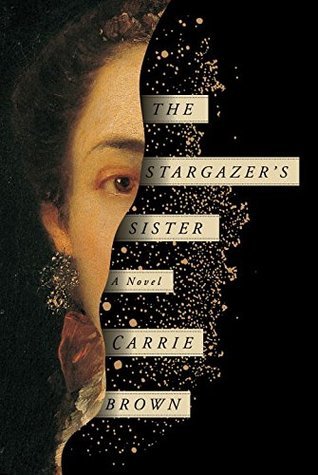 I love this kind of book. The Stargazer’s Sister is the mostly-true story of Caroline Herschel, the also famous sister of legendary astronomer, William Herschel. Anyone with even a passing interest in astronomy will know his name, and even those without that passing interest are familiar with some of his discoveries. Ever heard of Uranus? Yeah, he found it. No big deal, right? He perfected the design of the telescope allowing humans to visually reach farther into the universe than ever before. William features heavily in this novel, but Lina, as Caroline is better known, is the true star.
  The People We Keep follows 16-year-old April Sawicki. Living alone in a motorhome technically owned by her deadbeat dad, her mother existing only in memories from before she ran off, April has only her own grit and willingness to break laws in order to survive. In order to live, she has her music, her one true link to something real and lasting. After a vicious fight with her father, April decides to set off on her own in search of a place and people who could actually feel like home.
  October is a busy month for most of us in my book club, Read Between the Wines, and this month it was my choice for book selection. I chose this short and quick Southern Gothic paranormal mystery for something easy to tackle but also season-appropriate. While Kingfisher has published quite a bit, this is the first of her books I’ve had the pleasure of reading.
  I’m struggling with how to even start this review. It will be heavy, and more than slightly uncomfortable. Honestly, I’m kind of wishing I never lifted this book off the shelf. Maybe that’s why I haven’t posted a review SINCE MAY!!! Good God, what’s wrong with me?
  Let me first preface this review by saying this is at once the most infuriating and most wondrous book I’ve read in a very long time. At first glance, I didn’t think this book would be an articulate work of women’s fiction celebrating a brilliant and beleaguered scientist fighting her way through a world of utter shit bags. From the cover art, I prejudged it as being just another feel-good schmaltzy romance. Not that there’s anything wrong with that on certain occasions, but schmaltzy romances don’t usually make my blood boil and give me dreams of kicking misogynists in the balls repeatedly until they repent of their sins. There were times in this book I quite justifiably wanted to maim someone. Only really bad people, of course. I am the Dexter of women’s fiction.
 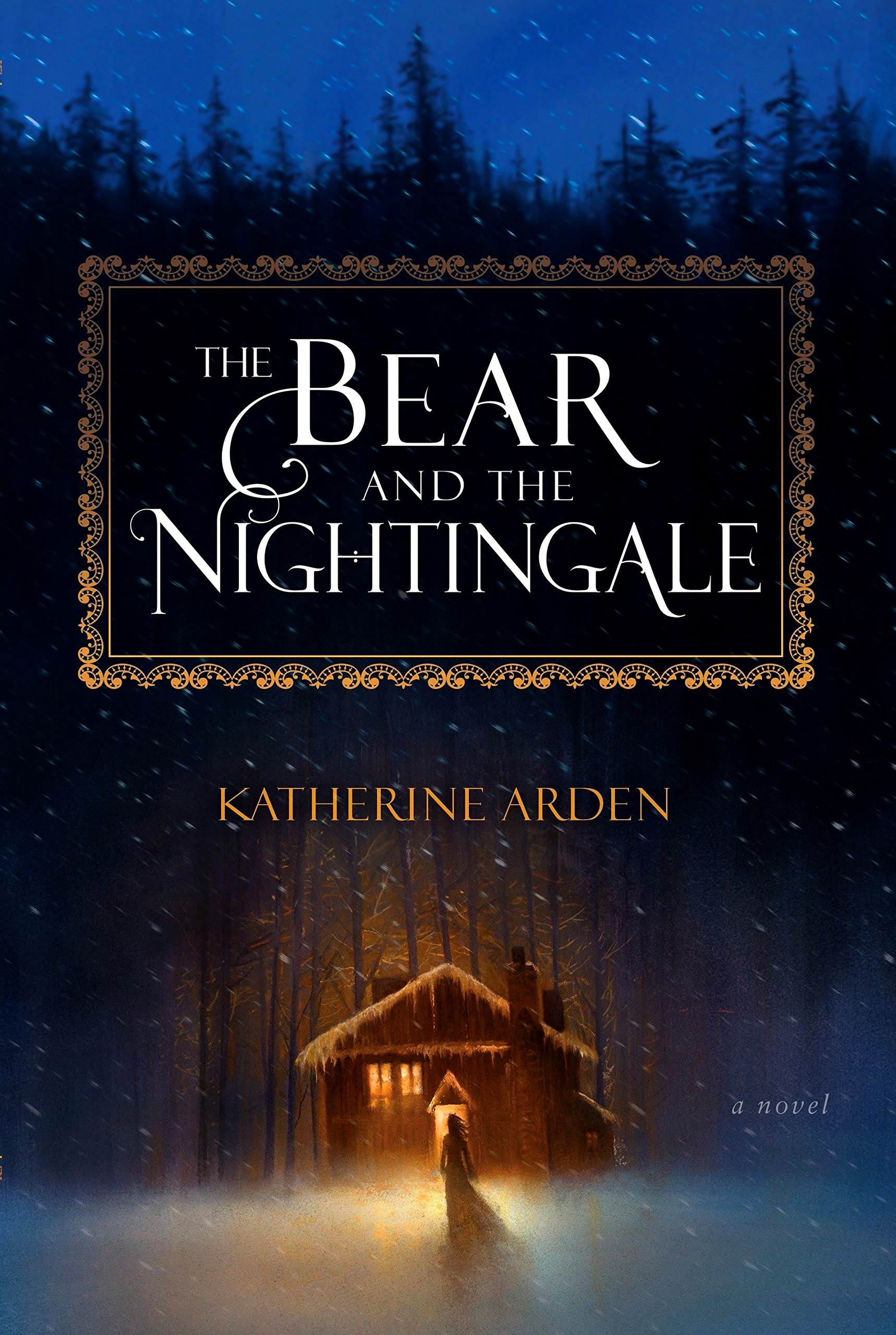 I stumbled upon this book on the shelf at the local library. The cover screamed “ATMOSPHERIC,” so it pulled me in. It is a blend of Russian folklore and medieval fantasy. It follows young Vasilisa (“Vasya”), the daughter of the local village leader. Vasya is an odd girl, wild and free and most at home in the forest or with the horses. She sees ancient creatures that no one else can see, the creatures of folklore that care for the home, the forests, the lakes, and the wildlife.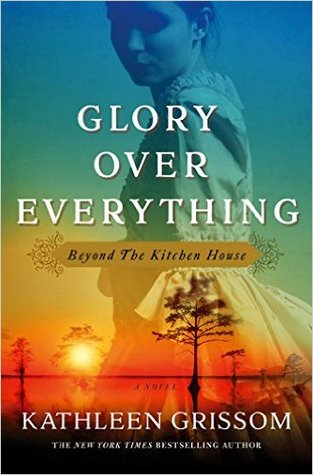
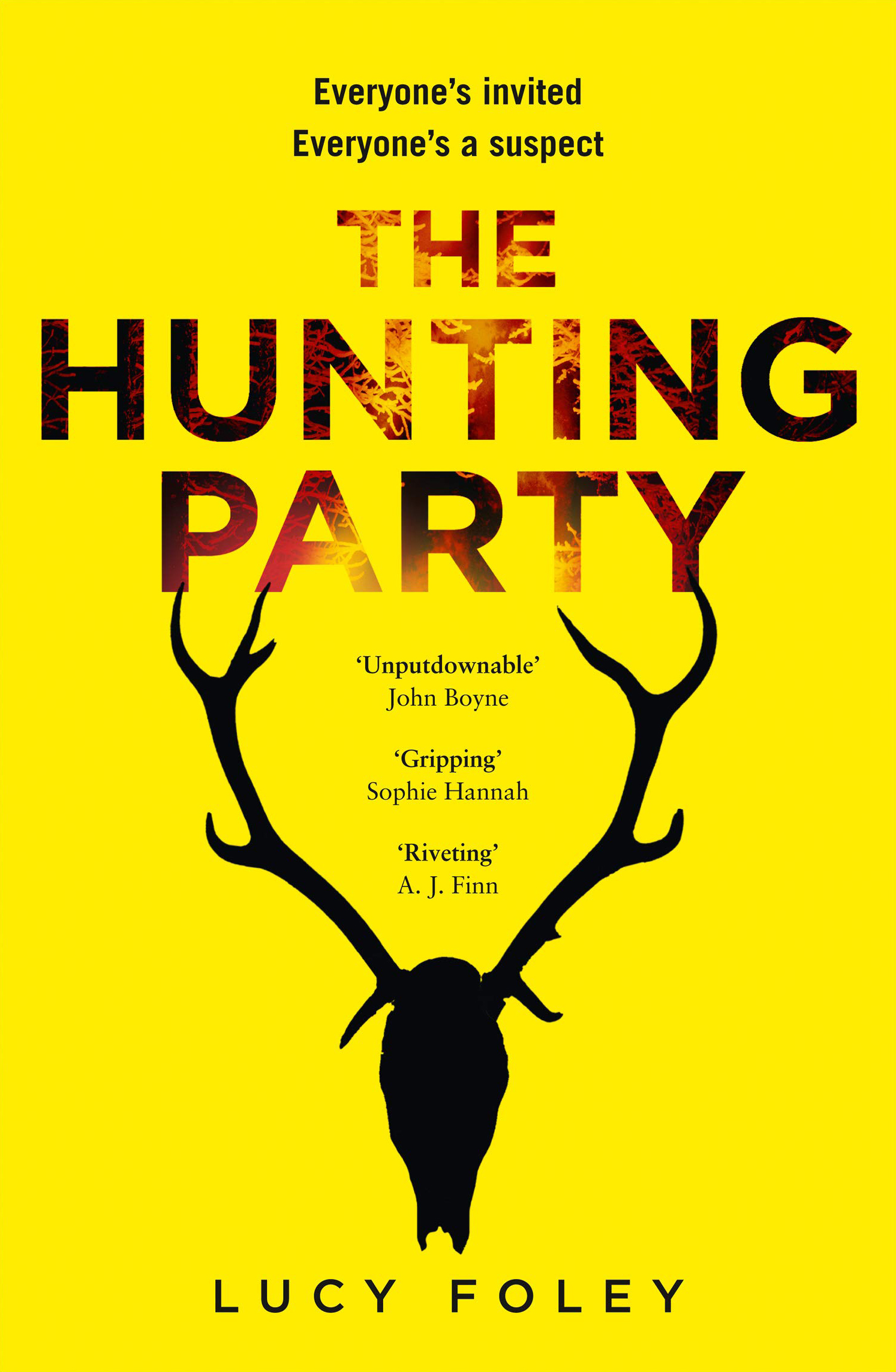

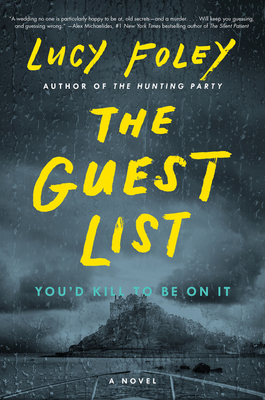 Ok, so you know how in my last review I said that Foley wasn’t formulaic? I’m about to contradict myself here, because there are some pretty striking similarities between The Guest List and The Hunting Party, one of her earlier novels. Both books have a group of people traveling to an isolated island getaway, one off the coast of Ireland and one Scotland. Someone gets murdered. We don’t know who it is and we don’t know who did it. The guests are there on these secluded islands for different events, but they still wind up in pretty similar predicaments, and old festering resentments eventually rear their ugly heads. With that being said, I do feel Foley did a good enough job of distinguishing the two works through her character development. Additionally, this particular Agatha Christie-esque style is pretty common in the genre because it works.
  A Librarian and Her Books